Open-source stack for fitness studios in 2026
Most studio software bills you per member. Add a class, sign a new client, and the monthly invoice climbs with you. The tools that run your bookings, your member list, and your payments are rented, and the data inside them sits on someone else's account.
This guide lays out a different approach: five open-source applications that cover class booking, member records, billing, retention email, and waivers. We run them for you in the region you choose, the member data stays yours to export, and the cost is flat. The five apps total €45 a month at €9 each, whether you have 30 members or 300.
This is not a purpose-built gym platform. It is five general-purpose tools, run for you, wired to do the jobs a studio needs. That boundary matters, so this guide states it plainly: where the stack fits, and where a dedicated platform is the better buy.
TL;DR
- Five open-source apps cover the core of a studio: booking (EasyAppointments), member records (Twenty), billing (Invoice Ninja), training plans and progress (wger), and waivers and files (Nextcloud).
- The cost is flat: the five apps total €45 a month at €9 each, no matter how many members you have.
- Per-member platforms scale with you. TeamUp starts around $119 a month and rises with active members; Mindbody and Glofox do not publish prices and commonly land in the $200 to $400 range, on contracts.
- You own the member data. Every app exports to standard formats, so you can move hosts without a lock-in penalty.
- It is not a gym platform: no door hardware, no body-metrics tracking, no branded member app, and only basic class waitlists. If those are core, a dedicated platform fits better.
Which studios this stack fits, and which it doesn't
This stack fits a studio or trainer whose core jobs are booking classes, keeping member records, collecting payments, and staying in touch. It fits owners who want a flat bill and want to own their member data. It does not fit a gym whose business runs on door hardware or a branded member app.
It is a good fit if most of these are true:
- You run classes, sessions, or appointments and need members to book online.
- You want one place for member records, leads, and history.
- You bill monthly memberships or packages and want recurring invoices and card payments.
- You want to email lapsed members without paying per contact.
- You want member data you can export and move, on a bill that does not climb every time you sign a client.
It is the wrong fit if you need any of these as a core feature:
- Door access control, turnstiles, key fobs, or 24/7 unstaffed entry. That needs gym software tied to hardware.
- A branded member app in the App Store and Google Play under your studio's name.
- Body-metrics or workout programming, composition tracking, logged lifts, or workout boards.
- Class waitlists with automatic promotion and complex capacity rules. The booking app here is solid but basic on this point.
If two or more of those are dealbreakers, a purpose-built platform such as Mindbody, Glofox, or a class-focused tool will serve you better, and that is the honest answer. The stack below is for the studio whose pain is the per-member bill and the rented data, not the door hardware.
The five-app stack
Each app below does one job a studio needs. Read each with its honest weakness in mind: none is a gym platform, and each trades polish in one area for the data ownership and flat cost of running it yourself. Together they cover booking, members, billing, retention, and files.
EasyAppointments: class and session booking
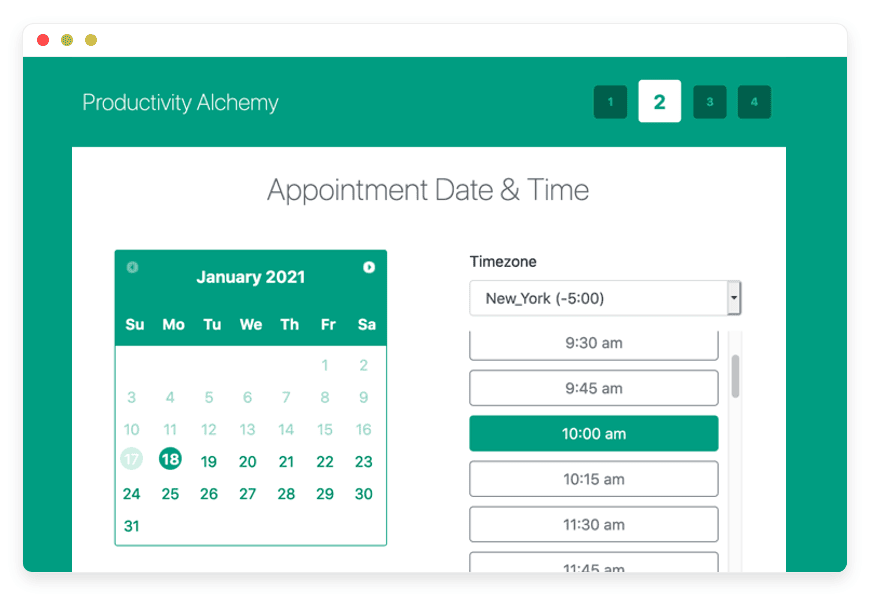
EasyAppointments is an open-source scheduler, released under the GPL-3.0 license with more than 3,000 stars on GitHub and a decade of releases behind it. Members book classes, sessions, or one-to-one appointments from a page you embed on your site. You define services, providers, and working plans; it syncs with Google Calendar and sends email reminders so fewer people no-show.
For a studio it replaces the booking calendar buried inside a per-member platform, and the Calendly-style link a trainer might bolt on. On DANIAN it runs at €9 a month. It suits a solo trainer up to a small multi-coach studio, and the switching effort is low: set up your services, your coaches, and your hours, then drop the booking page on your site.
The honest limitation: it is an appointment scheduler first. Class waitlists exist but are basic, there is no sophisticated auto-promotion or tiered capacity logic like a dedicated class platform. For one-to-one sessions and straightforward weekly schedules it is excellent. For a 40-spot reformer studio with intricate waitlist rules, test it against your real timetable before you commit. See EasyAppointments for class booking for the managed setup.
Twenty: member records and leads
Twenty is the newest open-source CRM to earn real traction: launched in 2023 by a Paris team, backed by Y Combinator, AGPL-3.0, and already around 49,000 GitHub stars. Its interface is the reason studios stick with it, a Notion-style workspace where companies, people, and deals are first-class records and the front desk actually keeps it tidy.
For a studio that maps to member records with history and notes, health flags a coach should know, attendance context, and a lead list for prospects who fill in a form but have not joined yet. Custom objects need no code, so membership type, expiry, and freeze notes become fields you add in an afternoon, and the GraphQL API is there when you want booking data and member data talking. It replaces the member module inside gym software, or the spreadsheet most studios outgrow. On DANIAN it runs at €9 a month and works for any team size. Switching effort is medium: import members by CSV, then add your custom fields.
The honest limitation: Twenty is young. There is no built-in email marketing, SMS, or telephony yet, and reporting is still basic, so real retention email is an add-on for later rather than a built-in. Its extension ecosystem is thinner than the big proprietary CRMs, so a specialist is harder to find than a Salesforce one. See Twenty for members for the managed setup.
Invoice Ninja: memberships and billing
Invoice Ninja is the one app here that is source-available rather than classic open source. It uses the Elastic License 2.0, which is worth understanding: you are free to self-host it and use it to bill your own members at no charge, but you cannot repackage and resell it as your own service. Built on Laravel and React, it does invoicing, quotes, recurring invoices, a client portal, and more than 40 payment gateways including Stripe, GoCardless, and PayPal.
For a studio that means recurring monthly membership billing, one-off package sales, automatic card collection, and a portal where members see their invoices. It replaces the billing engine inside gym software, and the processing markups some of those platforms add. On DANIAN it runs at €9 a month, plus an optional yearly white-label module (around $30) to remove branding, and whatever your card processor charges. It fits any team size; switching effort is medium.
The honest limitation: it is a billing tool, not full double-entry accounting, for formal books you still export to your accountant's software. And because the recurring logic is general-purpose, a few studio-specific rules like pro-rating or membership freezes need a manual setup rather than a one-click toggle. See Invoice Ninja for billing for the managed setup.
wger: training plans and member progress
wger is open-source fitness software under the AGPL-3.0-or-later licence, a Django application maintained by the wger team rather than a company. It tracks workouts, nutrition, and body measurements, and it carries a community-maintained exercise database, so the movements your coaches prescribe already exist in it. Nutrition logging scans barcodes against Open Food Facts data out of the box, and members log from their own phones.
In a studio it is the training layer, the part of the service the member actually experiences between visits. A coach builds the program, the member follows it in the app and logs each session, and the numbers, weights, measurements, progress photos, come back to the coach as evidence the membership is working. It replaces the workout add-ons inside gym software and the spreadsheet where progress used to live. On DANIAN, wger for training plans runs at €9 a month.
The honest limitation: wger is a training tracker, not a marketing tool. There are no email campaigns and no win-back sequences here; retention nudges stay with the booking reminders in EasyAppointments, and if you later want full email automation, Mautic can join as a sixth app at the same price. Member logging is self-service by design, so it rewards studios whose members actually engage, and it will not chase anyone for you.
Nextcloud: waivers and program files
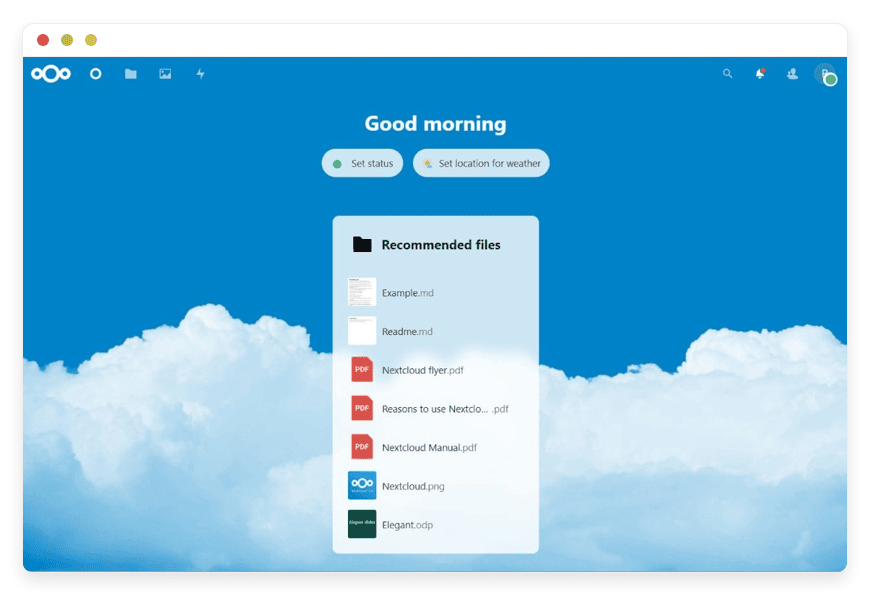
Nextcloud is open-source file sync and sharing under the AGPLv3, and one of the most widely used self-hosted apps anywhere. For a studio it is the home for signed waivers, program PDFs and training plans, a member-facing folder, and document collaboration with your coaches.
It replaces the scattered Google Drive or Dropbox folders most studios accumulate, and the paper waivers in a filing cabinet. On DANIAN it runs at €9 a month and works for any team size. Switching effort is low to medium: create your folder structure, set sharing rules, and upload your waiver and program library.
The honest limitation: Nextcloud stores and shares files; on its own it is not an e-signature product. For legally binding digital waiver signatures you add a signing app or pair it with a dedicated e-sign tool. It also rewards a little housekeeping, a tidy folder structure beats a dumping ground six months in. It is the quiet, dependable corner of the stack.
How the five pieces work together
The five apps are separate programs, not one dashboard, that is the honest trade for owning each piece. But they chain into a clean member lifecycle: someone books, becomes a record, gets billed, trains, and signs a waiver. Here is how the pieces hand off.
A prospect books a trial class in EasyAppointments, or fills in a lead form that lands in Twenty. They become a member record in Twenty, with type, start date, and notes. Invoice Ninja sets up their recurring membership invoice and collects payment each month. wger holds the member's training program and the logged sessions that show who is training and who has drifted. Nextcloud holds their signed waiver and the program files they need.
Data moves between the apps by export and import and through their APIs, not a built-in real-time sync. For a small studio that is a few minutes of admin a week, not an integration project. If you want true live sync between them, that is custom work, and a single gym platform does that part out of the box, a fair point to weigh.
The combinations that matter: booking plus members (EasyAppointments and Twenty) is the minimum useful pair. Add Invoice Ninja the moment you bill monthly. Add wger when training plans outgrow the spreadsheet. Add Nextcloud when waivers and files start to pile up.
What it costs: €45 a month, flat
The five apps total €45 a month at €9 each. That number does not move when you add members, classes, or staff. Per-member platforms work the other way: the bill rises with your member count, and several add processing markups or marketplace commissions on top. Here is the comparison.
The DANIAN stack is €45 a month, flat. That covers hosting, monthly patching, monitoring, daily off-site backups, and chat support for each app. You still pay your own card processor on memberships and your own email relay if you add email automation later, the same costs any setup carries.
The per-member software runs differently. TeamUp prices by active customer and starts around $119 a month, rising as your active member count grows; it is month-to-month with no long contract, but the number climbs with you. Mindbody and Glofox do not publish prices at all, both route you to a sales call. Independent gym-software pricing guides put typical studios in the $200 to $400 a month range, usually on an annual contract with an early-termination fee, and Mindbody adds a marketplace commission reported at 3.5% plus 20% on bookings that come through its marketplace.
For reference, €45 is roughly $48. So even the entry tier of the cheapest per-member platform is more than double the stack, and the mid-market platforms run four to nine times the cost before contracts and commissions. The point is not the number alone. It is the shape. The stack is flat; the SaaS scales with the very thing you are trying to grow.
| Path | Monthly cost | Rises with members? | Contract | Where member data lives |
|---|---|---|---|---|
| The five-app stack on DANIAN | €45 flat (5 × €9) | No | None; 7-day trial per app | Your own instance |
| TeamUp | From about $119, rises with active members | Yes | Month-to-month | Vendor's system |
| Mindbody / Glofox | Not published; commonly $200, $400 | Yes | Usually annual, with early-termination fee | Vendor's system |
See how €9-per-app pricing works
How they compare at a glance
One table, five apps. Each runs at €9 a month, each replaces a piece of the per-member platform, and each can run in the region closest to your members. The team-size column is a rough guide, not a hard limit, all five work for a solo trainer and for a multi-coach studio.
| App | DANIAN price | Replaces | Team-size fit | Region |
|---|---|---|---|---|
| EasyAppointments | €9/month | The booking calendar in gym software | Solo to small studio | The region you choose |
| Twenty | €9/month | The member module; the member spreadsheet | Any | The region you choose |
| Invoice Ninja | €9/month | The billing and payments engine | Any | The region you choose |
| wger | €9/month | The email and marketing add-on | Small studio and up | The region you choose |
| Nextcloud | €9/month | Drive and Dropbox folders; paper waivers | Any | The region you choose |
How to start
Do not deploy all five at once. Start with the one app that hurts most, usually booking or billing, run it live for two weeks against your real schedule, and add the others once it earns its place. Every app carries a 7-day free trial, so you can test before you commit.
A sensible order:
- Pick the sharpest pain. If chasing bookings is the mess, start with EasyAppointments. If chasing payments is the mess, start with Invoice Ninja.
- Deploy that one app and use it live for two weeks. Import a slice of real data, a few members, your real class schedule.
- Judge it on your actual week, not a demo. Does it save admin time? Do members find the booking page easy?
- Add the next app only when the first is bedded in. Members into Twenty, then billing, then retention email, then files.
- Move at your own pace. No contract forces the whole stack at once, and we set up each app for you.
Common questions
Short, direct answers to what studio owners ask before they switch.
Cost and billing
How much does the open-source fitness stack cost?
The five apps total €45 a month at €9 each, flat. That covers hosting, patching, monitoring, daily off-site backups, and chat support for each app. You still pay your own payment processor on memberships and your own email-sending relay if you add an email tool later.
Does the price rise as I add members?
No. The €45 a month is flat whether you have 30 members or 300. Per-member platforms work the other way, the bill climbs with your active member count, which is the cost that grows fastest as a studio fills.
What happens to my data if a payment fails or I cancel?
A failed card does not delete anything. We wait and email you. If you cancel, export your data first, nothing is erased without notice. The member records, invoices, and files are yours to take with you.
Is there a contract or a setup fee?
No long-term contract and a 7-day free trial on each app. Cancel anytime. By contrast, per-member platforms such as Mindbody and Glofox commonly use annual contracts with an early-termination fee of several months.
Is Invoice Ninja free to bill my own members?
Yes. Under the Elastic License 2.0 you can self-host Invoice Ninja and use it to bill your own members for free. You only need a separate commercial agreement if you repackage and resell it as your own product.
Owning and moving your data
Do I actually own my member data?
Yes. The apps run on your own instance and the member data is yours. There is no vendor-side analytics on it. You decide who can read it, and you can pull a full copy out at any time.
Can I export my members and move to another host later?
Yes. Every app exports to standard formats such as CSV and JSON. You can move to another host, or to your own server, without a lock-in penalty. The transfer is the normal migration effort, not a fee.
Can I choose where my data is stored?
Yes. Application data runs in the region you choose, from 21 datacenter locations across six continents. Pick the one closest to your members so booking pages and the member portal stay fast for them.
Is my data separated from other customers?
Yes. Each app runs in its own isolated container with its own data, not a shared pool. Backups run daily, off-site, with restore available. Access logs are available on request if you need them.
What it does and does not do
Does this fully replace Mindbody or Glofox?
For booking, member records, billing, retention email, and files, yes. For door hardware, a branded member app in the app stores, or body-metrics tracking, no, a purpose-built gym platform fits those better, and that is the honest answer.
Does EasyAppointments handle class waitlists?
It handles booking, providers, services, and working plans well. Waitlists are basic, there is no advanced auto-promotion or complex capacity logic like a dedicated class platform. For busy waitlist-heavy studios, test it against your real schedule first.
Can members book and pay from their phones?
Yes, through the mobile web, a booking page and a client portal that work in any phone browser, plus card payments. There is no branded native app under your studio's name in the App Store or Google Play.
Does the stack control door access or key fobs?
No. Door hardware, turnstiles, and 24/7 unstaffed entry need gym software tied to access devices. This stack does not do that. If unattended access is core to your business, a dedicated platform is the right buy.
Can I track body metrics or program workouts?
No. Composition tracking, logged lifts, and workout boards are out of scope for these five apps. If progress tracking or programming is central to your offer, pair the stack with a dedicated fitness app for that part.
Setup and support
Do I need to be technical, and who runs the apps?
You do not need to be technical. We install, patch, monitor, and back up all five apps. You use them; you never touch a server. The work that needs a human, we handle, and chat is there when you need it.
How do the five apps connect to each other?
They are separate apps. Data moves between them by export and import and through their APIs, not a built-in real-time sync. For a small studio that is light weekly admin. True live sync between them is custom work.
Can I start with one app instead of all five?
Yes. Start with the app that solves your sharpest problem, usually booking or billing, run it live for two weeks, then add the others at your own pace. Nothing forces you to deploy the whole stack at once.
How do I move existing members and bookings in?
Export your current members to CSV and import them into Twenty and Invoice Ninja. We help with the import so you are not doing it alone. Your class schedule is rebuilt once in EasyAppointments and then runs itself.
What if I get stuck or something breaks?
Email or chat us and a human replies. We monitor every app 24/7 and usually fix problems before customers feel them. Each app also has an active community and documentation if you like to dig in yourself.
Where should client progress photos live?
The numbers live in wger with the measurements, and wger takes progress photos too. If you want client-shared albums with stronger protection, Ente, AGPL-3.0 and built by a small company, is end-to-end encrypted photo storage: albums per client, expiring share links, photos the server itself cannot read. It is not one of the five, but it joins the stack at the same €9 a month on DANIAN, and for photos of bodies, encrypted storage is the honest default.
What to do this week
Pick the one app that solves your sharpest problem this week and start a free trial. If bookings are the mess, start with EasyAppointments. If payments are the mess, start with Invoice Ninja. Run it live for two weeks, then decide whether to build out the rest of the stack.
The case for the stack is not that it does everything a gym platform does. It does not. The case is narrower and, for the right studio, stronger: you own the member data, the bill is €45 a month flat, and the cost does not climb every time you sign a member. For a studio whose pain is the per-member invoice and the rented data, that trade is worth making.
Start with one app, keep the bill flat, and add the rest when each one earns it.
Try managed EasyAppointments hosting for 7 days
Sources
App projects: EasyAppointments, Twenty, Invoice Ninja, wger, Nextcloud. Pricing references: TeamUp pricing, plus independent gym-software pricing guides for the Mindbody and Glofox figures.