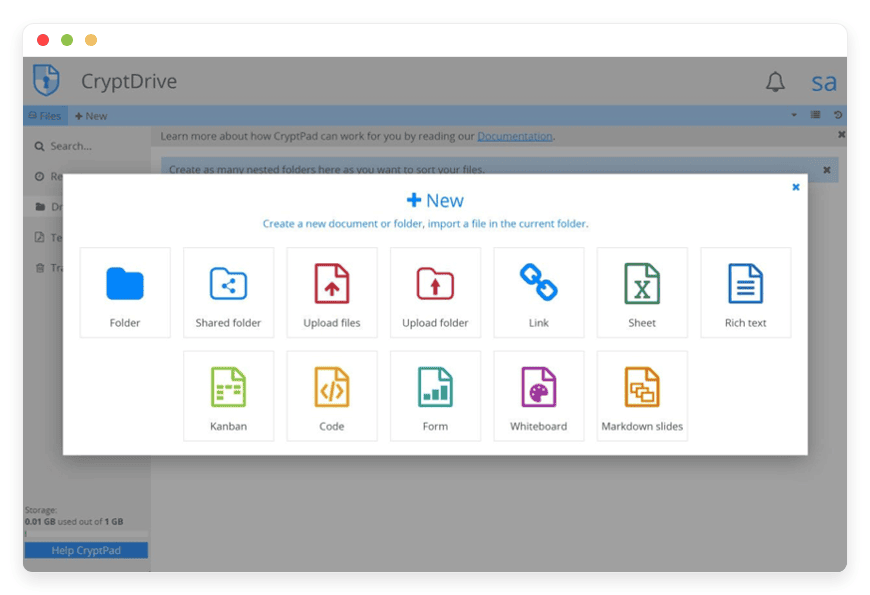
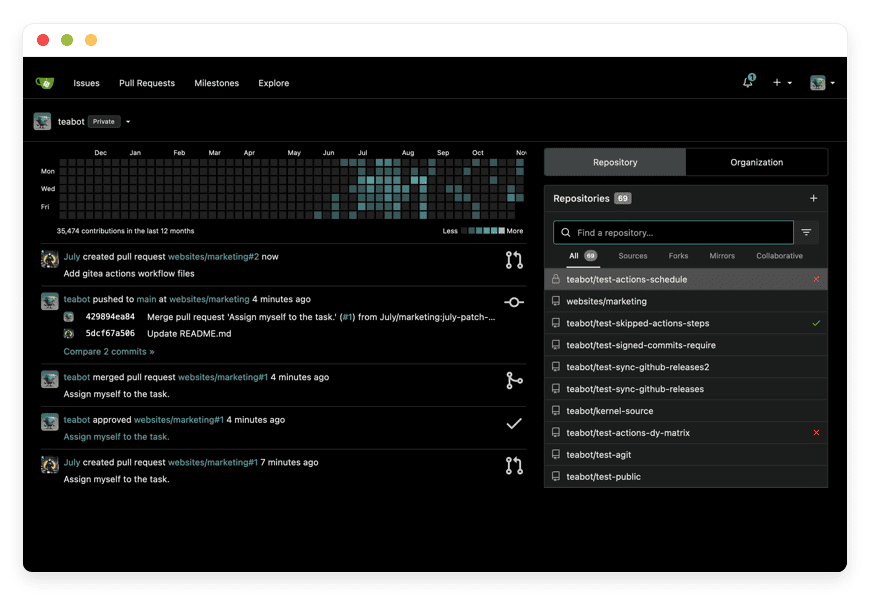
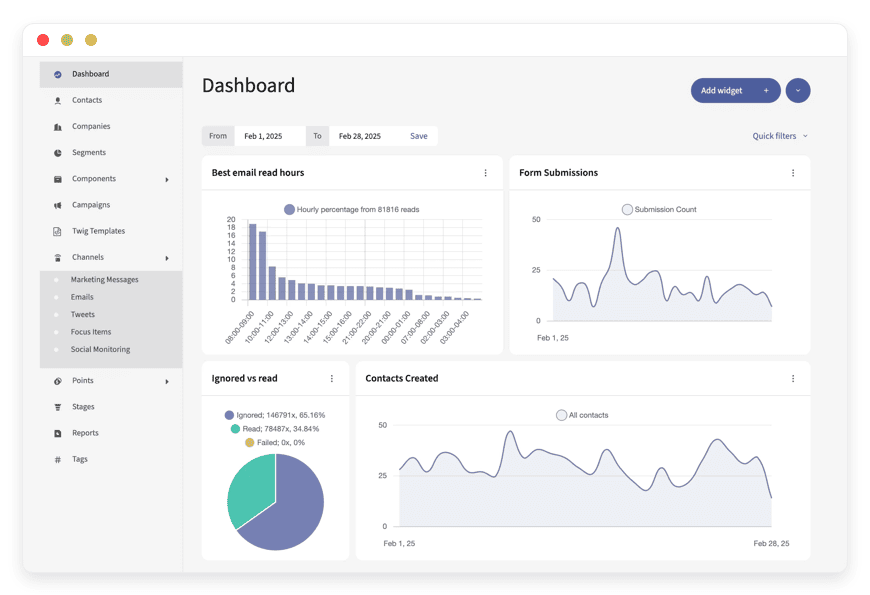
Open-source stack for contractors & trades 2026
Quotes, jobs, equipment, site photos, and crew chat, run for you at €9 per app, with the customer and job records staying yours.
TL;DR
- The stack is five apps at €9 each, so €45 per month, flat. You pay per app, not per crew seat.
- It covers the pieces of Jobber, Housecall Pro, ServiceTitan, and Buildertrend you actually touch: quotes, jobs, scheduling, equipment, photos, and chat.
- The records, every customer, quote, and job, live in software you own and can export any time.
- What it is not: a dispatch platform. No live GPS crew dispatch, no route optimisation, no permit modules, no truck-on-a-map tracking.
- One post covers plumbing, electrical, HVAC, roofing, and painting. The apps are general-purpose, not trade-specific.
A two-truck plumbing outfit and a ten-person roofing crew hit the same wall. The field-service platform that started cheap gets expensive as the crew grows. The customer list, the quotes, and the job history all live inside someone else's software. Per-seat pricing is the mechanism. Jobber, Housecall Pro, and ServiceTitan all bill by the user or the technician. Every hire raises the monthly bill, and the data sits with the vendor.
This post lays out a different shape. Five open-source apps, each run for you at a flat €9 per app per month, together cover the office and field paperwork a contractor handles: quotes, jobs, equipment, site photos, and crew chat. The records stay yours, exportable any time, and the price does not move when you add a person.
One thing up front, because it decides everything. This is a stack of general-purpose apps, not a field-service platform. It will not dispatch a crew over GPS, sequence a route, or pull a permit. What it does is let you own the customer and job records and pay a flat rate for them. The rest of this post is honest about both sides of that trade.
Who this is for, and who it is not
This list is for the owner or operator of a small trades business, plumbing, electrical, HVAC, roofing, painting, who is tired of per-seat math and wants the customer and job records on software they own. It assumes you want someone else to run the apps, patch them, and back them up, so you are not learning to be a sysadmin.
It is the wrong list if your day runs on live dispatch: assigning the nearest tech to an emergency call, sequencing a route across town, or watching trucks move on a map. A purpose-built field-service platform earns its price for that work, and this stack does not try to replace it.
It is also one list for five trades. A plumber's day and a painter's day are not identical. But the office shape, quote, schedule, do the work, track the gear, photograph the result, invoice, is close enough that the same five apps serve all of them.
The five-app stack
Each app below does one job well, replaces a piece of the per-seat tools, and comes with one honest limitation. None of them is a dispatch board. All of them are run for you.
Dolibarr: quotes, jobs, and invoicing
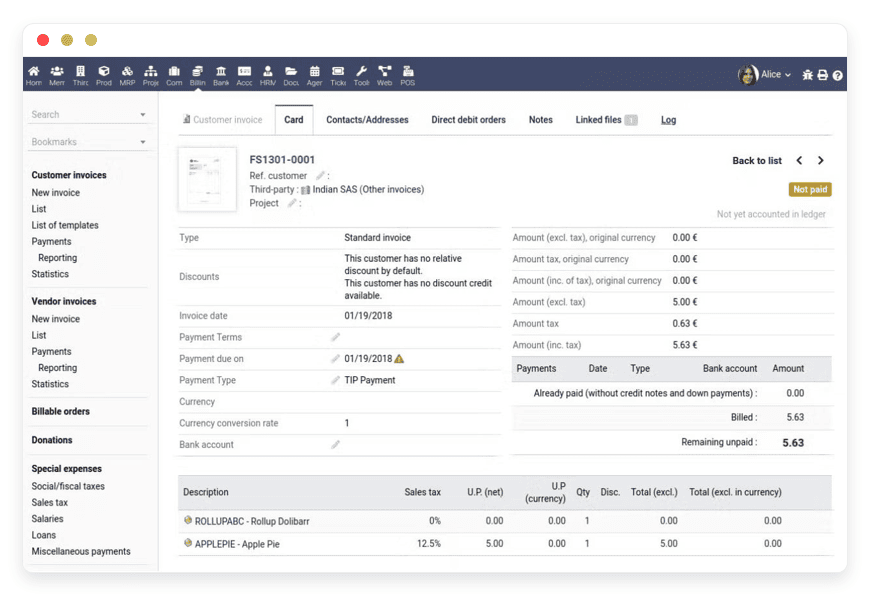
Dolibarr is an open-source ERP and CRM, released under the GPL and maintained by an international community since 2003. For a trades business it covers the office paperwork: customer records, quotes and proposals, work orders, and invoices, with payment tracking and PDF output built in. You build a quote, turn it into a job, then turn the finished job into an invoice, and the full customer history sits in one place you control. It is modular, so you switch on the pieces you need and leave the rest off. Crews use Dolibarr for jobs and invoicing, plus estimates and recurring maintenance contracts.
Honest limitation: Dolibarr is a generalist business suite, not a field-service product. There is no dispatch board and no live crew tracking, it manages the records and the money, not the trucks. Its interface is functional rather than polished, and reviewers consistently note it feels dated next to a slick SaaS. If your bottleneck is getting techs to the right address in the right order, Dolibarr does not solve that. It solves the quote-to-invoice trail behind it.
Snipe-IT: tools, equipment, and fleet
Snipe-IT is an open-source asset manager, licensed AGPL and built on Laravel, used by more than 6,000 organisations to track over 20 million assets. It was written for IT hardware, but the model maps onto trade tools cleanly: every drill, ladder, generator, and vehicle becomes an asset with a purchase date, a value, a status, and the person it is checked out to. Print a QR or barcode label, stick it on the gear, and the crew scans items in and out from a phone. You get a full check-in and check-out history, and maintenance records attach to individual assets, so service intervals stop living in someone's memory. This is Snipe-IT for equipment, adapted from IT to the field.
Honest limitation: Snipe-IT tracks equipment as assets, not as live locations. It tells you a tool is checked out to Marco; it does not show where Marco's truck is on a map right now. There is no GPS and no real-time fleet tracking. It is IT-asset software by origin, so you set up custom categories for trade gear yourself, and there is no built-in RFID. For ownership and accountability it is excellent; for live logistics it is the wrong tool.
EasyAppointments: estimate and job scheduling
EasyAppointments is a lightweight open-source booking system, released under the GPL by a developer in Greece. It gives you a public booking page where customers pick a service and a time slot, plus an admin side where you set providers, services, working hours, and booking rules. For a trades business it handles estimate visits and scheduled service calls: a homeowner books a window, picks the service, and gets an automatic confirmation and reminder by email. It syncs with Google Calendar, so the appointments land where your office already looks. It is the open-source answer to per-seat booking tools like Calendly and Acuity, with no per-booking commission and no monthly seat fee.
Honest limitation: this is appointment booking, not crew dispatch. EasyAppointments schedules a customer into a time slot. It does not assign the nearest available crew, sequence a day of stops, or plan a route. It has no map view and no live technician tracking. It is also a lean tool by design: powerful for booking, but you will not find job costing or invoicing inside it, that is Dolibarr's job. For letting someone self-book an estimate it is a clean fit; for running a dispatch board it is not built for that.
Nextcloud: plans and site photos
Nextcloud is an open-source file platform, licensed AGPL, that you run on your own server as an alternative to Google Drive, Dropbox, or Microsoft 365. For a trades business it is where the visual record lives: blueprints and permit PDFs, before-and-after site photos, signed change orders, and shared folders you can open up to a client or a subcontractor. The mobile app lets a crew upload photos straight from the job site, so the evidence of work done is captured the day it happens, not reconstructed later from someone's camera roll. You set who sees what, share a folder by link when a client needs the plans, and keep the whole archive on infrastructure you control.
Honest limitation: Nextcloud stores and shares files; it does not mark them up. There is no built-in blueprint annotation or photo redlining out of the box. You can add apps for some of that, but the core product is storage and sharing, not a takeoff or markup tool. It is also a broad platform with many moving parts, which is part of why teams hand the running of it to someone else. For owning your plans and photos and sharing them cleanly it is hard to beat; for drawing on a blueprint in the field, look elsewhere.
Mattermost: the crew channel
Mattermost is an open-source team chat platform, the self-hosted answer to Slack. The free Team Edition is MIT-licensed and runs as a single service you control; the wider project is open core, with some advanced administration features in the paid edition. For a trades business it is the crew's back-channel: a channel per job or per crew, direct messages, file and photo sharing, and mobile apps so the field and the office stay in one thread. Unlike Slack's free tier, no message-history cap eats your past conversations, and there are no per-seat fees as you add people. Photos from a site can drop straight into the job's channel, this is Mattermost for the crew, and the history stays searchable.
Honest limitation: Mattermost is general team chat, not a field-service tool. It has no scheduling, no dispatch, and no job records of its own, it is where people talk, not where work is tracked. The most advanced administration and retention controls sit in the paid Enterprise edition, though a small crew rarely needs them; the free edition covers channels, messages, files, and mobile. If you want Slack you own, it is a clean swap; if you want chat that also dispatches trucks, that product does not exist here.
How the five fit together
The apps are separate, but they line up with the actual workflow. A lead comes in and you build a quote in Dolibarr. The customer books an estimate window through EasyAppointments, which drops the appointment into your calendar. The crew does the visit, sorts logistics in the job's Mattermost channel, and uploads site photos to the Nextcloud folder for that job. The tools they used are checked out in Snipe-IT, so you know which gear was on site. The job closes, you turn the quote into an invoice in Dolibarr, and the whole record stays in software you control.
No single app does everything, and they do not share one login or one database. That is the honest cost of assembling a stack instead of buying one platform: you trade the convenience of one integrated product for flat pricing and ownership of your data. For some businesses that trade is obvious. For others it is not, and the cost section below is where it gets decided.
| App | What it replaces | Price | Best for |
|---|---|---|---|
| Dolibarr | Quoting and invoicing pieces; QuickBooks-style billing | €9/mo | Office paperwork, quote to invoice |
| Snipe-IT | Equipment add-ons and tracking spreadsheets | €9/mo | Tool, equipment, and vehicle accountability |
| EasyAppointments | Calendly, Acuity booking | €9/mo | Customer-booked estimate and service slots |
| Nextcloud | Google Drive, Dropbox, Microsoft 365 | €9/mo | Plans, permits, and site photos |
| Mattermost | Slack | €9/mo | Crew chat per job, with mobile |
All five apps run in your chosen region, across 21 datacenter locations.
What it costs
Here is the number the whole post turns on. Five apps at €9 each is €45 per month, flat. You pay per app, not per seat, so a two-person crew and a fifteen-person crew pay the same €45 for the same five apps.
| Tool | What it covers | How it is priced | Monthly cost |
|---|---|---|---|
| Jobber, Connect | Quotes, scheduling, dispatch, invoicing | Per plan, then per extra seat | $169 for 5 users; +$29 per extra user |
| Housecall Pro, Essentials | Scheduling, dispatch, invoicing, QuickBooks sync | Per plan, then per extra seat | $149 to $189 for up to 5 users |
| ServiceTitan | Full dispatch, CRM, marketing | Per technician | $245 to $398 per technician |
| DANIAN five-app stack | Quotes, jobs, equipment, photos, crew chat | Per app, flat | €45 for all five, any crew size |
Two things the table does not show, one for the SaaS column and one against it. Against it: those are list prices for the subscription only. Payment processing, commonly 2.9% plus 30 cents per card transaction, and add-ons like marketing suites or an AI receptionist stack on top, and every seat beyond the plan limit adds $29 to $35 a month. For it: that price buys a single integrated product with live dispatch and one unified mobile app, which the five-app stack does not provide.
DANIAN bills in euros, and the figures above are US list prices, check the current numbers on each vendor's pricing page, since they move. The point is not the exact dollar. It is the shape. One model is per-seat and climbs with your crew. The other is per-app and holds.
What this stack does not do
Worth stating plainly, because the gap is the honest part of the pitch. This is five general-purpose apps, run for you, not a dispatch or field-service platform. Specifically:
- No live crew dispatch. Nothing here assigns the nearest tech to a call or runs a dispatch board.
- No route optimisation. The apps schedule and record work; they do not sequence a day of stops or plan drive time.
- No permit or code modules. There is no permit-pulling, no code-reference library, and no inspection-workflow tooling.
- No live location. Snipe-IT logs which crew member holds which tool; it does not track trucks on a map in real time.
If those four are central to how you run, a purpose-built platform is the right buy and worth its per-seat price. This stack is for the business that values owning its records and paying a flat rate more than it values an integrated dispatch product. Both are legitimate. They are just different priorities.
How to start
Pick one app and run it for two weeks before adding the next. The fastest first win is usually the one that hurts most today. If per-seat chat costs are the irritant, start with Mattermost. If quoting and invoicing live in scattered documents, start with Dolibarr. Deploy it, move one real workflow over, one live quote, or one crew's chat, and see whether it sticks before you migrate the rest.
Each app is run for you: patched, backed up, and monitored, with a human on chat when something needs attention. You pick the region it runs in. When the first app earns its place, add the second, and build the stack at the pace your business can absorb rather than all at once.
Common questions
Cost and seats
How much does the full stack cost?
Five apps at 9 euros each is 45 euros per month, flat. You pay per app, not per seat, so the five apps cost 45 euros whether you run two people or fifteen. Each app covers one job: quotes, equipment, scheduling, photos, or crew chat.
Does the price go up as I add crew?
No. The 9 euros is per app, not per seat. A two-person crew and a fifteen-person crew pay the same 45 euros for the same five apps. The per-seat creep that pushes field-service bills past a few hundred dollars does not happen here.
How does 45 euros compare to Jobber or Housecall Pro?
Those bill per seat or per technician and climb with the crew. A five-user team runs about 149 to 189 dollars on Housecall Pro Essentials or 169 dollars on Jobber Connect, before add-ons. The stack is 45 euros flat at any crew size.
Are there extra fees like payment processing?
The 9 euros per app covers the hosting, patching, backups, and support. The open-source apps themselves take no per-booking or per-card cut: Dolibarr invoicing and EasyAppointments booking carry no commission. You bring your own payment processor if you take cards.
Owning your data
Do I actually own the customer and job records?
Yes. The apps are open-source and run on your own instance, so the customers, quotes, jobs, photos, and invoices are your data, not a vendor's. We operate the software; the records belong to you and move with you if you ever leave.
Can I get my data out if I leave?
Yes, on demand. Every instance is backed up daily, and you can download your data or pull it over SFTP. The open-source app is yours; we just run it. There is no lock-in clause and no ransom for your own records.
Where does the data live?
In the region you choose. The catalog spans 21 datacenter locations across six continents, and you pick the location per app, so the data sits close to your crew and your customers rather than wherever a vendor defaults to.
Is my data separated from other customers?
Yes. Every app gets its own hardened container with its own CPU, memory, and storage allocation and isolated networking. The hardware underneath is shared, which is how the 9 euro price works, but the boundary around your app is real.
Fit and limits
Will this dispatch my crew or optimise routes?
No. This is a set of general-purpose apps, not a dispatch platform. There is no live GPS dispatch and no route optimisation. If assigning the nearest tech and sequencing a day of stops is the heart of your operation, a purpose-built field-service product fits better.
Does it handle permits or code references?
No. There are no permit-pulling, code-reference, or inspection-workflow modules in this stack. It covers quotes, jobs, equipment, photos, and chat. If permit and code tooling is central to your trade, a specialised platform is the right buy for that part.
Can I track my trucks' location?
No live location. Snipe-IT logs which crew member has checked out which tool or vehicle, with full check-in and check-out history. It does not show a truck's position on a map in real time. For live fleet tracking you need a dedicated GPS product.
Is this right for a one-truck operation?
It can be, if flat cost and owning your records matter more than an integrated dispatch board. A solo operator who lives on a dispatch screen may be better served by a field-service SaaS. The stack suits owners who want the paperwork they control.
Does one stack work for plumbing, electrical, HVAC, roofing, and painting?
Yes. The office shape is shared across trades: quote, schedule, do the work, track the gear, photograph the result, invoice. The five apps configure to each business, so a plumber and a painter run the same stack tuned to their own services.
Running it
Do I have to be technical to run this?
No. Each app is run for you: patched, backed up, and monitored, with a human on chat when something needs attention. You use the apps from a browser and a phone. You do not install servers, manage updates, or read logs.
What happens at 2am if something breaks?
You reach us on chat or email, 24/7, and a named human replies rather than a ticket queue. We monitor instances and usually catch problems before customers feel them. When a fix needs a person, a person is the one who answers.
Do I need all five apps at once?
No. Start with one app, run it for two weeks, and add the next only when it earns its place. Most owners begin with whichever pain is loudest: crew chat costs, or scattered quotes and invoices. Build the stack at your own pace.
Why no SSH or root access?
Giving up shell access is what lets us promise patching, backups, and uptime. Your data and configuration still export without it. If you specifically need SSH or custom server access, a developer-grade host or your own VPS is the honest fit instead.
Can I add an app that is not on this list?
Yes. The catalog carries 150-plus open-source apps at the same 9 euro flat rate, and more get added on request for active customers. If the tool your trade needs is open-source and missing, ask and it can usually be added.
How do we handle crew holidays and leave?
Dolibarr carries HR basics, but leave planning is a job of its own. Urlaubsverwaltung, Apache-2.0 licensed and in continuous development for over a decade by a German team, gives every crew member a visible leave balance, an approval flow, half-days, and one calendar the whole crew can see. When leave tracking outgrows a Dolibarr tab, Urlaubsverwaltung joins the stack at the same €9 a month.
The bottom line
The case for this stack is narrow and honest. If owning your customer and job records and paying a flat €45 a month matters more to you than a single integrated dispatch product, five open-source apps, Dolibarr, Snipe-IT, EasyAppointments, Nextcloud, and Mattermost, cover the contractor's office and field paperwork without per-seat creep. If live dispatch and route optimisation are the heart of your day, buy the platform built for that instead. Start with the one app that solves your worst irritation this week, run it for two weeks, and add the rest only as each earns its place.
Sources, verify current pricing at each: Jobber pricing (getjobber.com/pricing), Housecall Pro pricing (housecallpro.com/pricing), ServiceTitan pricing (servicetitan.com/pricing). App projects: dolibarr.org, snipeitapp.com, easyappointments.org, nextcloud.com, mattermost.com.