Open-source stack for e-commerce operators 2026
The e-commerce operator's open-source stack in 2026 — the tools around your store you should own
TL;DR
- Six open-source tools cover the jobs most stores hand to separate subscriptions: analytics, live chat, lifecycle email, an operations database, monitoring, and a support inbox.
- Run all six managed and the bill is €54/month (6 × €9), roughly $58. The equivalent SaaS bundle runs about $300 at a small store and climbs past $500 as your contact list and ticket volume grow.
- These tools sit around your store, not under it. DANIAN does not host Shopify, WooCommerce, or Magento. Your storefront stays where it is.
- Matomo is the anchor: it tracks revenue, conversion funnels, and abandoned carts, and the data stays in your own database instead of Google's.
- Start with one tool, deploy it, and judge it against the line item it replaces over a 14-day trial.
Most stores do not start by deciding to run an open-source stack. It happens the other way around. You launch on Shopify or WooCommerce, then bolt on the tools the platform leaves out: an analytics service, a live-chat widget, an email platform, a help desk. Each one is a separate login and a separate invoice, and most bill by seats or contacts, so the total climbs as the store grows. By the time a store is doing real volume, those subscriptions can cost more than the platform fee itself. This guide is about the six tools you can own instead.
Who this list is for (and isn't)
This list is for the operator already running a store who keeps stacking SaaS around it. Analytics here, live chat there, an email tool, a monitoring service, a support inbox. Six subscriptions, six logins, six invoices that creep upward every quarter. The tools below replace those line items with software you own.
It fits stores doing real volume that want to own their customer data and stop paying per seat and per contact. It fits operators who are comfortable picking a tool and using it, but who do not want to run a server, patch it, or get paged when it breaks. Consolidating six invoices into one predictable bill is also simpler to budget against and to reason about.
It does not fit a pre-revenue store where free tiers are still enough. It does not fit a team that wants one vendor's tightly integrated suite and will happily pay for the convenience. And it does not fit a developer who wants SSH and custom Dockerfiles; that buyer should self-host directly.
One honest boundary before the list. DANIAN runs the supporting stack, not the storefront engine. Your Shopify, WooCommerce, or Magento store stays exactly where it lives now. The tools here connect to it and feed off it. They do not replace it.
The shortlist
Six tools, in the order most stores adopt them. Each entry covers what the tool does, the subscription it replaces, the team size it suits, the switching effort, and where it falls short. Prices are current as of mid-2026 and change.
Matomo — store analytics you own
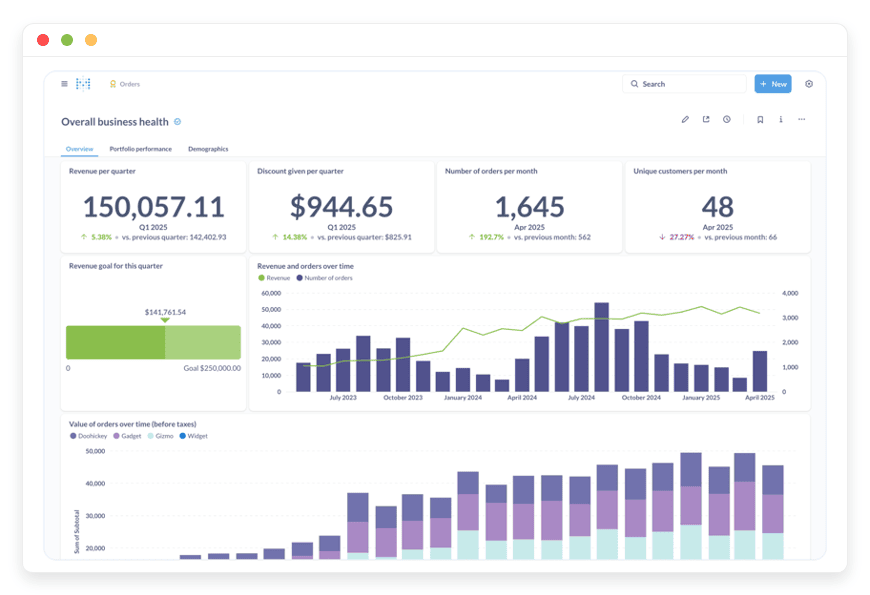
Matomo is the leading open-source web analytics platform, licensed under GPL v3, and with around 21,500 GitHub stars. E-commerce tracking is built in: revenue, orders, conversion rate, product performance, and abandoned-cart reports. A tag manager, custom reports, and a media-analytics view ship in the core alongside the e-commerce dashboard. It connects to Shopify, WooCommerce, and most major platforms with an official plugin.
What it replaces: Google Analytics 4. GA4 is free, but you pay in data ownership. Google holds and samples the data, the retention windows are short, and the e-commerce reports sit behind a layout most operators never fully trust. With Matomo, the numbers live in your own database, unsampled, and the revenue reports are front and centre. Because the data is yours, you keep it as long as you like and can query it directly, which matters when you reconcile marketing spend against actual orders.
DANIAN price: €9/month.
Ideal team size: any store with someone who reads the numbers, from 1 to 20 people.
Switching effort: medium. Add the tracking snippet, turn on e-commerce tracking, and run it beside GA4 for a month to confirm the revenue figures line up.
Honest limitation: the funnel-analysis and heatmap features are paid plugins from the Matomo marketplace. Core revenue and goal tracking are included, but the deeper conversion-rate tooling costs extra. Accurate e-commerce numbers also depend on correct setup; wire the order tracking properly or the revenue will drift from your store's own totals.
We run managed Matomo for store analytics at the flat €9, with the server and updates handled.
Chatwoot — live chat without the per-seat bill
Chatwoot is an open-source live-chat and customer-engagement platform, MIT-licensed at its core, and with around 29,700 GitHub stars. It pulls website chat, email, Instagram, WhatsApp, Messenger, and Telegram into one inbox. Its Shopify integration shows a customer's order details next to the conversation, so an agent answers without switching tabs. It also handles CSAT surveys, internal notes, and team routing, so a two-person store and a ten-person team work out of the same inbox.
What it replaces: Intercom and Tidio. Intercom's helpdesk starts around $29 per seat per month plus per-resolution AI fees; Tidio's paid tiers run from $29 to $59 per month and up. Both scale with seats and usage. Chatwoot does not charge per seat when you self-host.
DANIAN price: €9/month.
Ideal team size: stores with 1 to 10 people answering chats.
Switching effort: low to medium. Install the widget, connect your channels, and import your canned responses.
Honest limitation: Chatwoot's enterprise directory ships under a separate commercial license, so a few advanced features — single sign-on, for instance — sit outside the free core. Its built-in AI and reporting are improving steadily but are not yet as deep as Intercom's. For a small store answering customer questions, that gap rarely matters.
We run managed Chatwoot live chat on the same €9 floor.
Mautic — lifecycle and abandoned-cart email
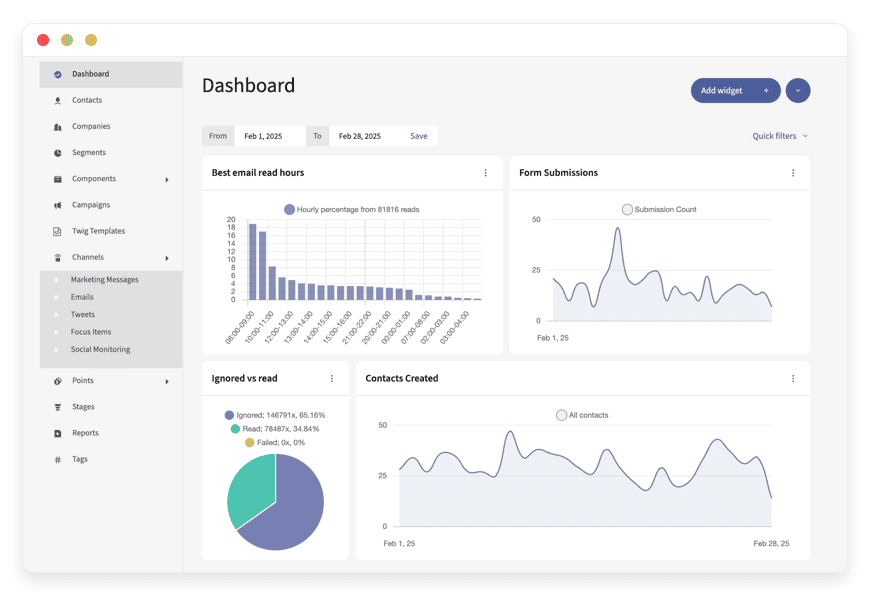
Mautic is the largest open-source marketing-automation project, licensed under GPL, with more than 6,500 GitHub stars and an active contributor community. It covers email campaigns, segmentation, lead scoring, landing pages, and multi-step automations. With a store integration, it triggers abandoned-cart sequences, win-back flows, and post-purchase emails based on what a customer actually did. It also keeps a full contact timeline, so you can see every email opened and every page viewed before someone buys.
What it replaces: Klaviyo and Mailchimp. Klaviyo starts at $20/month and runs about $100/month at 5,000 contacts and $150 at 10,000; Mailchimp scales on a similar curve. Both bill by contact count, so the line grows every time your list does. Mautic's hosting cost does not.
DANIAN price: €9/month, flat, regardless of how many contacts you hold.
Ideal team size: any store with a list worth nurturing, from 1 to 20 people.
Switching effort: high. Mautic is capable and has a learning curve; you build the segments, the emails, and the automations yourself.
Honest limitation: this is the steepest tool on the list. Deliverability still depends on a clean sending setup, and community plugins range from excellent to abandoned, so vet them before you depend on one. DANIAN runs the server, applies updates, and provides SMTP; it does not write your campaigns.
If you want managed Mautic for lifecycle email, the operations are ours and the strategy stays yours.
NocoDB — the operations database behind the store
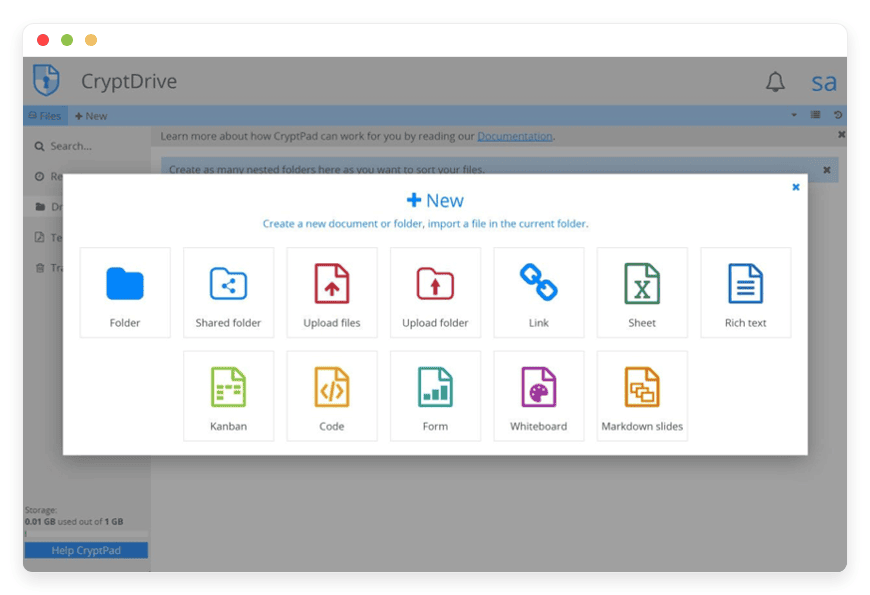
NocoDB turns a SQL database into a spreadsheet-style interface, with around 63,000 GitHub stars. You get grid, kanban, gallery, and calendar views, plus forms, a REST API, and webhooks. It is built for the spreadsheets a store outgrows: inventory, supplier lists, returns tracking, order operations, and content calendars that several people edit at once. Link fields, lookups, and rollups cover most of what a store tracked in Airtable, and the API lets your other tools read from it.
What it replaces: Airtable. Airtable's Team plan is $20 per seat per month billed annually, or $24 monthly; Business is $45 per seat. A three-person operations team on Team runs about $60 to $72 a month, and every editor is a paid seat. NocoDB charges no per-seat fee.
DANIAN price: €9/month.
Ideal team size: 2 to 15 people sharing operational data.
Switching effort: low. Export from Airtable, import into NocoDB, and you are running.
Honest limitation:NocoDB moved to the Sustainable Use License. It is source-available “fair-code” — free to self-host and use internally, with limits on reselling it as your own hosted product — rather than a permissive open-source license. It is also a database interface, not an application builder; if you need complex business logic and custom screens, you will outgrow it.
Uptime Kuma — store and checkout monitoring
Uptime Kuma is the most widely used self-hosted monitoring tool, MIT-licensed, with more than 75,000 GitHub stars. It watches your URLs, APIs, checkout endpoints, DNS records, and SSL-certificate expiry, and sends alerts to email, Slack, Telegram, Discord, and more than 90 notification channels. It checks as often as every 20 seconds and builds public status pages. Point it at your checkout URL and a keyword on the confirmation page, and it tells you when the buy button quietly stops working. The 2.1 release in February 2026 added domain-expiry checks and worldwide probes.
What it replaces: Pingdom, and tools like UptimeRobot and StatusCake. Pingdom's synthetic monitoring starts around $10 to $15 a month with no permanent free tier and climbs toward $95 at higher tiers. Uptime Kuma gives you unlimited monitors on hardware you control.
DANIAN price: €9/month.
Ideal team size: any store; one person sets it up.
Switching effort: low. Add your endpoints and set your notification channels.
Honest limitation: a monitor has to run somewhere other than the thing it watches. If your store and your monitor sit on the same box and that box dies, you lose both, and the alert never fires. That is the core reason to run monitoring on separate, managed infrastructure. Uptime Kuma is also a single instance with no built-in clustering, and its Node.js and SQLite stack can strain past a few hundred monitors.
FreeScout — the customer support inbox
FreeScout is a lightweight open-source help desk and shared mailbox, licensed under AGPL, and with around 4,200 GitHub stars. Built on PHP and Laravel, it turns your support address into a shared team inbox with assignments, internal notes, collision detection, canned replies, and unlimited agents. Workflows, auto-replies, and tags handle the repetitive parts, and the mobile apps let you answer a ticket from a phone. It is light enough to run almost anywhere.
What it replaces: Gorgias and Zendesk. Gorgias starts at $10/month and runs about $60 a month at small-store ticket volume, and it bills AI-handled tickets twice. Zendesk's Suite Team is about $55 per agent per month. FreeScout adds agents at no extra cost.
DANIAN price: €9/month, with unlimited agents.
Ideal team size: 1 to 10 people sharing a support inbox.
Switching effort: low to medium. Point your support mailbox at it, then set up your mailboxes and users.
Honest limitation: the core is free, but several useful modules — advanced reporting and some integrations — are paid one-time purchases from FreeScout's module store. It is also email-ticket-first, not omnichannel, which is why most stores pick one support lane rather than two. When a security patch ships — someone has to apply it without delay. On managed hosting, that is not your job.
How they fit together
You rarely need all six at once. Most stores start with the analytics and the email, because that is where the money leaks: untracked revenue and unrecovered carts. The support tools come next as ticket volume grows. The combinations below are the ones that earn their keep first.
The marketing pair: Matomo plus Mautic. Matomo tells you which products convert and which carts get abandoned. Mautic acts on it, firing cart-recovery and post-purchase sequences off that behaviour. Wire Matomo's e-commerce tracking first so Mautic has accurate behaviour to act on; the order matters. For a store, this is the highest-impact pairing on the list, and the one to deploy first.
The support lane: pick one. Chatwoot is chat-first and omnichannel; FreeScout is an email-ticket inbox. They overlap, and running both is usually redundant for a small store. Chat-led stores pick Chatwoot. Email-led stores pick FreeScout. Match the tool to how your customers actually reach you.
The quiet backbone: NocoDB plus Uptime Kuma. One organises the operational data your store runs on. The other tells you the moment checkout breaks. Neither faces the customer, and both prevent expensive mistakes that an external SaaS would charge you a growing fee to catch.
Want to see what else is available before you choose? Browse the full catalog of 150+ open-source apps.
The numbers
Here is the monthly math at a small store. The SaaS prices come from each vendor's published rates in mid-2026, and they rise with contacts, tickets, and seats. The DANIAN column is flat at €9 per app — €54 for all six — and stays flat as the store grows.
| Job | Open-source tool | Typical SaaS replaced | Small-store SaaS cost/mo | DANIAN |
|---|---|---|---|---|
| Store analytics | Matomo | Google Analytics 4 | $0 (you pay in data ownership) | €9 |
| Live chat | Chatwoot/FreeScout | Intercom / Tidio | ~$59 | €9 |
| Lifecycle + cart email | Mautic | Klaviyo / Mailchimp | ~$100 | €9 |
| Operations database | NocoDB | Airtable (3 seats) | ~$60 | €9 |
| Store + checkout monitoring | Uptime Kuma | Pingdom | ~$15 | €9 |
| Support inbox | FreeScout | Gorgias / Zendesk | ~$60 | €9 |
| Total | ~$294, rising to $400–500+ as you grow | €54, flat |
The SaaS column is a moving target by design. At 5,000 contacts the Klaviyo line is $100; at 10,000 it is $150. Add Gorgias ticket overages during a Black Friday spike and the bundle clears $500 in a single month. The €54 does not move. And that €9 per app is not just rent: it covers the server, security patching, daily off-site backups, monitoring, and 24/7 support from a named human.
Take a store a year into real trading: 8,000 email contacts, 400 support tickets a month, three people in the operations sheet. On SaaS, that is roughly $130 for the email tool, $60 for a help desk, $59 for live chat, $60 for the database, and $15 for monitoring — about $324 a month, before any seasonal overages. The same six jobs on DANIAN are still €54. The gap widens every time the store adds contacts, tickets, or seats, because none of those raise the €9 floor.
How to start
Do not migrate six tools in a weekend. Pick the one line item that costs the most or annoys you the most, deploy it managed, and run it beside the SaaS for two weeks. Cancel the subscription only once the replacement is doing the job at least as well. The path below keeps the risk low.
- Pick the leak. For most stores that is the email tool, where Klaviyo's bill grows with the list, or the analytics, where you have stopped trusting GA4's numbers. Start there.
- Deploy it on a 7-day trial, no card. For Matomo, add the tracking snippet and switch on e-commerce tracking. For Mautic, connect your store and import your contacts.
- Run both in parallel. Compare the open-source tool against the SaaS for 14 days, on the same data, doing the same job. For analytics, check that Matomo's revenue total lands within a few percent of your store's own order report before you trust it.
- Cancel the SaaS once it has earned it. Then move to the next line item and repeat.
Ready to try the first one? Start a 7-day free trial — no card needed.
FAQ
What does “managed open-source hosting” mean?
It means we run the open-source software for you. The server, the install, security patching, daily off-site backups, and monitoring are all handled. You use each app through its normal dashboard and own both the software and your data. It is the opposite of renting a bare server and administering it yourself.
Does DANIAN host my Shopify or WooCommerce store?
No. DANIAN hosts the tools around your store: analytics, chat, lifecycle email, your operations database, monitoring, and a support inbox. Your storefront stays on Shopify, WooCommerce, or wherever it runs today. These tools connect to it and feed off its data; they do not replace it.
How is managed hosting different from self-hosting these tools on a VPS?
On a VPS, you rent the machine and own every operation. A production-class VPS runs about $24 a month before backups, monitoring, and the hours you spend patching and on call. Managed hosting folds all of that into €9 per app, with no operational time on your side. The trade is control for time.
What is included in the €9 per app?
The server, security patching, daily off-site backups, monitoring, and 24/7 support from a named human. It is the whole operational layer, not just rent for a box. The software itself is open source and free; the €9 covers running it properly so that you never have to.
How much does the full stack cost?
Six apps at €9 each is €54 per month, flat, or roughly $58. The equivalent SaaS bundle runs about $300 at a small store and climbs past $500 as your contact list, ticket volume, and seat count grow. The €54 does not change as you scale.
How does pricing work if I run more than one app?
Every app is €9 per month, flat. There are no per-seat or per-contact fees, so six apps is €54 and the figure does not climb as you grow. Add an app and the bill rises by €9; drop one and it falls by €9. Nothing else changes the price.
Can I try a tool before I pay?
Yes. Every app comes with a 7-day free trial, and no card is required to start. Deploy it, run it next to the SaaS you want to replace, and judge it on your own numbers. If it is not doing the job, cancel before the trial ends.
Can Matomo really replace Google Analytics for a store?
Yes. Matomo tracks revenue, orders, conversion rate, product performance, and abandoned carts, and the data sits in your own database instead of Google's. It connects to Shopify, WooCommerce, and most platforms. The funnel and heatmap extras are paid plugins, but core e-commerce tracking is included.
Do these open-source tools integrate with Shopify and WooCommerce?
Yes. Each one connects to the major store platforms. Matomo has an official e-commerce plugin, Chatwoot can show a customer's order details, and Mautic fires email flows off store events. Your storefront stays exactly where it is; these tools read from it rather than replace it.
Do I need a developer to run these?
Not with managed hosting. DANIAN handles the server, security patching, daily backups, and monitoring; you use each app through its own dashboard. You still configure your own campaigns, reports, and inboxes, and support steps in when a setup needs a human.
Which of these tools is the hardest to learn?
Mautic is the steepest. It is a capable marketing-automation platform, so you build the segments, emails, and automations yourself, and that takes time. The others are approachable: analytics, a shared inbox, a database front end, and a monitor are quick to get going. We run the servers either way.
Which tool should I set up first?
Start where the money leaks, which is usually analytics or email. Pick Matomo if you have stopped trusting your store numbers, or Mautic if your email bill grows with your list. If you plan to run both, wire Matomo first so the email tool has accurate behaviour to act on.
Should I run both Chatwoot and FreeScout?
Usually not, because they overlap. Chatwoot is chat-first and omnichannel; FreeScout is an email-ticket inbox. Chat-led stores pick Chatwoot; email-led stores pick FreeScout. Choose the lane that matches how your customers reach you, and add the other later only if you truly need it.
Can my whole team use these tools?
Yes, and you are not billed per person. Chatwoot routes a shared inbox, FreeScout adds unlimited agents, and NocoDB lets several people edit the same operational data. Proprietary SaaS tools usually charge for each seat. The €9 per app does not move with your headcount.
Does running these tools slow down my store?
No, because they run separately from your storefront. These tools sit alongside your store on their own infrastructure, not inside it. Analytics adds one lightweight script; the rest are back-office tools your customers never load. Your store's speed depends on your store platform, not on these.
Is open-source software safe to run a business on?
Yes, and much of the internet already runs on it. The tools here are mature projects with large communities and regular security releases. The real risk is an unpatched instance left to drift. Managed hosting closes that gap by applying the security updates for you, as soon as they ship.
Where is my data stored, and can I choose the region?
You choose the region. There are 21 datacenter locations across six continents, so you can pick the one closest to your customers. Your application data is hosted in the region you select, not a fixed default. If your buyers sit in one part of the world, host there for lower latency.
Is my data backed up, and how often?
Yes. Every instance is backed up daily to a separate, off-site location, automatically. A backup on the same machine is not a backup, so we keep yours apart from the live app. You do not configure, run, or verify the backups yourself; that work is part of the €9.
What happens if an app goes down or breaks?
We watch every instance around the clock and step in when something breaks. Monitoring runs constantly, and 24/7 support connects you to a named human. You are not the on-call engineer. For a store, that means the tools near your checkout get watched without you having to watch them.
Will I lose my historical data when I switch from a SaaS tool?
Not if you export it before you cancel. Most SaaS tools export to CSV or a standard format, and the open-source apps import those files. Run the new tool beside the old one for two weeks, confirm the data carried over, and only then cancel the subscription.
What happens to my data if I leave?
It is yours. Each app stores data in standard formats you can export, over the dashboard or by download, and the software is open source, so nothing is locked to DANIAN. You can take your Matomo database, your Chatwoot conversations, or your NocoDB tables and move them out.
Conclusion
The tools around your store add up quietly. A chat subscription here, an email bill that grows with your list, a monitoring service you forgot you pay for. Six of them, owned and managed, cost €54 a month and stop scaling against you.
This week, pick the one line item that costs the most. Deploy the open-source replacement on a trial, run it beside the SaaS, and decide with your own numbers. Then do the next one. Owning these tools is not an all-or-nothing migration; it is one cancelled subscription at a time. See what €9 per app includes.