Open-source CRM in 2026: Twenty alternative
Most CRMs charge by the seat. Add a salesperson, pay again. An open-source CRM breaks that link: you run the software, and the per-user meter goes away. This guide covers the open-source CRMs worth your attention in 2026, what each actually does, and the real cost difference at 3 and 10 users.
- Salesforce and HubSpot bill per seat. A 10-person team pays roughly $12,000 a year on Salesforce Pro or HubSpot Sales Pro, before add-ons or onboarding fees.
- An open-source CRM moves you off per-seat pricing. You own the software and the data; the cost stops scaling with headcount.
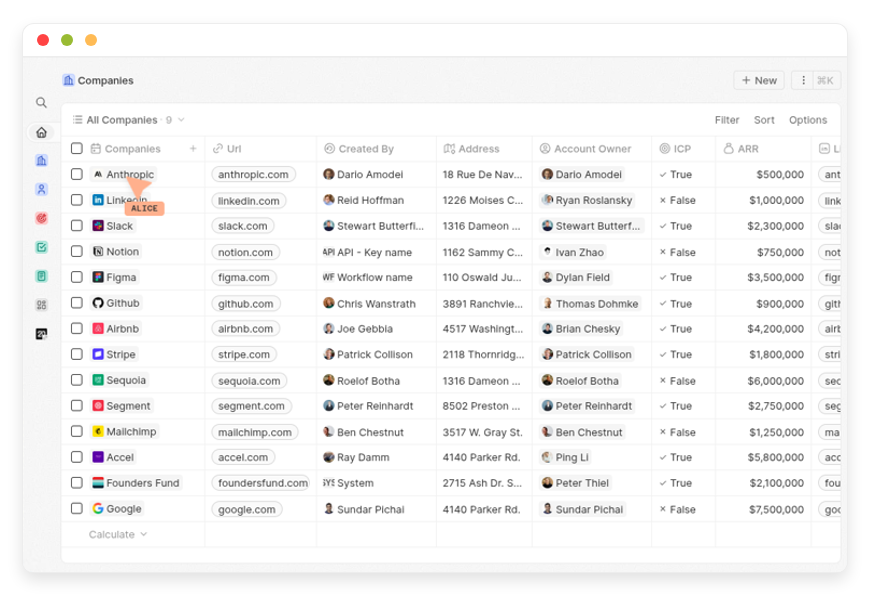
- Twenty is the modern open-source CRM of 2026, about 49,000 GitHub stars, a Notion-style interface, AGPL-3.0 licensed. It runs on DANIAN managed hosting at €9/month flat.
- EspoCRM is the proven open-source CRM you can run today: maintained since 2014, no-code admin, available on DANIAN now for €9/month flat, any number of users.
- The honest catch: Twenty is young. No built-in email marketing, telephony, or deep reporting yet. The win is modern design, ownership, and a flat price, not feature parity with Salesforce.
Why teams are leaving Salesforce and HubSpot in 2026
The trigger is almost always a renewal email with a bigger number on it. Per-seat pricing scales faster than a small team grows, and the jump between tiers is where the surprises live. The CRM still works; the invoice is the problem.
Salesforce Sales Cloud lists at $25 per user per month for Starter, $100 for Pro, and $175 for Enterprise, with most editions billed annually and a roughly 6% increase applied to the upper tiers in August 2025. HubSpot Sales Hub starts at $15 per seat on annual billing, then jumps to $90 per seat at Professional, the tier where sequences, automation, and forecasting live, plus a one-time $1,500 onboarding fee. Pipedrive runs $14 to $79 per seat depending on tier, with paid add-ons stacked on top. Attio is free for up to three users, then $29 to $69 per seat plus a metered credit system for its AI and enrichment features.
Every one of those numbers multiplies by headcount. Two new hires on Salesforce Pro is another $2,400 a year. The second cost, less visible, is lock-in: your records, your pipeline automations, and your integrations live inside the vendor, and leaving means rebuilding. The product you are really paying for is the switching cost.
What "alternative" means here
There are three honest ways off an expensive CRM, and only one of them removes both the per-seat meter and the lock-in. Naming them plainly saves a lot of wasted evaluation time.
Cheaper SaaS. Moving from Salesforce to a lower-priced proprietary CRM trims the bill, but the model is unchanged: still per seat, still hosted by a vendor, still your data on someone else's terms. Self-hosted open source. You run the software yourself on a server you control. The licence is free and the data is yours, but you own the patching, the backups, and the 2am pager. Managed open source. You own the software and the data; someone else runs the server. That is the path DANIAN takes, a flat €9 per app per month covers the hardware, updates, daily backups, monitoring, and support, with no per-seat charge.
One thing this post will not pretend: a €9 managed open-source CRM is not a Salesforce clone. The €9 buys the running of the software, not a feature-matched copy of a $175-a-seat product. Open-source CRMs carry smaller integration ecosystems, and Twenty in particular is a young project. The case for them rests on ownership, a flat price, and, for Twenty, a genuinely modern interface, not on out-feature-ing the incumbents.
Twenty is the open-source CRM you can run today, fully managed, for €9/month flat, any number of users.
The shortlist: five open-source CRMs worth your time
These five cover the realistic choices in 2026. Two of them, Twenty and EspoCRM, are the ones DANIAN runs as a managed service. The other three are strong projects you would self-host or put on a VPS.
Twenty: the modern one
Twenty is a CRM built in 2023 by a Paris team, backed by Y Combinator, and licensed under AGPL-3.0. It has grown to over 60,000 GitHub stars, making it the most-starred open-source CRM and the fastest-growing in the category. The stack is modern, React front end, NestJS back end, a metadata-driven GraphQL API, and the interface borrows from Notion: keyboard shortcuts everywhere, a native dark mode, table and Kanban views you can shape per object. Custom objects and fields are free and editable in the settings, no SQL and no developer required. Its cloud workspaces ship a built-in connector for AI agents like Claude and ChatGPT. Best for teams that want a clean, ownable CRM and care about how the tool feels day to day. Available on DANIAN managed hosting today at €9/month flat, any number of users, with the same 7-day free trial as every other app.
EspoCRM: the proven one
EspoCRM has been maintained since 2014 and licensed under AGPLv3 the whole time. It is a full CRM, leads, contacts, accounts, opportunities, marketing campaigns, support cases, with a no-code Entity Manager that lets a non-developer add fields, build new record types, and edit layouts from the admin panel. It runs light, idling at a few hundred megabytes of memory, and its CSV import wizard handles column mapping and de-duplication, which matters when you are bringing years of records across. Best for an operations lead who wants a working CRM today and does not want to touch a server. Available on DANIAN now: EspoCRM, available today at €9/month flat, any number of users.
SuiteCRM: the deep one
SuiteCRM is an AGPL-3.0 fork of SugarCRM's community edition, with a reported five million users and the deepest feature set of any open-source CRM: quotes, contracts, workflow engines, and a large module library accumulated over a decade. It is heavier to set up and run than the others, and its interface shows its age. Best for a team that needs Salesforce-style depth and has the technical capacity to host and maintain it. Self-host it, or run it on a VPS.
CiviCRM: the membership one
CiviCRM is a long-established, AGPL-3.0 platform built specifically for nonprofits, associations, and advocacy groups. Where the others model a sales pipeline, CiviCRM models members, donors, events, and contributions, with the reporting that fundraising and membership work needs. Best for an association, charity, or cultural body that manages people and gifts rather than deals. Self-host it, often alongside a CMS.
Dolibarr: the all-in-one one
Dolibarr is a GPL-3.0 platform that combines CRM with invoicing, inventory, and basic accounting in one modular system. The CRM is not as deep as Twenty, EspoCRM, or SuiteCRM, but for a small business that wants pipeline and invoices in the same place, the trade can be worth it. Best for an SMB that wants one system for sales and billing without per-user fees. Self-host it, or use a community host.
| CRM | Licence | Best for | Managed by DANIAN |
|---|---|---|---|
| Twenty | AGPL-3.0 | Modern interface plus data ownership | Available today |
| EspoCRM | AGPLv3 | No-code admin, running today without a developer | Available today |
| SuiteCRM | AGPL-3.0 | Salesforce-depth features, technical team | Self-host |
| CiviCRM | AGPL-3.0 | Nonprofits, donors, members, events | Self-host |
| Dolibarr | GPL-3.0 | CRM plus invoicing and inventory in one | Available today |
The cost math: per seat versus flat per app
Here is the difference that drives the search. The proprietary CRMs charge per user, so the column grows with the team. The managed open-source row is flat: one app, €9 a month, whether three people use it or thirty. At €108 a year it sits below every other row at both team sizes, and the gap widens as you add people.
| CRM (tier) | Pricing model | 3 users / yr | 10 users / yr |
|---|---|---|---|
| Salesforce Starter | $25 / user / mo | $900 | $3,000 |
| Salesforce Pro | $100 / user / mo | $3,600 | $12,000 |
| HubSpot Sales Starter | $15 / seat / mo | $540 | $1,800 |
| HubSpot Sales Pro | $90 / seat / mo + $1,500 once | ~$4,740 (yr 1) | ~$12,300 (yr 1) |
| Pipedrive Growth | $39 / seat / mo | $1,404 | $4,680 |
| Attio Plus | $29 / user / mo | $1,044 | $3,480 |
| Twenty or EspoCRM on DANIAN | €9 / app / mo flat | €108 | €108 |
Two honest caveats. The €9 covers a base allocation of compute and storage; a large database or heavy use can need a resource bump, which costs more. And the open-source CRMs do not match Salesforce or HubSpot feature for feature, you are buying ownership and a flat price, then bringing your own integrations where you need them.
One flat price covers hardware, security, updates, backups, monitoring, and support, for any app in the catalogue.
How to pick: three questions to ask yourself
The right answer depends less on stars and more on what your team needs and who will run the thing. Three questions sort most of it out.
Do you need built-in marketing, calling, or deep reporting today? If sequences, a dialer, and forecasting dashboards are core to how you sell, Twenty is not there yet, and EspoCRM or even staying on your current CRM may serve you better this quarter. If you mainly need contacts, companies, and a pipeline you control, both open-source options fit.
Who is going to run it? Self-hosting any of these means owning the upgrades, the backups, and the on-call. If that is a job nobody on your team wants, a managed service removes it, DANIAN patches, backs up daily, and answers chat when something breaks. If you have the in-house comfort and want total control, self-hosting on a VPS is a legitimate path.
How many people will touch the CRM? At three users the per-seat math is annoying; at ten or twenty it is the whole decision. The more seats you would be paying for, the more a flat per-app price saves, and the more obviously the open-source route pays back.
Migrating off Salesforce or HubSpot, honestly
The mechanics are manageable, but go in knowing what does and does not come across. Both Twenty and EspoCRM import contacts and companies from a CSV, export from Salesforce or HubSpot, map the columns, and load. For larger or repeated migrations, Twenty's GraphQL API and EspoCRM's REST API let you batch records in. EspoCRM's import wizard is the more forgiving of the two for a non-technical user, with built-in de-duplication.
A migration that goes smoothly tends to follow the same order. Run the new CRM in parallel for a week or two before you cut over, keep the old system read-only and stop adding new records to it. Move companies and accounts first, then contacts, then open deals or opportunities, because contacts reference the company they belong to and deals reference both. Export a clean CSV from the old system, delete the columns you never used, and fix obvious duplicates in the spreadsheet before import rather than after. Rebuild only the automations you relied on, not every workflow that accumulated over the years; most teams discover they were carrying rules nobody could explain. Re-point your forms and inbound integrations last, once you trust the data is landing where you expect.
What does not migrate is the platform-specific work: your HubSpot sequences, Salesforce flows, and custom automations are tied to those products and have to be rebuilt in the new tool. Records move; logic does not. One operational note that argues for managed hosting, open-source CRM upgrades can include forward-only database migrations, so a backup before every upgrade is not optional. On DANIAN, that backup-and-upgrade discipline is the part you are paying us to handle; you bring the data and run your business.
Frequently asked questions
Cost and pricing
How much does an open-source CRM cost compared to Salesforce or HubSpot?
The software is free to licence; you pay only to run it. On DANIAN that is €9 per app per month, flat, for any number of users. Salesforce Pro is $100 per user per month and HubSpot Sales Pro is $90 per seat plus a $1,500 onboarding fee, so a 10-person team pays around $12,000 a year.
Does the €9/month price change as I add users?
No. DANIAN charges €9 per app per month, not per seat, so the price is the same whether three people or thirty use the CRM. That flat model is the core difference from Salesforce, HubSpot, Pipedrive, and Attio, which all multiply their per-seat rate by your headcount every month.
Are Twenty and EspoCRM really free?
The software is free and open source, Twenty under AGPL-3.0, EspoCRM under AGPLv3. What is not free is running it: a server, updates, backups, monitoring, and support all cost time or money. DANIAN bundles all of that into €9 per app per month so you get the open-source software without operating it yourself.
What does the €9/month include?
It covers hardware, security patching, software updates, daily off-site backups, monitoring, and 24/7 chat and email support, with a base allocation of compute and storage. Resource upgrades for a large database cost more and only happen with your consent. There is no per-seat charge and no separate fee for the open-source licence.
Choosing a tool
What is Twenty CRM?
Twenty is an open-source CRM started in 2023 and licensed under AGPL-3.0, built on a modern stack with a Notion-style interface. It models companies, people, and deals, supports custom objects without code, and exposes a GraphQL API. With over 60,000 GitHub stars it is the most-starred open-source CRM and the fastest-growing in the category.
Is Twenty a real Salesforce alternative or just a clone?
It is a real, production-used CRM, not a demo, but it is younger and narrower than Salesforce. Core CRM features like contacts, companies, deals, custom objects, and the API are stable. The win is a modern interface and full data ownership, not matching Salesforce's depth of reporting, marketing, and marketplace apps.
What can't Twenty do yet?
As of its 2.x releases, Twenty has no built-in email marketing, no SMS, and no telephony or dialer. Its reporting is basic, custom forecasting is underdeveloped, single sign-on beyond Google is still on the roadmap, and there is no native mobile app yet. For outbound email you would pair it with a separate tool like Mautic or Listmonk.
Should I choose Twenty or EspoCRM?
Choose Twenty if a modern, Notion-like interface and a clean API matter most and you can wait for its newer features to mature. Choose EspoCRM if you want a proven, full-featured CRM today with no-code admin and built-in marketing and support modules. Both EspoCRM and Twenty run on DANIAN today.
How does an open-source CRM compare to Pipedrive or Attio?
Pipedrive and Attio are easier to start with and have more built-in integrations, but both bill per seat, Pipedrive from $14 to $79 and Attio from $29 to $69, plus add-ons or credits. An open-source CRM trades some out-of-the-box polish for data ownership and a flat price that does not grow with your team.
Data and switching
Can I move my data out later if I leave?
Yes. The CRM and its database are yours, you can export records over the API or as files, and download a full backup on demand. There is no proprietary data format holding you in. That portability is the point of open source: the software and the data belong to you, and DANIAN only operates them.
How do I migrate from Salesforce or HubSpot?
Export your contacts, companies, and deals to CSV and import them, EspoCRM has a mapping wizard with de-duplication, and Twenty imports CSV or accepts records through its GraphQL API. Plan to rebuild any sequences, flows, or custom automations, since those are platform-specific and do not transfer. Records move across; the automation logic has to be recreated.
Who owns my customer data on managed open-source hosting?
You do. DANIAN runs the software and the server, but the data and the open-source application are yours to export or take elsewhere at any time. This is the structural difference from proprietary SaaS, where the vendor holds your records inside their platform on their terms.
Is my CRM isolated from other customers?
Yes. Each app runs in its own hardened container with isolated networking and its own reserved compute, memory, and storage. The underlying servers are shared, that density is how the €9 price works, but the boundaries between containers are real, and backups and patching are run per app.
Running it
Do I need a developer to run Twenty or EspoCRM?
Not on managed hosting. DANIAN deploys the CRM, patches it, updates it, and backs it up, so no server skills are needed on your side. If you self-host instead, expect to be comfortable with a Linux server, Docker, and an upgrade-and-backup routine, which is exactly the work a managed service removes.
What happens when there is a new version or a security patch?
On DANIAN, we apply updates and security patches and take a backup before each upgrade, so you do not track releases or run migrations yourself. Open-source CRM upgrades are sometimes forward-only at the database level, which is precisely why a tested backup-first process matters and why handing it to a managed service is worth it.
Can I get help if something breaks?
Yes. DANIAN runs 24/7 chat and email support, and a real person replies rather than a queue or a bot. Support also handles tasks like DNS edits and configuration tweaks that other hosts gate behind paid professional services. The 7-day trial is a good way to test how the support actually responds.
Is Twenty available on DANIAN?
Yes. Twenty runs fully managed on DANIAN today at €9 per app per month, with the same 7-day free trial as every other app. EspoCRM is also available if you want a proven CRM with built-in marketing and support modules.
Which region is my CRM hosted in?
You choose. DANIAN runs across 21 datacenter locations on six continents, so you can place your CRM near the people who use it for lower latency. Application data stays in the region you pick, and you can ask support to advise on the closest option for your team.
What to do this week
Twenty is running on DANIAN today: start its 7-day trial, import a CSV of your contacts, and give it two weeks of real use before deciding. If you want a more proven, full-featured option, EspoCRM makes the side-by-side comparison, at the same €9 a month. Either way, the test is simple: pick one, load your data, and see whether a CRM you own beats a CRM you rent.
Run Twenty, fully managed, for €9/month flat. EspoCRM runs in the same catalogue.
DANIAN OÜ, managed hosting for 150+ open-source apps across 21 datacenter locations. €9 per app, per month, all included.