Open-source back-office stack for restaurants 2026
The restaurant’s open-source back-office stack in 2026 — recipes, staff, and admin you run yourself
The short version
- This is a back-office stack for a small restaurant: recipes, rotas, staff chat, bookings and subscription tracking. It is not a point-of-sale, a payment system, or a table-management platform.
- Five open-source apps cover the jobs: Mealie, Nextcloud, Mattermost, EasyAppointments and Wallos.
- DANIAN runs each one for €9 a month. Five apps is €45 a month, flat, no matter how many staff use them.
- The per-seat tools they replace — business email, file sharing and staff chat — start around $8 a seat each and climb with every hire.
- Start with one app, run it free for 7 days, then add the rest as you go.
What this stack is, and what it is not
This is the admin layer behind a restaurant, not the front of house. The five apps below handle recipes, staff scheduling, internal chat, private-event bookings and subscription tracking. None of them takes a card, runs a till, or manages your dining room. Keep your point-of-sale and reservation platform; this runs the paperwork around them.
A restaurant runs on two kinds of software. One faces the guest: the till, the card reader, the floor plan, the reservation page. The other faces the team: recipes, rotas, staff chat, bookings and the bills behind them. This post is about the second kind.
Be clear on the boundary before you buy. What this stack does not do:
- take card payments or run a till — that is your POS;
- manage a live table floor or turn times — that is a reservation platform;
- track stock, food cost, or plate margins — Mealie is recipe documentation, not inventory;
- keep your books — Wallos tracks your own subscriptions, not your accounts.
What it does do is the admin that eats an owner’s evenings. It standardises recipes so every cook plates a dish the same way. It keeps the rota and the supplier paperwork in one place.
It moves staff chat off a personal phone group and into channels. And it shows you every software subscription the venue pays for. That is the whole job: the back office, run for you.
Who this is for, and who should skip it
This suits a small independent venue on thin margins: one site or a few, an owner or manager doing the admin, and a team that does not need enterprise tools. It is the wrong fit if you need front-of-house software, high-volume table management, or one system that does payments, floor and kitchen together.
The buyer here is the person who opens the laptop after close. They are not a developer and do not want to be one. They want the recipes, the schedule and the supplier files somewhere reliable. And they want one predictable bill instead of five creeping ones.
Skip this stack if your main pain is on the floor. If you need fast table turns, a live waitlist and a kitchen display tied to orders, buy software built for that. If you run twenty sites with central procurement, you have outgrown this. None of those jobs is what these five apps are for.
The five tools, and the job each one does
Each app below does one back-office job for a small venue. All five are open-source, so the data stays yours. DANIAN runs each for €9 a month, with hosting, updates, daily backups and support included. Here is the specific job, the tool it replaces, and where the fit gets loose.
Mealie — your recipes and prep notes, written down once
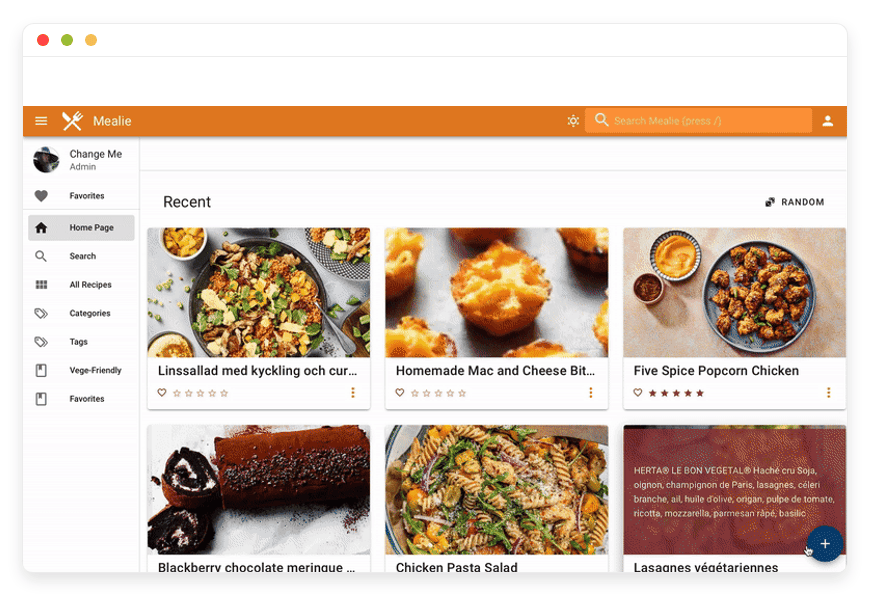
Mealie is a self-hosted recipe manager. It stores your dishes, method, yields and prep notes in one searchable place. Paste a URL and it imports the recipe; scale a batch and it adjusts the quantities. For a kitchen, it is the reference a new cook reads on day one.
Most small kitchens keep recipes in three places: a binder, the chef’s head, and photos on a phone. That works until the chef is off and a dish goes out wrong. Mealie puts the method, the plating and the prep list where every cook can open it.
It replaces a paid recipe or prep-doc subscription, or the sprawl of shared documents inside an office suite. It is licensed under the AGPL and has roughly 9,000 stars on GitHub. That means it is well-used and still actively built.
Be honest about the edge: Mealie documents recipes, it does not count stock or cost a plate. If you need inventory and food-cost figures, run a costing tool alongside it. It suits any back-of-house team, from one chef to twenty. Switching is light: type or import your top recipes over an afternoon.
On DANIAN, Mealie runs for €9 a month, backups and updates handled, in the region you choose. You log in and start adding dishes. For a deeper look, see Mealie for standardized recipes.
Nextcloud — rotas, supplier files and the shared drive
Nextcloud is a self-hosted file and collaboration platform. It is your shared drive for rotas, supplier contracts, invoices, allergen sheets and training docs. It adds a shared calendar and lets managers share files by link. Think of it as the office suite for the back room, on your own space.
Rotas and supplier paperwork tend to scatter across email, spreadsheets and a manager’s desktop. Nextcloud gives the team one folder structure, with a shared calendar for shifts and deliveries. Files share by link, so a supplier or a manager gets exactly what they need.
It replaces a per-seat office suite such as Google Workspace, or a paid file-sharing plan. Google Workspace Business Starter lists at $8.40 a user each month, and the tier with proper shared drives costs more. Nextcloud is AGPL-licensed and among the most widely run self-hosted projects there is.
The honest edge: Nextcloud is files, calendar and docs, not a payroll or scheduling engine with shift-swapping logic. For complex rota rules, a dedicated scheduling tool may suit better. It works for the whole team, from front-of-house to kitchen. Moving in is a drag-and-drop of your existing folders.
On DANIAN, Nextcloud runs for €9 a month in the region you choose. We handle the updates and take a daily off-site backup. For setup detail, see Nextcloud for rotas and supplier docs.
Mattermost — staff chat that is not a personal phone group
Mattermost is a self-hosted team-chat platform. It moves shift handovers and kitchen-to-floor messages off a personal phone group and into proper channels. Set up a channel per section — kitchen, front-of-house, managers — and keep the history. The core is open-source under the MIT licence.
Many venues run on a personal messaging group that mixes work with everything else. It has no structure, no real search, and it lives on one person’s phone. Mattermost gives you channels by section, searchable history, and a workspace that belongs to the business, not to an app account.
It replaces the paid tier of a tool like Slack. Slack’s free plan now hides messages older than 90 days, which is the moment most teams start paying. Slack Pro runs about $8.75 a seat each month; Mattermost charges nothing per seat because you run it yourself.
The edge here is narrow: Mattermost is chat, not scheduling or task-tracking. It will not build your rota or take a booking. It fits the whole team, and most people already know how a chat app works. Switching is a morning: make the channels and invite the staff.
On DANIAN, Mattermost runs for €9 a month, patched and backed up, in the region you choose. Your team logs in to a web address that is yours.
EasyAppointments — a booking page for private events and tastings
EasyAppointments is a self-hosted scheduler. It puts a booking page on your own site for private events, tastings, chef’s-table seats and consultations. Customers pick a slot; you get an email and a calendar entry. It is appointment-style booking, best for seats you take one at a time.
Plenty of small venues take private bookings by phone, email and a paper diary. That works until two staff double-book the same Saturday. EasyAppointments gives guests a booking page with your services, your availability and your rules, and it syncs to a calendar.
It replaces a paid booking widget or a per-booking commission. The project is open-source under the GPL, syncs with common calendars, and sends email confirmations on its own. There is no upstream subscription and no cut on each booking — you run it on your space.
This is the loosest fit in the stack, so read it carefully. EasyAppointments is appointment-style scheduling, not a high-volume table-turn system. For a busy floor with walk-ins, turn times and a waitlist, a reservation platform built for restaurants is the right tool. Use it for bookings you take by the slot — events, tastings, a chef’s table, a consultation.
On DANIAN, EasyAppointments runs for €9 a month in the region you choose, updates and backups handled. For setup detail, see EasyAppointments for bookings.
Wallos — every software subscription the venue pays for
Wallos is a self-hosted subscription tracker. It lists every recurring charge the venue pays — the POS fee, the delivery-platform cut, design tools, and the apps in this stack — with renewal dates and totals. It was built for personal finance, and it works just as well for a small business’s software bill.
Subscription sprawl is a quiet cost in hospitality. A booking add-on here, a design tool there, two things the last manager signed up for. Wallos puts them in one dashboard with renewal dates, categories and a monthly total, in your currency.
It replaces a spreadsheet that nobody updates, or a paid subscription-tracking app. Wallos is GPL-licensed, with roughly 7,000 to 8,000 stars on GitHub and frequent releases. Seeing the full bill in one place is usually how a venue finds the charges it forgot.
The edge: Wallos tracks what you pay, it does not pay or cancel anything for you. It is not accounting software and will not file your books. It suits the owner or whoever watches the money. Setup is an evening of typing in your current subscriptions.
On DANIAN, Wallos runs for €9 a month in the region you choose, backed up daily.
How the five fit together
Run alone, each app earns its €9. Run together, they cover the back office end to end. Recipes and files form a back-of-house knowledge base; chat and the calendar keep service organised; the booking page feeds the calendar; and the tracker watches the whole software bill, including these apps.
A natural pairing is Mealie and Nextcloud. Recipes and prep notes live in Mealie; the rota, supplier files and allergen sheets sit in Nextcloud. Together they are the reference a new starter reads before their first shift.
Mattermost and the Nextcloud calendar keep day-to-day service moving. The kitchen channel handles handovers; the calendar holds shifts, deliveries and private bookings. EasyAppointments drops each new event straight onto that calendar, so nothing is double-booked.
Over the top of all of it, Wallos shows the running cost. It lists the five apps beside the POS fee and the delivery cut. The owner sees the true monthly software spend in one view.
The cost: five apps, one flat bill
DANIAN charges €9 per app, per month, with hosting, updates, daily backups, monitoring and support included. Five apps is €45 a month, and it stays €45 whether three people use them or thirty. The per-seat tools these replace start around $8 a seat and grow with every hire.
Here is the stack at a glance, with the tool each app replaces and the licence it ships under.
| App | Replaces | Best team size | Licence | DANIAN |
|---|---|---|---|---|
| Mealie | Recipe/prep docs, scattered Google Docs | Any back-of-house, 1–20 | AGPL | €9/mo |
| Nextcloud | Google Workspace, paid file sharing | Whole team | AGPL | €9/mo |
| Mattermost | Slack paid tier | Whole team | MIT (core) | €9/mo |
| EasyAppointments | Paid booking widgets | Owner/manager taking bookings | GPL | €9/mo |
| Wallos | A spreadsheet or paid tracker | Owner/bookkeeper | GPL | €9/mo |
The maths is simple because the pricing is. Five apps at €9 each is €45 a month, flat. Compare that with the per-seat bundle for the same jobs. Say six of your team need accounts.
| Back-office job | Per-seat tool | List price | At six accounts |
|---|---|---|---|
| Files, email, docs | Google Workspace Business Starter | $8.40/seat/mo | ~$50/mo |
| Staff chat | Slack Pro | $8.75/seat/mo | ~$53/mo |
| Both, combined | — | — | ~$103/mo |
| All five apps | DANIAN | €9/app/mo, flat | €45/mo |
Those two tools alone come to roughly $103 a month, before any booking widget or recipe subscription. At today’s rates that is around €95. The DANIAN stack is €45 for all five apps.
The difference is not only the number; it is the shape. The SaaS bundle is priced per seat, so it grows every time you hire. DANIAN is priced per app, so €45 covers the whole team, this year and next.
You can try one app free for 7 days, with no card, and watch the bill before you commit.
How to start without disrupting service
Do not migrate everything at once. Pick the one job that hurts most — usually recipes or staff chat — and run that app for a 7-day free trial. Use it through a real service week, then add the next app. Within a month you can have the whole back office moved, one tool at a time.
The safe order is one app at a time. Start where the pain is loudest. If new starters keep plating dishes wrong, begin with Mealie. If the staff phone group is chaos, begin with Mattermost.
Run the first app on a 7-day free trial, with no card needed. Put real recipes or real shifts into it, not test data. If it earns its keep through a busy week, keep it and add the next. There is no rush and no lock-in; the data is yours to export at any point.
The bottom line
A small restaurant does not need enterprise software to run its back office. Five open-source apps — recipes, files, chat, bookings and a subscription tracker — cover the admin behind the service. On DANIAN that is €45 a month, flat, with everything managed. It is not your POS, and it is not meant to be.
Keep the front of house on the tools built for it. For the paperwork behind it, an open-source stack costs less and the data stays yours. Start with the one app that would save you the most time this week.
Curious what it adds up to? See what each app costs — it is €9, every time.
Questions restaurant owners ask
These are the questions restaurant owners ask before they commit. They cover what the stack does and does not do, what it costs to run, where the data lives, and how to leave. Each answer is short on purpose; the detail is in the sections above.
Is this a point-of-sale or payment system?
No. This is a back-office stack, not a point-of-sale or payment system. It runs recipes, staff scheduling, internal chat, bookings and subscription tracking. It does not take card payments, run a till, or manage a table floor. Keep your POS for service; run this for the admin behind it.
Does it integrate with my POS or accounting software?
Not out of the box. This stack is a set of separate apps, not one suite wired into your till or your books. Some apps offer an API or calendar sync, but they do not plug into your POS or accounting software. Keep those systems; this runs the admin beside them.
Can EasyAppointments replace OpenTable for a busy service?
EasyAppointments runs a booking page for private events, tastings, chef’s-table seats and simple reservations. It is appointment-style scheduling, not a high-volume table-turn system. For a busy Friday floor with walk-ins and turn times, a reservation platform built for restaurants fits better. Use it for bookings you take by the slot.
Can I take deposits or payments through EasyAppointments?
No. EasyAppointments is a booking page, not a payment processor. It books a slot and sends a confirmation; it does not take a card on its own. To collect a deposit, send a payment link or take it through your usual POS. Booking and money stay separate here.
Is Mealie kitchen inventory or food-cost software?
No. Mealie is recipe and prep documentation, not kitchen inventory or food-cost software. It stores your recipes, method, yields and prep notes so every cook plates a dish the same way. It does not track stock levels, supplier prices, or plate margins. Pair it with a costing tool if you need those.
Does Mealie handle allergens and dietary labels?
Mealie stores allergen and dietary notes as part of each recipe, so the kitchen can see them at a glance. That is documentation, not a labelling or food-safety system. For legal allergen labelling on packaging or menus, use a tool built for that job.
Which app should I start with?
Start with the job that hurts most. For many kitchens that is Mealie, for standardised recipes; for a team buried in a phone group, it is Mattermost. Run one app on the 7-day free trial, prove it through a real week, then add the rest.
Can I run just one app, or do I have to take all five?
Yes. DANIAN bills per app, so you can run one and add others later. Many venues begin with a single app, recipes or chat, and grow the stack over a few months. There is no bundle you are forced to buy, and no per-seat fee on top.
What does it cost to run all five with DANIAN?
Five apps on DANIAN cost 45 euros a month, billed as five flat 9-euro apps. That price covers hosting, updates, daily backups, monitoring and support for each app. It does not change when you hire more staff, because DANIAN charges per app, not per person.
Is this cheaper than Google Workspace plus Slack for a small restaurant?
For a small team, yes. Five apps on DANIAN are 45 euros a month, flat. Google Workspace Business Starter and Slack Pro alone run about 103 dollars a month for six accounts, before the booking and recipe tools. The flat price also does not climb as you hire.
How is this different from the free plans of Google and Slack?
Free plans have limits that bite a working team. Slack free hides messages older than 90 days; a personal email account is not built for shared business files. The paid step is where most teams land. The open-source stack does the same jobs without a per-seat fee.
Can my whole team use the apps without per-seat fees?
Yes. DANIAN prices per app, not per person, so adding staff accounts does not add to the bill. A ten-person team and a three-person team pay the same 9 euros for the same app. Heavy use can need more resources, which we add only with your consent.
Can I import my existing recipes and files?
Yes. Mealie imports a recipe straight from a URL, so you can pull in your existing dishes fast. Nextcloud takes a drag-and-drop of your current folders. Most venues move their core recipes and files in an afternoon, one app at a time.
Do I need technical skills to run these apps?
No. DANIAN runs the servers, applies updates, takes daily backups and monitors each app around the clock. You log in and use the software the way you would any web tool. Setup help is included, and a named person replies when something needs a human.
What equipment or internet do I need to run this?
Just a web browser and an internet connection. DANIAN runs the apps on its own servers, so there is nothing to install or keep running at the venue. No on-site box, no static line, no patching. You open a web address and log in, on a laptop, tablet or phone.
Can my staff use these apps on their phones?
Yes. Mealie, Nextcloud and Mattermost have mobile apps or run in a phone browser, which suits a floor team that lives on their phones. EasyAppointments and Wallos are managed from a browser too. Your staff log in to a web address that is yours.
Can more than one location use the same setup?
Yes. One Nextcloud or Mattermost can serve several sites, with a channel or folder per location. You still pay per app, not per site, so two venues on one app cost the same 9 euros. Add more apps or more resources as the group grows.
Can I use my own domain or a custom subdomain?
Yes. Each app runs on a custom subdomain, and you can use your own domain with our help. Bookings, files and chat then sit on a web address that carries your name, not a generic one. We handle the DNS setup so you do not have to.
Do I get support, and how fast does someone reply?
Support runs by email and ticket, around the clock. A named person replies, not a queue or a bot, and the reply is usually quick. We also do the setup work that needs a human, like DNS or a config change. The 7-day trial is the place to test it.
How often is my data backed up, and can it be restored?
Every app is backed up daily, off-site, as part of the 9-euro price. If something goes wrong, we can restore from a recent backup on request. A backup on the same machine is not a backup, so yours are kept separately. Your data is also yours to export at any time.
Where is my data stored?
Your data sits in the region you pick, across 21 datacenter locations on six continents. You choose the location per app when it is set up. Your files, recipes and messages stay exportable, so the data is always yours to take with you.
Is open-source software reliable enough to run a restaurant on?
Yes. These are widely used, actively maintained projects, not weekend code. DANIAN patches each one, takes daily backups, and runs every app in its own isolated container. You get the updates and the monitoring a business needs, without managing any of it yourself. Open-source here means the data is yours.
What happens if I want to leave DANIAN?
You can export your data and leave at any time. The apps are open-source, so your recipes, files, schedules and records are yours, not locked to us. Download them or move them to another host. A failed payment does not delete anything; we wait and reach out.
Projects and prices referenced: Mealie, Nextcloud, Mattermost, EasyAppointments, Wallos; Google Workspace pricing and Slack pricing, checked June 2026. Software prices change; verify before you decide.