After Scribd's unlimited cap - own your library 2026
When Scribd’s unlimited reading ended: where readers went in 2026
Scribd built its reputation on one promise: pay a flat monthly fee, read as much as you want. That promise is gone. The reading service Scribd renamed to Everand now caps premium titles behind monthly credits, and a lot of heavy readers have started asking a different question — not “what can I borrow this month” but “what do I actually own?”
- In late October 2024, Everand — the books-and-audio service Scribd rebranded to in November 2023 — dropped unlimited reading. New plans cap premium titles behind monthly credits: Standard at $11.99 covers one title, Plus at $16.99 covers three.
- Existing subscribers kept legacy unlimited until their 2025 renewal. Once you switch to a new plan, there is no way back.
- Calibre-Web and Kavita serve an ebook library you already own — books you bought DRM-free, or files you already hold. They do not replace Everand’s catalog or its store.
- Hosting that library on a VPS runs about $44 a month plus your time. DANIAN runs the same software for €9 a month, with 30 GB of storage included.
- If your reading is mostly bestsellers you do not own, a subscription still fits. If you own your books, you can stop renting access to them.
What Calibre-Web and Kavita do — and what they don’t
Calibre-Web and Kavita are reading servers for books you already own. They organise your EPUB, PDF, and comic files and serve them to any browser or reading app. They do not include a catalog, a store, or a bestseller you have not bought. They change where your library lives, not what is in it.
This is the honest version of the story, and it matters before anything else. Everand is a subscription store. It holds more than 1.5 million licensed titles, including current bestsellers from the major publishers. If you want to read a book you do not own, you still buy it or borrow it from a library.
Calibre-Web and Kavita do none of that. They take the files you already have — books you bought without DRM, public-domain texts, your own documents — and give you a clean place to read them from any device. The pitch here is not “get the catalog for free.” It is “own the books you have, and stop losing access to them every time a plan changes.”
What actually changed at Scribd, now Everand
Scribd rebranded its books-and-audio service to Everand in November 2023. In late October 2024, Everand replaced unlimited reading with a tiered model. Standard, at $11.99 a month, includes one premium title credit; Plus, at $16.99, includes three. Magazines, podcasts, and a smaller open catalog stay available without a credit.
The split is worth keeping straight. The Scribd name now covers documents and PDFs. Everand is the brand for books, audiobooks, magazines, podcasts, and sheet music. The rebrand came first, in late 2023. The pricing change came almost a year later, in late October 2024.
The terms for existing users were firm. Anyone on the old unlimited plan kept it until their subscription renewed in 2025, after which the tiered plans became the only option. The coverage at the time was clear on one point: once you move off legacy unlimited, you cannot move back. As of 2026, Everand lists three tiers — Standard, Plus, and a higher Deluxe plan — over a catalog the company puts at more than 1.5 million titles.
Why readers started moving their libraries
Three things pushed heavier readers to look elsewhere: the cap itself, the one-way switch, and the ownership question. None of these hits a casual reader hard. All three land on the person who reads a dozen or more books a year and keeps what they read.
The cap is the obvious one. Under the old model, a fast reader could go through many titles a month for a flat fee. Under the new model, the same reader gets one premium title on Standard or three on Plus, for the same money or more. Most people read between zero and five books a year, so the cap fits them fine. The roughly one in four who read eleven or more are exactly the readers it pinches.
The one-way switch raised the stakes. Knowing you cannot return to a plan makes the change feel less like a tweak and more like a door closing. And underneath both is the ownership question. A subscription is access you rent. The day you stop paying, the library is gone — not damaged, just no longer yours to open.
The shortlist: two ways to own your library
If you decide you would rather own and serve your own collection, two open-source tools cover almost every ebook case. Both are free software you could run yourself, and both are apps DANIAN runs for €9 a month if you would rather not.
Calibre-Web — your Calibre library in a browser
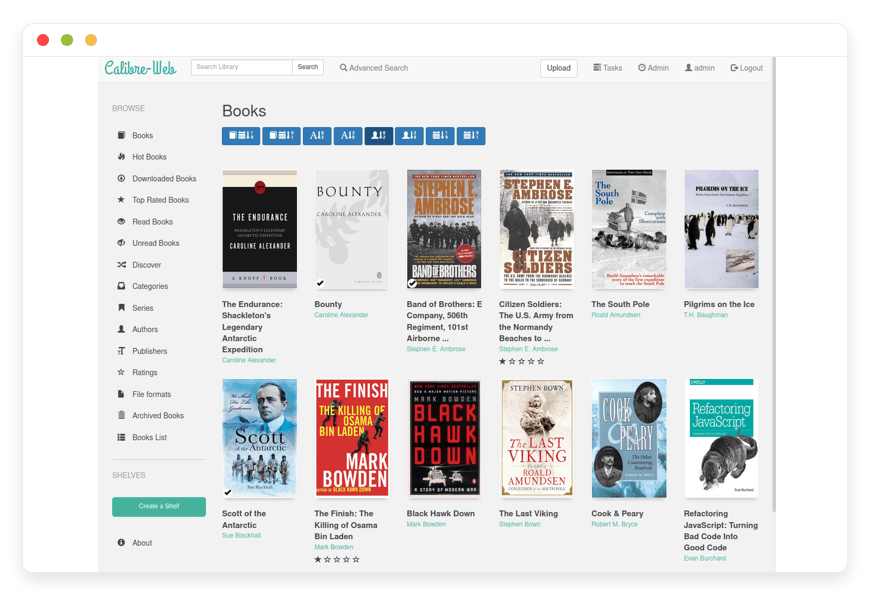
Calibre-Web is a web front end for a Calibre ebook library. It has more than 17,500 GitHub stars and ships under the GPL-3.0 license. It browses, reads, and downloads your EPUB and PDF files from any browser, with OPDS feeds for reading apps. Best for anyone with an existing Calibre collection who wants it online.
If you have spent years building a Calibre library on a laptop, Calibre-Web is the shortest path to reaching it from anywhere. It reads your existing Calibre database, keeps your metadata and covers, and adds per-user accounts so a household can share one server. You can read in the browser or pull books into a separate reading app over OPDS.
See managed Calibre-Web hosting: danian.co/calibreweb
Kavita — ebooks, comics, and manga
Kavita is a reading server for ebooks, comics, and manga. It ships under the GPL-3.0 license with roughly 6,000 GitHub stars. It reads EPUB, PDF, and comic formats such as CBZ and CBR, with format-specific readers, reading-progress sync across devices, and a send-to-Kindle option. Best for mixed libraries that include comics or manga.
Kavita is the better pick when your collection is more than plain ebooks. Its comic and manga readers handle CBZ, CBR, and similar archives with webtoon, single-page, and dual-page modes. It tracks where you stopped on each device, supports per-user access rules, and pulls in cover art and metadata. For a household with both novels and a comics shelf, one Kavita instance covers both.
Open Kavita for ebooks and comics: danian.co/kavita
For audiobooks rather than ebooks, Audiobookshelf fills the same role: a self-hosted server for audio files you own, under the GPL-3.0 license, with native iOS and Android apps and progress sync. The pattern is identical across all three — your files, your server, no subscription attached. The one practical difference is size, which the storage note below covers.
What it costs: rent a catalog, or host a library you own
These are not the same product, so the table below is not a feature match. It shows the difference between renting access to a catalog and hosting a library you own. The two hosting rows — do it yourself, or have DANIAN do it — are the real comparison.
| Approach | Monthly cost | What you get | Who runs it | Leave anytime? |
|---|---|---|---|---|
| Everand Standard | $11.99 | One premium title credit a month, plus magazines and a limited open catalog | Scribd, Inc. | Access ends when you stop paying |
| Self-host on a VPS | ~$44 + your time | Your own ebook and comic files, on hardware you manage | You | Yes — the files are yours |
| Calibre-Web or Kavita on DANIAN | €9 flat | Your own ebook and comic files, 30 GB of storage included | DANIAN | Yes — export any time |
Everand is a subscription store; Calibre-Web and Kavita serve a library you own. The Everand row is here for the rent-versus-own contrast, not feature parity. SaaS pricing verified against the October 2024 change; check current pricing pages before quoting.
The self-host figure is a production-class VPS at about $24 a month, plus roughly $5 for backup storage and $15 for monitoring. That covers the machine, not the hours. Setup, security updates, certificate renewal, and the occasional 2am fix are yours to own. For someone who enjoys that work, it is a fair trade. For someone who just wants to read, it is a recurring tax in time.
The storage caveat, stated plainly
DANIAN runs Calibre-Web or Kavita for €9 a month per instance. That price covers the server, security updates, daily off-site backups, monitoring, and 30 GB of storage. Ebooks are small, so 30 GB holds thousands of them. Audiobooks are large, and a sizeable audio library can pass 30 GB.
The math is worth seeing. A typical ebook runs 1 to 5 MB, so a 30 GB allowance holds several thousand titles — more than most people will read in a lifetime. Audiobooks are a different shape: a single title often runs 200 MB to over 1 GB. A serious audiobook collection can pass the included 30 GB, and extra storage is €0.50 per GB per month.
One promise sits behind that number. Resources only change after you approve them. There are no silent overages and no surprise upgrades on your invoice. If your library grows past the included storage, you decide whether to add space before anything changes.
How to pick
Three questions settle most of it.
Do you own your books, or rent access to a catalog? If you mostly read current bestsellers you do not own, a subscription is still the right tool — keep it. Self-hosting is for the collection you own, not a way to get titles you have not bought.
Ebooks only, or comics and audiobooks too? Plain ebooks point to Calibre-Web, especially if you already use Calibre. Comics or manga point to Kavita. Audiobooks point to Audiobookshelf. A mixed shelf of novels and comics is the clearest case for Kavita.
Do you want to run a server, or have someone run it? If server work is something you enjoy, a VPS gives you full control. If it is not, €9 a month puts the same software on a managed instance and takes the upkeep off your plate.
Frequently asked questions
Does Calibre-Web or Kavita replace my Everand subscription?
No. They serve books you already own. Everand is a store with more than 1.5 million licensed titles, and these tools have no catalog of their own. If you want a book you do not own, you still buy or borrow it. They change where your library lives, not what is in it.
Calibre-Web or Kavita: which one should I choose?
Calibre-Web suits a plain-ebook library, especially an existing Calibre one. Kavita suits mixed shelves that include comics or manga. Both read EPUB and PDF in any browser. Pick by what your collection holds.
What file formats do these readers support?
Calibre-Web serves EPUB and PDF from a Calibre library, with OPDS feeds for reading apps. Kavita reads EPUB, PDF, and comic formats such as CBZ and CBR, with separate readers for manga and webtoons. Both run in any browser, so no app is required.
Can I read these books on my Kindle?
Yes, with one extra step. Kavita offers a send-to-Kindle option for supported files. Calibre-Web can email a book to your Kindle address, or feed a reading app over OPDS. Direct Kindle store browsing is not the model here.
Will this work on my phone, iPhone, or Android?
Yes. Both read in any mobile browser, so nothing needs installing. For ebooks, an OPDS reading app can connect to your instance. For audiobooks, Audiobookshelf adds native iOS and Android apps.
Can my whole household share one instance?
Yes. Calibre-Web and Kavita both support per-user accounts on one instance. Each reader gets a separate login and reading progress. One €9 instance can serve a household with no per-seat fees.
Can I read my library when I am away from home?
Yes. A managed instance stays online and opens from any browser, anywhere. There is no home server to expose or keep awake. Your library follows you, not a single device at home.
Can I move my Everand books into a self-hosted library?
Only books you own as DRM-free files. Subscription titles stay locked to Everand. Books you bought without DRM elsewhere, or files you already hold, import fine. Anything tied to a live subscription or to DRM does not transfer to a library you run yourself.
Can I import my Kindle or Amazon books?
Only files you hold without DRM. Most Kindle purchases carry Amazon DRM and stay inside Amazon. Books you own as plain EPUB or PDF import without trouble. These tools will not strip DRM for you.
How do I get my books onto the server?
You add your files to the instance, and the reader sorts them. Calibre-Web can import an existing Calibre database with its covers and metadata. Kavita reads folders of ebooks and comics. We can help with the first import.
Is self-hosting my own ebook library legal?
Serving files you own is a normal, lawful use. These tools do not break DRM or fetch books you have not bought. Whether you may remove DRM from purchased books depends on your country. This is not legal advice.
What about audiobooks?
Audiobookshelf is the audio counterpart, run the same way for €9 a month. It serves audiobooks and podcasts you own, with native mobile apps. The one caveat is size, since audio files dwarf ebooks. A large audio collection can pass the included 30 GB.
How much does DANIAN charge to host one of these?
€9 per month per instance. That covers the server, security updates, daily off-site backups, monitoring, and 30 GB of storage. There are no per-seat fees and no setup charge. A 7-day free trial runs without a card, so you can test a real instance first.
Is 30 GB of storage enough for my library?
For ebooks, almost always. A typical ebook is 1 to 5 MB, so 30 GB holds several thousand of them. Audiobooks are larger, often 200 MB to more than 1 GB each, so an audio library can pass 30 GB. Extra storage is €0.50 per GB, added only with your approval.
Is my library backed up if the server fails?
Yes. Every instance gets daily off-site backups inside the €9 price. A hardware fault does not mean a lost library. You can also export a full copy whenever you want.
What happens to my library if I stop paying DANIAN?
Your files stay yours. You can export your full library before you leave, and a failed card does not trigger deletion of your data. A library you own does not disappear the moment a subscription lapses. That is the core difference from renting access to a catalog.
What happens to my library if DANIAN shuts down?
The software is open source, so you are never locked in. You can export your whole library at any time. The same apps run on a VPS you control if you move. Your files do not depend on us to stay yours.
How is this different from running Calibre on my own computer?
Desktop Calibre lives on one machine and is reachable there alone. A hosted instance is online for every device at once. It adds household logins and reading-progress sync. The trade is a monthly fee instead of a free local tool.
How does this compare to running the software myself on a VPS?
A production-class VPS with backups and monitoring runs around $44 a month, before the hours you spend on setup, updates, and on-call. DANIAN runs the same open-source software for €9 and handles that upkeep. Self-hosting suits people who enjoy server work; managed hosting suits people who would rather read.
Should I cancel my Everand subscription?
Keep it if most of your reading is current titles you do not own. The catalog and store are the part self-hosting cannot replace. Cancel once your reading has shifted to books you already hold. For many heavy readers, that shift has happened.
What to do this week
Start by counting what you own. Open Everand and look at how many of your saved titles you can read without a credit, and how many you would need to buy outright. That number tells you whether a subscription still earns its place, or whether most of your reading is already books you hold.
If it is the latter, gather your DRM-free files into one folder and pick the reader that fits: Calibre-Web for a Calibre library, Kavita for ebooks and comics. You can run either yourself on a VPS, or put it on a managed instance and skip the upkeep. Either way, the library ends up somewhere a plan change cannot reach.
Sources: coverage of the October 2024 model change (Book Riot, Good e-Reader); current model and pricing (Everand); project sources (Calibre-Web, Kavita). Subscription prices change; verify against current pages before relying on them.