
Turn Web Analytics into Agency MRR
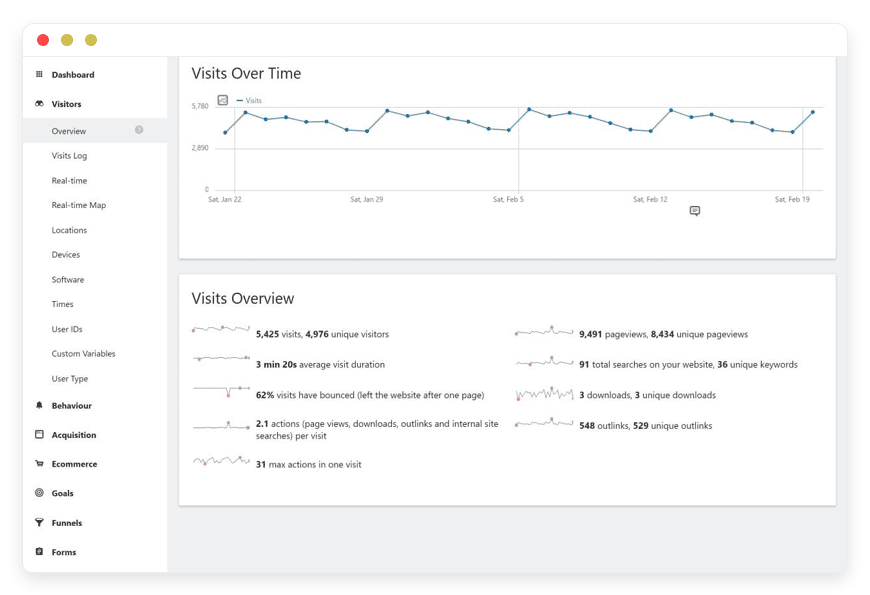
Most agencies do analytics work constantly and bill almost none of it. It shows up inside website projects as a tag install, inside marketing retainers as a monthly screenshot, inside support calls as "while you are in there, check why traffic dropped". The work is real, the revenue is not. This guide is the opposite construction: analytics as a standalone monthly service, priced like a product, tracked like MRR, and built to survive client churn.
TL;DR
- Retainer agencies lose about 18% of clients a year; project-based shops lose about 42%. The same analytics work sold as a retainer simply lasts longer.
- The most common agency retainer band is $1,001 to $2,500 per month, and the median blended agency billing rate is about $84 per hour. Managed analytics slots cleanly under both anchors.
- A managed Matomo instance costs EUR 9 to EUR 22 per month in tooling. Sold at EUR 99 to EUR 249 per month per client, delivery is 2 to 4 hours, and margins beat the industry's 13% average several times over.
- Twenty analytics clients at a EUR 150 average is EUR 36,000 a year of recurring revenue that compounds through renewals and upsells.
- Recurring revenue also changes what the agency is worth the day you sell it: buyers pay higher multiples for predictable revenue than for project pipelines.
The project trap: why one-off analytics work never compounds
The numbers behind the retainer switch are blunt. Focus Digital's 2026 churn analysis puts annual client churn at roughly 18% for retainer-led agencies against about 42% for project-led shops. A retainer client's effective lifespan runs four to five years; a project client's runs a bit over two. Every analytics setup you sell as a one-off is a revenue line that dies on delivery day.
The project model also fights your margin. Promethean Research's pricing-model analysis puts net margin at about 14% for project pricing against 16% for retainers, and the average digital agency finished 2025 at just 13% after-tax, down from 14% the year before. If the whole agency nets 13 cents on the dollar, a service line that reliably nets 60% or more is not a nice-to-have. It is the thing that funds everything else.
Then there is acquisition cost. Client acquisition has been agencies' hardest job for three consecutive years, and the most common pitch win rate is one signed client per three pitches. Selling a client once and keeping them four years beats selling them annually by a factor your new-business team will feel immediately.
What you are actually selling when you sell analytics
A durable analytics retainer is a product with a shape, not a bucket of hours. The stack that renews has four layers:
- Infrastructure: a provisioned, updated, backed-up Matomo instance per client, isolated so retention rules and offboarding stay clean
- Configuration: goals, funnels, segments, consent-free tracking where the client's market allows it, and a documented measurement plan
- Reporting: a branded monthly PDF plus a live dashboard the client can open any day without asking you
- Interpretation: a 30-minute monthly call that ends in one decision, which is the layer clients actually renew for
Notice that only the first layer costs real money. Managed hosting runs EUR 9 per month flat per instance, or EUR 22 per month if you resell Matomo Cloud's entry tier. Everything above infrastructure is your expertise delivered at software margins, which is exactly the arbitrage this whole service exists to capture. The client-facing offer playbook covers the sales conversation; this guide stays on the economics.
Pricing the retainer against real market anchors
Price against numbers buyers already believe. The 4A's billing rate benchmark puts the median blended agency rate near $84.40 per hour, and Swydo's compilation shows seniority bands from roughly $50 to $100 junior up to $300 and beyond for principals. On the retainer side, Databox's agency survey finds the single most common band is $1,001 to $2,500 per month, while SoDA and Productive's pricing survey maps small-business retainers at $2,500 to $5,000 and mid-market at $5,000 to $15,000.
| Offer | Monthly price | What the client gets | Who buys it |
|---|---|---|---|
| Analytics foundation | EUR 99 | Managed instance, consent-free config, branded monthly PDF | Small sites, single property |
| Analytics plus insights | EUR 199 | Foundation plus goals, funnels, monthly 30-minute decision call | Growing B2B and ecommerce |
| Measurement program | EUR 399 and up | Multi-property, custom dashboards, quarterly strategy reviews | Mid-market, multi-brand |
Analytics sits deliberately at the accessible end of those market bands: the price of one junior hour per week, framed against the cost of the compliance risk and the missing fifth of tracking data it removes. Among SEO agencies, the category next door, 78% already sell monthly retainers at an average of $3,209; buyers of marketing services are fully conditioned to subscription pricing. You are not teaching the market something new.
The margin math on one analytics client
Take the middle tier, EUR 199 per month, delivered on managed infrastructure.
| Line | Monthly cost | Notes |
|---|---|---|
| Managed Matomo instance | EUR 9 | Flat per instance, updates and backups included |
| Reporting and call time | 2 to 3 hours | At the $84 median blended rate, roughly EUR 150 of loaded time |
| Total delivery cost | About EUR 159 | Against EUR 199 revenue |
On pure hourly accounting that tier is thin. But two effects fix it fast. First, delivery compresses: templates, saved segments, and a standing report structure push the monthly touch toward 90 minutes within a quarter, and every saved hour drops straight to margin. Second, the blended-rate figure prices junior time like senior time; in practice the monthly cycle is a trained analyst at the low end of the $50 to $100 band. Run the real numbers and the foundation tier at EUR 99 with 45 minutes of monthly work clears better than 70% margin, which is why even a small book of analytics clients moves the agency's P&L visibly. The average shop runs 13% net and bills about 25 billable hours per person per week; a service line with software-like margins is the counterweight.
Compounding: what twenty clients do to a P&L
Recurring revenue earns its name in year two. Model a book that adds two clients a month at a EUR 150 average, with 18% annual churn, which is the retainer-agency norm rather than a stretch goal:
| Month | Clients | MRR | Annualized run rate |
|---|---|---|---|
| 3 | 6 | EUR 900 | EUR 10,800 |
| 6 | 12 | EUR 1,800 | EUR 21,600 |
| 12 | 24 | EUR 3,600 | EUR 43,200 |
| 24 | 39 | EUR 5,850 | EUR 70,200 |
The year-two line matters more than the year-one line: churn claws back roughly one client per month at that size, and the book still grows while your acquisition cost on renewed clients is zero. Growth like this is also unusually cheap to fund. Two new clients a month do not require a sales hire; they require every website project you already deliver to end with an analytics proposal attached. Industry revenue mix data shows agencies earning about 44% of revenue from retainers on average, which means most shops already have the muscle memory for this sale. And when agencies grow, Promethean's 2025 data shows revenue per employee around $160,000 to $175,000; a low-touch analytics book raises that ratio instead of dragging it, because it sells expertise once and delivers on automation.
Cutting churn from 18% toward single digits
The 18% benchmark is the floor, not the ceiling. Three mechanics move analytics churn toward single digits, and none of them is a discount.
First, ship an artifact every month even when nothing happened. The monthly branded PDF is the tangible proof the retainer exists; a client who receives nothing for two months is already drafting the cancellation email. Second, run a quarterly business review that connects analytics to money: revenue per channel, cost per acquisition, the funnel step you fixed. Retainers die when they report traffic; they live when they report decisions. Third, put the renewal date on the calendar at signing, with a price escalator agreed upfront. Industry convention already accepts annual agreements with 20% to 50% deposits on project work; a 12-month analytics agreement with a 5% year-two escalator raises zero eyebrows and halves your effective churn.
One more retention lever lives upstream of any of this: sell the service to clients whose traffic actually matters to their business. An ecommerce store renewing because the funnel report found a broken checkout step is structurally safer than a brochure site buying analytics out of vague duty.
Upsells that raise average revenue per client
The entry tier is a doorway, not a destination. The natural upsell ladder on the same infrastructure costs you configuration time and nothing else:
- Funnel and checkout analysis on the events you already collect
- Session recording reviews that turn "visitors dropped" into "visitors got stuck on the address form"
- A/B test measurement with proper significance tracking instead of gut calls
- Second and third properties: the microsite, the staging server, the new market launch
- Tag governance: an audit of every third-party script adding weight and consent risk to the client's pages
Each upsell reuses the instance you already run, so incremental margin approaches 100% on the configuration hours. If you want a worked example of packaging these into an agency offer, the reseller guide to managed Matomo walks one in detail, and the white-label reporting guide covers the branded-report layer specifically.
Why MRR changes what the agency is worth
Agencies sell on multiples of earnings, and buyers pay for predictability. Valuation work by FE International and First Page Sage consistently shows service businesses with a high share of recurring revenue commanding stronger multiples than project-dependent peers, because a pipeline of signed monthly agreements is underwriteable in a way a sales pipeline is not. Twenty analytics clients at EUR 150 is EUR 36,000 a year of revenue a buyer can model with a churn number and a calculator. The same revenue assembled from one-off projects is worth less at exit for the same reason it is worth less in operation: it has to be re-sold every single month.
None of this requires you to stop selling projects. It requires one bookkeeping decision: recurring analytics revenue gets its own line, its own churn number, and its own review in your monthly numbers. What gets measured separately gets managed deliberately.
Onboarding that protects the model
Bad onboarding leaks margin for months. Run every new analytics client through the same first-week sequence: instance provisioned, tag swapped, historical data imported, goals and funnels rebuilt in the client's language, first branded report delivered inside seven days. A fixed sequence is what makes delivery compress from three hours to ninety minutes; improvisation is what makes every client permanently expensive.
Two contract terms do most of the protecting. Cap rollover hours at one month so unused delivery capacity does not accumulate into a liability, and define the scope wall clearly: analytics covers measurement, reporting, and recommendations, not unlimited implementation of them. Every agency that has watched a EUR 199 retainer absorb EUR 800 of development work knows exactly which sentence was missing from the agreement.
Frequently asked questions
How many analytics clients before this is a real revenue line?
Ten to fifteen clients is where the line becomes visible in a small agency's P&L, roughly EUR 1,500 to EUR 3,000 MRR at typical pricing. Below that it feels like a side effect of other work; above it, the line justifies its own delivery templates and its own churn tracking.
Should analytics be standalone or bundled into a bigger retainer?
Sell it standalone on paper even when it rides inside a bigger engagement. A separate line item keeps the margin visible, makes the upsell path explicit, and lets the client renew analytics when they pause campaign work. Bundling it invisibly into a marketing retainer is how analytics becomes the free screenshot service again.
How do I justify pricing against our hourly rate?
Stop quoting hours for a subscription. The market's own anchors do the work: the median agency blended rate is about $84 per hour and the most common retainer band is $1,001 to $2,500 per month. A EUR 199 analytics retainer priced as an outcome with a monthly artifact sits comfortably below both, while your effective rate on compressed delivery beats the hourly card.
What churn rate should an analytics book target?
The retainer-agency benchmark is about 18% a year, so start there as your ceiling and drive toward single digits with monthly artifacts, quarterly reviews, and annual terms. Clients acquired through a website project convert to analytics retainers at high rates and churn less, because the relationship already exists.
Does recurring revenue really change agency valuation?
Yes, directionally and consistently. Valuation analyses of digital agencies show higher recurring revenue share supporting stronger multiples, because buyers can underwrite predictable revenue and discount project pipelines. Even a modest analytics MRR line moves the mix.
What if the client insists Google Analytics is free?
Walk them through the two costs they are already paying: the consent-shaped hole in their data and the enforcement record behind it. The client-facing version of that conversation, with the regulator decisions and the consent study numbers, is laid out in the privacy-first analytics offer guide.
Sources
- Focus Digital, average marketing agency churn analysis, 2026
- Promethean Research, digital agency industry report and pricing-model margin analysis, 2024 and 2025
- 4A's billing rate benchmark survey via Swydo, 2026
- Databox agency survey via HawkSEM, 2024
- SoDA and Productive agency pricing survey via Swydo, 2024
- SE Ranking SEO pricing survey, 2025
- Ahrefs SEO pricing survey, 439 respondents, 2024
- AgencyAnalytics marketing agency benchmarks report, 2025
- FE International and First Page Sage agency valuation analyses
- Matomo pricing, matomo.org/pricing


