Fully Managed WikiJS
as a Service

Deploy WikiJS as a fully managed service starting at €9/mo. Get automated backups, SSL, updates, support and monitoring included.

Wiki.js is an open-source documentation and knowledge-base platform built on Node.js. It runs as a single application backed by PostgreSQL, and it is used for internal handbooks, engineering documentation, and public wikis alike.

Free 7-day trial  99.9% Uptime SLA  No credit card  Cancel anytime

Free 7-day trial  99.9% Uptime SLA
No credit card  Cancel anytime

WikiJS

WikiJS

STARTING AT

€9/month
Automated Backups
Monitoring
Automated Updates
Auto SSL

USAGE

Unlimited
Human Support
Custom Domains
Terminal Access
File Manager Access
Deploy in your region 21 locations worldwide
GermanyFinlandNetherlandsUKSwedenUnited StatesCanadaSingaporeJapanAustraliaBrazilSouth Africa+9 more →
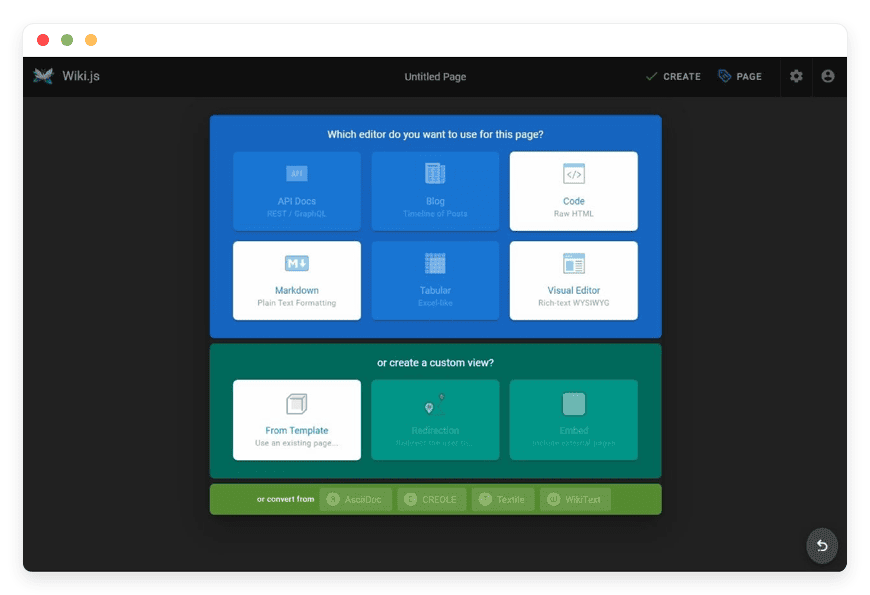
WikiJS Preview Image

ABOUT THE SOFTWARE

What is WikiJS

Wiki.js is an open-source documentation and knowledge-base platform built on Node.js. It runs as a single application backed by PostgreSQL, and it is used for internal handbooks, engineering documentation, and public wikis alike.

Wiki.js is maintained by Nicolas Giard under the requarks GitHub organization and released under the AGPLv3 license. The current production line is v2.x; a v3 developer preview has been available since October 2022 but no beta has shipped, so v2 remains the recommended target for new installs. The app supports Markdown and WYSIWYG editing, full version history, modular authentication (OIDC, SAML, LDAP, Azure AD, Okta, GitHub and more), Git sync to external repositories, and built-in PostgreSQL search.

A typical install fits in a small container with a separate PostgreSQL service. The maintainer recommends PostgreSQL for any production deployment because the v3 upgrade path will initially be PostgreSQL-only. Wiki.js is used by teams across software, education, and consulting, and is a common destination for organizations leaving Confluence Server and Cloud.

FEATURES

What WikiJS does

Wiki.js is a single-app wiki: page tree, editor, search, authentication, and asset storage in one place. The feature set targets engineering and operations teams who want a documentation home they fully control.

Markdown editor

Live preview with toolbar and keyboard shortcuts. Pages are stored as Markdown and render fast on PostgreSQL-backed search.

WYSIWYG editor

A second editor for people who prefer not to think about Markdown. Both editors save into the same Markdown source.

Built-in search

PostgreSQL full-text indexing covers most wikis without external services. External Elasticsearch or Manticore can be added if you have one.

Modular auth

OIDC, SAML 2.0, LDAP, plus prebuilt modules for Google, Azure AD, GitHub, Okta, Auth0, Authelia and more. Multiple strategies can run at once.

Page versioning

Every save creates a revision. Diff between versions, restore any prior version, and audit who changed what and when.

Asset management

Upload images, PDFs, and other files into folders. Assets are reachable by URL and survive version upgrades and restores.

Page tree navigation

Hierarchical paths with locale prefixes. Move and rename pages with redirects; namespaces drive the permission model.

API and webhooks

REST and GraphQL endpoints for programmatic page management, plus Git sync to GitHub, GitLab, Bitbucket, or any remote you can push to.

WHAT'S ALWAYS INCLUDED

Every app. Fully managed.
Nothing extra to pay for.

Every app you deploy includes the full managed service — security, backups, updates, and support from day one.

Automatic updates and patches

Apps run the latest stable version. Security patches applied silently, with rollback if needed.

Daily off-site backups

Multiple daily backups in redundant off-site locations. One-click restore if anything goes wrong.

24/7 uptime monitoring

Continuous monitoring with instant alerting. We respond before you notice.

SSL, firewall, DDoS protection

Auto-renewing SSL, hardened firewall rules, DDoS mitigation on every deployment.

Performance and scaling

We monitor resource usage continuously. When your app needs more headroom, we flag it and upgrade with your explicit approval.

Dedicated engineering support

Real engineers on chat. DNS, SMTP & migration help. All included in €9.

WHY MANAGED

Why teams pick managed WikiJS

Atlassian announced another Confluence Cloud price increase effective 15 October 2025, with Standard up 5% and Premium up 7.5%. Teams already irritated by per-seat math started looking for a flat-cost open-source alternative they would not have to operate themselves.

Self-hosting Wiki.js is straightforward on day one and progressively less fun afterward. The container needs to be kept current, the database needs to be backed up to a separate location, the search index needs rebuilding after restores, and the reverse proxy needs sane upload limits so that a 30 MB design PDF does not 413. None of this is hard. All of it is recurring.

The specific gotcha we see most often: teams install the default SQLite-backed Docker image, get to twenty pages, and then hit corruption or write contention as soon as two editors save at the same time. The v3 line has also been in developer preview since October 2022 with no beta release, and the preview explicitly cannot be upgraded to or from, so anything you build on it today is a throwaway.

DANIAN ships Wiki.js v2 on PostgreSQL with nightly off-site database dumps separate from container snapshots, reverse-proxy upload limits raised to 50 MB, and pinned image versions. We pin the search index rebuild step into our restore runbook. We monitor for the SAML auth-strategy regressions that have shown up in past Wiki.js releases so you do not get locked out after an upgrade.

REVIEWS

Hear from customers ​like you​​​​​​​

Successful businesses and professionals around the world rely on DANIAN every day

USE CASES

Three teams who run WikiJS on DANIAN

These are representative team types we set up most often. Each starts with the same flat €9 plan.

ENGINEERING · 12 PEOPLE

Off Confluence after the Cloud price jump

A twelve-person platform team moved off Confluence after the Atlassian Cloud price increase doubled their annual line item. They run Wiki.js in a Sweden region with OIDC against Okta, a /runbooks namespace locked to engineers, and Git sync mirroring pages to a GitHub repo for code-adjacent review.

CONSULTANCY · 5 PEOPLE

Client KB and internal handbook on one instance

A five-person consultancy publishes a client-facing knowledge base under /clients/ and an internal handbook under /handbook/ on the same Wiki.js. Public pages are read-only to guests, internal pages are locked to the staff group, and the company logo and color are themed via the admin panel.

OPEN-SOURCE PROJECT

Public docs with GitHub-based contributor login

A distributed open-source project documents its codebase publicly. Anonymous readers can browse; contributors sign in with OIDC via GitHub and edit. Maintainers approve edits through Wiki.js's built-in moderation flow and push the Markdown source to a Git remote for archival.

COMPARISON

Four ways to run WikiJS

The Atlassian alternative scales with editors. Self-hosting is cheap on the invoice and expensive on the calendar. Home hardware is a one-time spend plus ongoing electricity. The managed route is flat.

CONFLUENCE STANDARDSELF-HOST ON A VPSHOME SERVERDANIAN MANAGED WIKI.JS
Cost — 1 user
Free up to 10 users; ~$6.40/mo with Standard features~$24/mo production-class VPS~€650 one-time (Synology DS923+) + electricity€9/mo flat
Cost — 5 users
~$32/mo~$24/mo (same VPS)Same one-time + electricity€9/mo flat
Cost — 10 users
~$64/mo~$24/mo (same VPS)Same one-time + electricity€9/mo flat
Ongoing ops timeAtlassian handles patching; SSO and Marketplace add-ons are your problemYou handle OS, container, database, backups, SSL renewalYou handle everything plus hardware and powerZero hours/month on your side
BackupsAtlassian-managed, restore via supportYour jobYour jobDaily off-site, multiple restore points
MonitoringAtlassian-managedYour jobYour job24/7, alerts route to on-call engineers
Region choiceData residency is a paid Enterprise featureOne per VPS accountWherever your office is21 regions across six continents

Confluence Cloud Standard pricing reflects Atlassian list rates after the 15 October 2025 increase. VPS price is a representative figure for a production-class instance with backups enabled.

BY INDUSTRY

WikiJS for specific industries

A wiki is shaped by the kind of work it documents. These five industries have specific demands on access control, retention, and the workflows the page tree needs to support.

Engineering teams document services, runbooks, on-call procedures, post-mortems, and architecture decisions. Many also map their wiki to NIST 800-53 control documentation when they sell into regulated buyers, which means tracked revisions and clear ownership per page.

For these teams we typically pin the instance to the region closest to the largest engineering office, wire OIDC to GitHub or Okta, and create namespaces for /services, /runbooks, /postmortems, and /adrs with separate write groups. A monthly engineering retrospective gets published to /retros/YYYY-MM with @-mentions resolved through the identity provider.

A typical instance ends up holding 1,500–4,000 pages with thirty to sixty active editors. Page revision history is retained for the lifetime of the wiki, and Git sync provides a second copy of the Markdown source in a repository the team already backs up.
Consultancies juggle internal playbooks and client-facing deliverables on overlapping timelines. ISO 9001 quality-management documentation expectations push them toward versioned procedures with reviewer sign-off, which Wiki.js's page history and moderation flow handle directly.

We usually run one Wiki.js instance with /handbook for internal use and /clients/{name} for engagement work, with page rules locking each client subtree to the assigned team. A common workflow: an analyst drafts a delivery brief in /clients/acme/briefs/, requests review through the comment system, and an associate approves the version before it is shared.

Instances tend to be smaller, around 400–1,200 pages and ten to twenty editors, but heavy on attachments. Our default 50 MB upload ceiling absorbs most decks and PDFs without the reverse-proxy 413 issue that comes with vanilla installs.
Courses, lab notebooks, faculty handbooks, and student-facing syllabi all live well in a wiki. Institutions handling student records also need to keep FERPA boundaries clear between content that may be shown publicly and content that is restricted to staff.

DANIAN config choices: pick the region closest to campus, enable OIDC against the institution's identity provider, and split the page tree into /courses (read by enrolled groups), /faculty (read-write for staff), and /public (open to guests). A typical workflow has a course coordinator publishing weekly lab instructions to /courses/{code}/labs/ and rolling them over by archiving prior terms under /archive/.

A medium department instance runs 2,000–5,000 pages with around forty editors and full revision history retained across academic years, which makes year-over-year curriculum diffs straightforward.
Firms run internal procedures, intake checklists, and precedent libraries on a wiki. The ABA Model Rules on client-confidentiality scoping push firms to keep matter-specific content out of any shared namespace and to log who read what when.

We pin the instance to a region the firm chooses, lock the default Guest group to deny-all, and build matter-specific subtrees under /matters/{id} with page rules limiting access to the assigned matter team. A practice-group workflow: a senior associate drafts a clause precedent under /precedents/{topic}, links to it from the matter page, and the revision history records every refinement.

Firms typically run 800–2,500 pages with a tightly bounded editor list of ten to thirty lawyers. We retain page revisions indefinitely; daily backups give the firm a recoverable point-in-time view across the whole matter library.
Nonprofits document programs, grant histories, volunteer onboarding, and donor communications. Many adopt ISO 9001-style quality-management practices for grant reporting, where versioned procedures and a clear record of who edited what matter to funders.

The DANIAN setup: pick a region near the operations office, enable OIDC against Google Workspace (the common nonprofit identity stack), and build /programs, /grants, /volunteers, and /board subtrees with appropriate read/write groups. A typical workflow: a program manager updates a grant report under /grants/{funder}/{year}/, the executive director reviews via comments, and the version history captures the approval trail.

A working instance lands around 500–1,500 pages and twelve to twenty-five editors. The flat €9 price keeps the line item predictable across fiscal years, which matters when budgets are set 18 months ahead.

FAQ

Frequently asked questions

Everything teams ask before signing up — answered straight, without sales speak.

Three groups: technical setup, migration, and how DANIAN works as a service.

01

Technical and configuration

We deploy Wiki.js v2 in production. The v3 line has been in developer preview since October 2022 and the maintainer has not declared a beta. Direct in-place upgrade from v2 to v3 is not yet supported except for PostgreSQL installs, so v2 is the safe target today.
The built-in PostgreSQL search works well for wikis up to several thousand pages. We only suggest wiring in external Elasticsearch or Manticore when a team has unusual ranking needs or very large attachment-heavy corpora that the default tokenizer does not rank well.
Yes. Wiki.js ships modules for generic OIDC, SAML 2.0, LDAP, Google, Azure AD, GitHub, Okta, Auth0, and Authelia. We help you wire claim mapping during onboarding because the SAML library has historically had upstream issues that surface as cryptic login errors.
Permissions are defined per group via page rules. Rules can match an exact path, a prefix, all pages, a locale, or a tag. We tune these so a path like /finance is locked even if /finance-public is open.
We take a daily off-site PostgreSQL dump plus an assets snapshot, retained for 7 days. Restore is a database import followed by a search index rebuild from the admin panel. We pin the rebuild step into our restore runbook so it does not get skipped.
No. Wiki.js v2 has single-editor pages with full revision history rather than live co-editing. Real-time editing has been discussed for v3 but is not in the current stable line, so if live multi-cursor editing is a requirement, Wiki.js is not the right fit today.
Yes. Assets live in the database and on disk, and both are part of our backup. We pin image versions and test each Wiki.js release before promoting it, so the upgrade arrives only after we have confirmed it does not break attachment handling.
Wiki.js supports TOTP-based two-factor authentication globally or per user. We recommend enforcing it for the administrator group at minimum, and identity providers used via OIDC or SAML can also enforce MFA upstream so the policy is centralized.
Yes. Each authentication strategy has a self-registration toggle with a default group. We tune the group rules so new sign-ins land with read access only, and an admin promotes them to write groups as needed.

02

Migration and onboarding

We can activate your app on your own custom domain/subdomain. Examples: mydomain.com, anyword.mydomain.com.
Or, on our randomized free subdomain. Example: 963.apps.danian.cloud
If you wish to use a custom domain/subdomain, select that option when ordering your app (or notify us later). We will send you the required DNS records and if needed, our tech team will modify them for you.
21 datacenter locations across six continents. You choose the region at provisioning. Application data sits in the region you choose; pick whichever is closest to your users or matches your data-residency preference.
Yes. Request a region migration from the dashboard and we run the move in the background. The system emails you when the migration completes; total transfer time depends on data volume but typical instances finish in a few hours. There is no extra charge for a region change.
Yes. Full data export is available at any time, in a portable format you can bring to any infrastructure.
Yes, with caveats. The community maintains scripts that convert Confluence HTML exports into Wiki.js pages with attachments. We help run the conversion, clean up residual Confluence chrome (page-info banners, "recently edited" widgets), and rewrite internal links.
Notion exports to Markdown and HTML, both of which Wiki.js can import via the Local File System storage module. Embedded block types — databases, callouts, toggles — need light cleanup, which we handle as part of onboarding.
Yes, by exporting source pages to Markdown or HTML and using the file-system import. MediaWiki templates and BookStack books need structural mapping to Wiki.js's path-based tree; we walk through it during the trial.
Yes. Once the import lands and SSO is wired, editors keep their accounts through the identity provider. Bookmark redirects can be configured in Wiki.js so old Confluence or Notion URLs resolve to the new page paths.

03

Billing, support, and platform

€9 covers everything we do for that app: hardware in the region you choose, daily off-site backups with one-click restore, automatic security patches and version upgrades, 24/7 monitoring, SSL and firewall, and engineering support on Email/LiveChat. There are no setup fees or hidden line items. For more info see our Pricing page.
If you decide to continue, we charge €9/app/month from day 8. If you don't, the trial ends and you can export your data. No card is required for the trial, and we never auto-charge you without explicit consent.
No. The €9/month is flat regardless of how many users log into your app. Add 5 users or 50; the price doesn't change.
24/7 Live chat and email support, both staffed by engineers who run the systems. We handle DNS configuration, SMTP setup, app integrations, performance tuning, troubleshooting, and migration help. Response time is typically under an hour. There is no tier system — every customer gets the same support.
Yes. Cancel from the dashboard. We don't charge a cancellation fee, we don't lock data, and we will export your data to you on request before deletion. data to you on request before deletion.
Every customer instance is backed up daily to a separate region from the primary. We test restores. You can request a restore at any backup point within the retention window — usually 7 days for daily backups.
Your application data sits in the region you choose at provisioning — 21 datacenter locations across six continents. Account-level data (billing, account email, support ticket history) is processed centrally. Application data region is picked by you, per app.
99.9% uptime SLA on every app, every tenant. Service credits are documented at danian.co/service-level-agreement. The status page is located at status.danian.co.
When your tenant approaches the resource ceiling — the base tier holds 1 vCPU/RAM, 30 GB storage — we notify you. Resource upgrades happen with your explicit consent; we will not upgrade your tenant or charge you without it.
We wait. We don't suspend the app or delete your data on the first failed charge. We email you, you fix the card on file, and we continue.
Invoices can be downloaded from the billing dashboard in PDF the day each charge succeeds. EU VAT is added where applicable and the VAT-reverse-charge regime applies for VAT-registered businesses with a valid number.
150+ open-source apps across automation, team chat, file sync, analytics, AI, password management, email marketing, dev tools, project management, smart home, CMS, and federated social. See the full catalog →
Yes. Every instance comes with a web-based terminal and a file manager in your DANIAN management dashboard. Useful for managing your data and customizations.
Resources scale with your usage. If your app needs more vCPU, RAM, or storage, we add it — and we ask first before any change to your plan. €9 is the floor; resource-heavy workloads may price higher, but you'll always know in advance.
Yes. We have both a Partner program and an Affiliate program available. Anybody can sign up.
No contract. No minimum commitment. Cancel anytime from the dashboard with one click. The 7-day free trial requires no credit card. After the trial converts to paid, you can still cancel at any month without notice or penalty.

DEPLOY IN YOUR REGION

21 datacenter locations on six continents

Pick the region closest to your users.

United States, Germany, Finland, Singapore, Australia, Brazil, Canada, Netherlands, UK, Spain, Italy, France, Sweden, Malaysia, India, Japan, Mexico, Poland, South Korea, Chile, South Africa and more coming soon
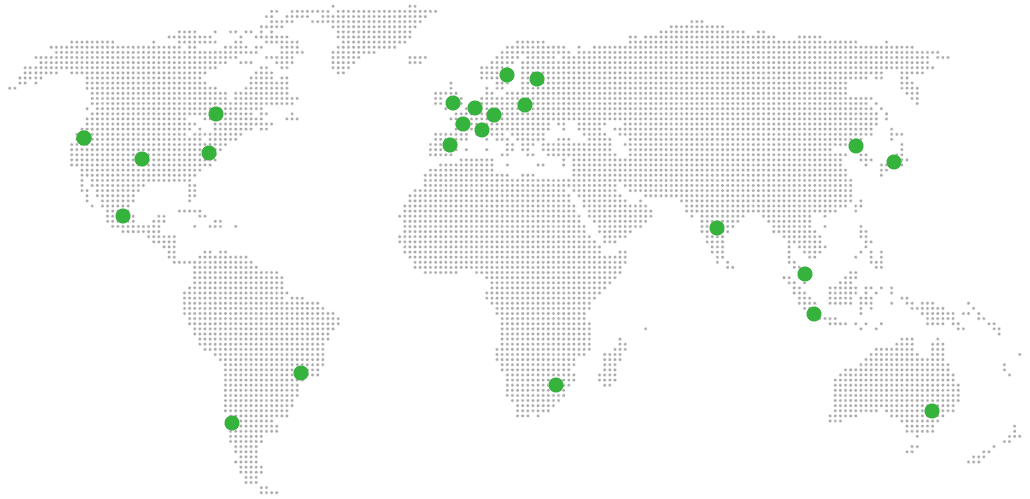
Global Reach Map

Try managed WikiJS for 7 days

No card. Cancel from the dashboard.