Fully Managed Evcc
as a Service

Deploy Evcc as a fully managed service starting at €9/mo. Get automated backups, SSL, updates, support and monitoring included.

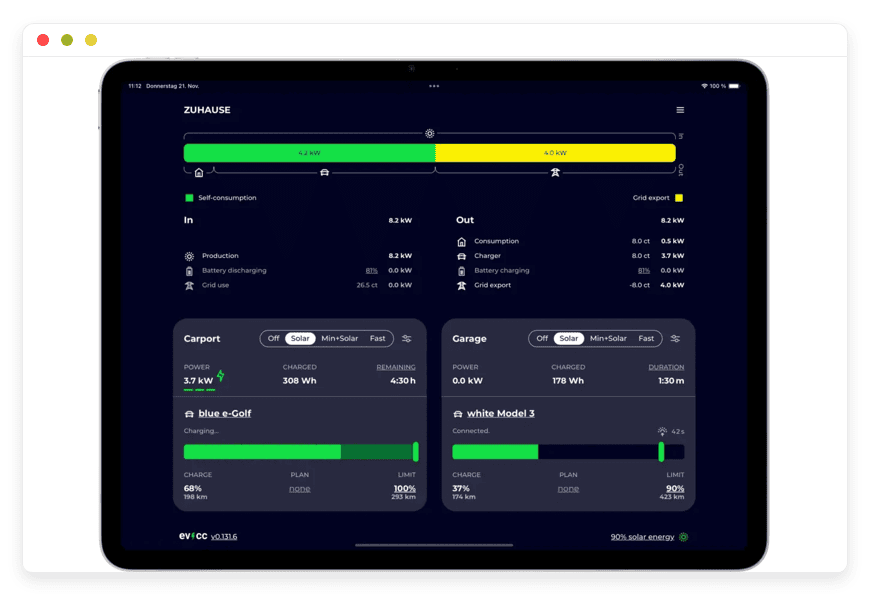
evcc is an open-source EV charge controller and home energy management system — solar-surplus charging, dynamic-tariff scheduling, multi-loadpoint load balancing, and integration with chargers, inverters, batteries, heat pumps and vehicles from over 240 manufacturers.

Free 7-day trial  99.9% Uptime SLA  No credit card  Cancel anytime

Free 7-day trial  99.9% Uptime SLA
No credit card  Cancel anytime

Evcc

Evcc

STARTING AT

€9/month
Automated Backups
Monitoring
Automated Updates
Auto SSL

USAGE

Unlimited
Human Support
Custom Domains
Terminal Access
File Manager Access
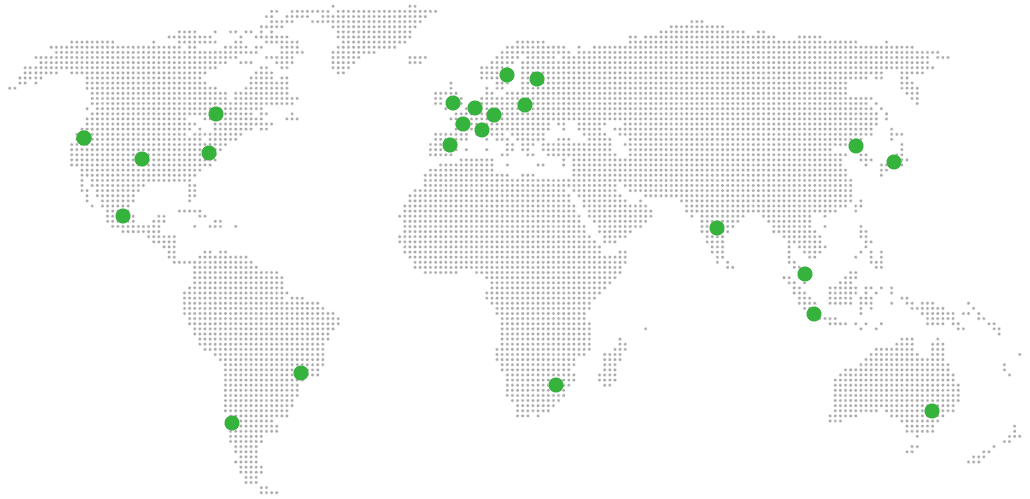
Deploy in your region 21 locations worldwide
GermanyFinlandNetherlandsUKSwedenUnited StatesCanadaSingaporeJapanAustraliaBrazilSouth Africa+9 more →
Evcc Preview Image

ABOUT THE SOFTWARE

What is Evcc

evcc is an MIT-licensed, community-maintained EV charge controller and home energy management system. It drives any of 620+ supported chargers from on-site solar surplus or dynamic electricity tariffs, integrating inverters, batteries, heat pumps and vehicles into one local controller.

The project is led principally by maintainers Michael Geers and Andreas Linde, sustained by a community of contributors and by GitHub Sponsoring plus a sponsor-token model for a subset of device drivers. The codebase is a single Go binary plus a Vue 3 web UI, with SQLite for state.

evcc supports 240+ device manufacturers and 620+ specific products across chargers, inverters, smart meters, batteries, heat pumps and vehicles. It runs on a Raspberry Pi 3/4/5, on x86 Linux, on macOS, inside Docker, and as a Home Assistant add-on. The project has been featured in c't Magazin and PV Magazine. The GitHub repository at github.com/evcc-io/evcc has over 6,500 stars and an active release cadence.

FEATURES

What Evcc does

evcc is a controller, not a vendor cloud. It drives the charger, reads the meter, talks to the car, watches the tariff, and decides — locally, on hardware you can pick. Eight capabilities cover the bulk of what teams use it for.

PV-surplus charging

Modulates charge current in real time to consume on-site solar surplus, with configurable battery-priority lock during fast EV charging.

Multi-loadpoint load management

Shared-current circuits across multiple wallboxes behind one grid connection, with 1-phase/3-phase switching on supported chargers.

Heat pump and electric heater control

SG-Ready relays plus templates for Vaillant, LG Therma V and other Modbus heat pumps, treated as flexible loads alongside the car.

OCPP 1.6J charger backend

Local websocket endpoint at ws://host:8887/<stationId> for chargers that talk OCPP, plus Modbus TCP/RTU and EEBus plugins for the rest.

Dynamic-tariff scheduling

First-party connectors for Tibber, aWATTar, Octopus, Ostrom, ENTSO-E, EPEX, Nordpool, Energy-Charts, EDF Tempo, Stekker, REE, OMIE, Pstryk, Energinet and more.

Vehicle SoC integration

OEM API integrations for Audi, BMW, Citroën, Dacia, Fiat, Ford, Hyundai, Jaguar, Kia, Mercedes, Mini, Nissan, Opel, Peugeot, Porsche, Renault, Seat, Smart, Skoda, Tesla, Volkswagen and Volvo.

Home battery integration

PV-priority discharge lock on Sonnen, BYD, SMA, E3/DC, Tesla Powerwall, Victron and others, so the car does not drain the house battery.

Home Assistant, MQTT and REST

Official Home Assistant add-on, MQTT broker for downstream integrations, REST API for billing exports, and notification hooks for Telegram, Pushover, Ntfy and Signal.

WHAT'S ALWAYS INCLUDED

Every app. Fully managed.
Nothing extra to pay for.

Every app you deploy includes the full managed service — security, backups, updates, and support from day one.

Automatic updates and patches

Apps run the latest stable version. Security patches applied silently, with rollback if needed.

Daily off-site backups

Multiple daily backups in redundant off-site locations. One-click restore if anything goes wrong.

24/7 uptime monitoring

Continuous monitoring with instant alerting. We respond before you notice.

SSL, firewall, DDoS protection

Auto-renewing SSL, hardened firewall rules, DDoS mitigation on every deployment.

Performance and scaling

We monitor resource usage continuously. When your app needs more headroom, we flag it and upgrade with your explicit approval.

Dedicated engineering support

Real engineers on chat. DNS, SMTP & migration help. All included in €9.

WHY MANAGED

Why teams pick managed Evcc

Since 17 January 2025, every electricity supplier in the EU must offer at least one dynamic-price contract under Directive 2024/1711. That makes the hourly spread between cheap and peak power a real, ongoing budget line — and the reason an open-source charge controller like evcc became worth paying for.

Germany's §14a EnWG, in force since 1 January 2024 and active in Module 3 time-variable grid fees since 1 April 2025, goes one step further: every new wallbox above 4.2 kW must be remotely curtailable by the DSO. Member-state implementations across NL, AT, ES, IT and FR are following on different timelines, all driven by the same directive. The decision a homeowner or property manager faces in 2026 is no longer "should I get a wallbox" but "how do I make my wallbox follow the price curve and the DSO signal without becoming a weekend project".

Running evcc yourself solves the technical half. The operational half is where the time goes. evcc is sustained by community sponsorship, and the sponsor-token JWT that unlocks drivers for chargers like Heidelberg, Alfen, Sungrow and KEBA has an expiry. When the token lapses, those drivers refuse to construct on startup and the wallbox effectively goes idle. The Tesla Fleet API, replacing the deprecated Owner API since January 2024, has its own token-refresh cadence and a $10/month command-credit budget that aggressive polling can exhaust. Octopus, Tibber, aWATTar and Ostrom tariff feeds occasionally serve stale data; the planner needs a tight enough control interval to act on the next slot before it has passed.

Managed evcc on DANIAN means we track sponsor-token expiry, refresh Tesla Fleet tokens inside the renewal window, tighten the control interval against your tariff's publication latency, watch the OCPP backend for charger reconnect storms, and back the YAML plus SQLite up off-site every night. Three defaults we ship out of the box: interval: 60s against minute-cadence tariff APIs; poll mode: connected with a 15-minute per-vehicle cache so OEM rate limits stay green; and a maintenance-window restart hook tied to the sponsor-token exp claim so a sponsor renewal does not become a 9pm support call.

REVIEWS

Hear from customers ​like you​​​​​​​

Successful businesses and professionals around the world rely on DANIAN every day

USE CASES

Three teams who run Evcc on DANIAN

Composite scenarios drawn from the kind of buyer we see most often — a consultancy that inherited an evcc install, a hotel that wants guest charging without a CPO contract, and an energy co-op that needs §14a EnWG compliance without a treasurer becoming a sysadmin.

7-PERSON CONSULTANCY · FRANKFURT

Two pool EVs after the in-house evcc expert retired

Two KEBA P30 c-series wallboxes behind a 22 kW grid connection. A Fronius Symo Hybrid PV inverter, a VW ID. Buzz, a BMW i4. Tibber tariff connector for overnight charging. evcc's MQTT broker feeds the office Home Assistant. They picked managed hosting because the partner who installed evcc retired and nobody wanted to renew the sponsor token by hand.

12-ROOM BOUTIQUE HOTEL · AMSTERDAM

Guest charging without a CPO contract

Four Alfen Eve Single Pro-line chargers in the rear courtyard. A Huawei SUN2000 inverter on the roof, no battery. Stekker spot-price connector for NL day-ahead pricing. Telegram alerts to the night manager. RFID via OCPP gates the chargers to room key-cards. The hotel chose managed hosting because PCI scope sits with Stripe via OCPP, and the maintenance window is not theirs to run.

6-HOUSEHOLD ENERGY CO-OP · VIENNA

Shared garage on a 50 A connection, §14a EnWG compliant

Six go-eCharger Gemini 2.0 wallboxes share one 50 A connection with active load balancing. Each household has its own loadpoint and SoC integration — three Skoda Enyaq, two Renault Megane E-Tech, one BMW iX1. aWATTar AT tariff plus a shared SENEC battery. The co-op picked managed hosting because their treasurer is the only technically inclined member.

COMPARISON

Four ways to run Evcc

The honest tally at one site, five sites, and ten sites. The math holds at every scale; the trade-offs are about who carries the operational load. Numbers verified May 2026 against the named public pricing pages.

 PATHCOST AT 1 SITECOST AT 5 SITESCOST AT 10 SITESOPS TIME YOU CARRY
Charging-management SaaS
Monta Advanced — for true commercial CPOs
€505/mo
€500 platform + €5 AC socket
€525/mo
€500 + 5×€5
€550/mo
€500 + 10×€5
Low — vendor cloud manages backend
Self-host on a VPS
$24/month production-class VPS + you
€100–280/mo
$44 infra + €60–240 ops time
€500–1,400/mo
5× the above
€1,000–2,800/mo
10× the above
5–10 hours setup,
1–2 hours/month/site
Home server
Synology DS923+ class hardware, on premises
€210–667/mo
€650 amortised + electricity + business internet + backup + ops
Not practical — one site per boxNot practical — one site per box2–4 hours/month/site, plus hardware refresh every 3 years
DANIAN Managed Evcc€9/mo
€45/mo
5×€9
€90/mo
10×€9
0 hours/month

Monta is the right tool for a commercial charge-point operator running roaming, PowerBank settlements, KYC/KYB and fiscalisation on hundreds of public chargers — that is the scale at which the €500/month platform fee earns its keep. For a small site that needs intelligent local charging and tariff-aware scheduling without a CPO platform, the math turns the other way.

BY INDUSTRY

Evcc for specific industries

Four industries place very different demands on the same controller. Each accordion describes one regulation in force, one default we change for that industry, one operational workflow, and one quantifiable number to anchor the decision.

Regulation in force. In Germany, the Gebäude-Elektromobilitäts-Infrastruktur-Gesetz (GEIG) mandates pre-cabling for new and substantially renovated residential buildings with more than ten parking spaces, with at least one charge point. Combined with §14a EnWG, in force since 1 January 2024, every new wallbox above 4.2 kW must be remotely curtailable by the DSO. The flexibility is no longer optional.


What we change from default. Dynamic load management is set across all loadpoints, capped at the building's grid-connection capacity. The disable.threshold is configured so that no charger drops below the §14a minimum guaranteed 4.2 kW per device during a DSO dimming signal.

Workflow. Each tenant has an RFID tag bound to one evcc loadpoint. Charging sessions export via the REST API into the monthly Nebenkostenabrechnung. The property manager sees one dashboard for the whole building.

One number. A 50 A house connection runs six 11 kW go-e wallboxes through evcc's load-balancing curve without ever exceeding the grid-connection limit.

Regulation in force. The EU Alternative Fuels Infrastructure Regulation 2023/1804 sets baseline requirements for public and semi-public charging. In Germany, the Eichrecht under MessEG applies the moment charging energy is on-sold rather than absorbed as an amenity. The EU Measuring Instruments Directive 2014/32/EU governs the meter inside the charger.

What we change from default. The configured charger must be MID-metered — Alfen Eve Pro-line, KEBA P40, Wallbox Pulsar Pro, or Mennekes Amtron Premium are the usual choices. evcc's OCPP server pipes meter values to a downstream billing endpoint while the front-of-house terminal reads only the QR or RFID.

Workflow. Guests scan the QR sticker on the charger. The OCPP backend authorises the session through evcc. Stripe collects payment at session end. The weekly sessions.csv lands in the accounting inbox.

One number. At €0.55/kWh and 30 kWh average per guest per night, four chargers at 60% utilisation yield around €130/day of resold energy — without taking a 5% transaction haircut on every kWh.

Operational standard. OCPP 1.6J is the de-facto integration contract between chargers and back-ends. ISO 15118-2 Plug & Charge identification is the emerging contract for vehicle-charger handshake, supported on newer hardware. Both let coworking operators avoid printing fleet cards or buying a per-charger CPO licence.

What we change from default. evcc's local OCPP listener at ws://host:8887/<stationId> is reverse-proxied behind TLS with member-level RFID allow-listing. Loadpoint priority is set so resident tenants never starve visiting members, and visiting-member sessions are capped at a sensible kWh limit.

Workflow. Tenants receive an RFID fob on contract signing. evcc's REST API mirrors monthly kWh into the coworking-space billing platform. End-of-month settlement happens in the same flow as desks and meeting rooms.

One number. A single evcc instance manages up to 16 chargers behind one grid connection through dynamic load curtailment — versus a per-charger licence model that scales linearly with the parking lot.

Standard in force. ISO 15118 Plug & Charge identification removes the need for fleet cards on capable vehicles. Eichrechtskonformität applies in Germany only if the dealership on-charges energy to a third party — for internal pool charging, the MID-meter on the charger is enough.

What we change from default. Vehicle SoC integrations per brand — BMW Connected, VW WeConnect, Renault My-R, Tesla Fleet API with a command proxy — feed evcc's planner so the next-departing vehicle is always charged to spec. Departure time and minimum-SoC are set per loadpoint, not per fleet.

Workflow. The dispatcher sets "minSoC 80% by 06:00" in the evcc UI. The planner schedules charge slots inside the cheapest two-hour window of the aWATTar or Tibber day-ahead price curve. The morning roster is ready by the time keys are handed out.

One number. For an 8-EV fleet driving 50 kWh/day each, a 6-cent spread between night and peak prices yields roughly €875/year of avoided cost — without changing driver behaviour.

FAQ

Frequently asked questions

Everything teams ask before signing up — answered straight, without sales speak.

Three groups: technical setup, migration, and how DANIAN works as a service.

01

Technical and configuration

Some manufacturer drivers were contributed by the evcc team rather than by the vendor, and a sponsor-token JWT gates those drivers to fund ongoing project maintenance. The token has an expiry.
Since Tesla's January 2024 Owner-API shutdown, evcc speaks to the car through the Fleet API plus a command proxy.
Yes. We treat a heat pump as another loadpoint via SG-Ready relays, vendor templates such as Vaillant or LG Therma V, or a smart plug for simpler units. The default poll mode is charging, which only wakes data fetches when an EV is plugged in. For a heat pump you typically want it set to connected or always.
Each provider has its own tariffs.grid.type template. Tibber needs an API token and optionally a homeId. aWATTar uses the AT or DE endpoint with no key. Octopus needs the account region and API key. Ostrom needs an OAuth client.
Yes. Each wallbox is one loadpoint. A circuit definition enforces a shared maximum current upstream of them. Phase switching from 1-phase to 3-phase mid-session is supported on KEBA, go-e Gemini and certain Pulsar models. For sites on a 50 A house connection, six 11 kW chargers via dynamic load curtailment is a known-good ceiling.
On supported inverter and battery brands — Sonnen, BYD, SMA, E3/DC, Tesla Powerwall, Victron and others — we lock the home battery against discharge during fast EV charging, and treat battery charging as a flexible load that yields when the car is plugged in. Loadpoint priority is the knob.
evcc itself is not an Eichrecht-certified billing system. To resell energy under German law you pair it with a MID-metered or Eichrecht-certified charger, and export OCPP meter values to a downstream billing provider that holds the certification. We can advise on charger selection during onboarding, but the certification itself is held by the charger or by the billing back-end, not by evcc and not by DANIAN.
Partially. The chargers documentation lists ISO 15118 vehicle identification on supported hardware, which lets the wallbox read the car's contract certificate and start a session without a fleet card. ISO 15118-20, the newer revision covering bidirectional and richer scheduling, is still ahead of mass-market vehicle adoption.
In v0.300, released around year-end 2025, the browser-based configuration UI became the default for new users. Existing YAML configurations keep working. We support both paths: we keep your YAML form for diff-friendly review and add the browser UI alongside it. Some templates were renamed in the transition — most visibly the Tesla integration during the Fleet-API switch — and we migrate those automatically.

02

Migration and onboarding

We can activate your app on your own custom domain/subdomain. Examples: mydomain.com, anyword.mydomain.com.
Or, on our randomized free subdomain. Example: 963.apps.danian.cloud
If you wish to use a custom domain/subdomain, select that option when ordering your app (or notify us later). We will send you the required DNS records and if needed, our tech team will modify them for you.
21 datacenter locations across six continents. You choose the region at provisioning. Application data sits in the region you choose; pick whichever is closest to your users or matches your data-residency preference.
Yes. Request a region migration from the dashboard and we run the move in the background. The system emails you when the migration completes; total transfer time depends on data volume but typical instances finish in a few hours. There is no extra charge for a region change.
Yes. Full data export is available at any time, in a portable format you can bring to any infrastructure.
OCPP chargers point at a websocket URL. We give you the new ws:// or wss:// endpoint plus your stationId. You change one field in the charger's web admin and the charger reconnects within seconds.

03

Billing, support, and platform

€9 covers everything we do for that app: hardware in the region you choose, daily off-site backups with one-click restore, automatic security patches and version upgrades, 24/7 monitoring, SSL and firewall, and engineering support on Email/LiveChat. There are no setup fees or hidden line items. For more info see our Pricing page.
If you decide to continue, we charge €9/app/month from day 8. If you don't, the trial ends and you can export your data. No card is required for the trial, and we never auto-charge you without explicit consent.
No. The €9/month is flat regardless of how many users log into your app. Add 5 users or 50; the price doesn't change.
24/7 Live chat and email support, both staffed by engineers who run the systems. We handle DNS configuration, SMTP setup, app integrations, performance tuning, troubleshooting, and migration help. Response time is typically under an hour. There is no tier system — every customer gets the same support.
Yes. Cancel from the dashboard. We don't charge a cancellation fee, we don't lock data, and we will export your data to you on request before deletion. data to you on request before deletion.
Every customer instance is backed up daily to a separate region from the primary. We test restores. You can request a restore at any backup point within the retention window — usually 7 days for daily backups.
Your application data sits in the region you choose at provisioning — 21 datacenter locations across six continents. Account-level data (billing, account email, support ticket history) is processed centrally. Application data region is picked by you, per app.
99.9% uptime SLA on every app, every tenant. Service credits are documented at danian.co/service-level-agreement. The status page is located at status.danian.co.
When your tenant approaches the resource ceiling — the base tier holds 1 vCPU/RAM, 30 GB storage — we notify you. Resource upgrades happen with your explicit consent; we will not upgrade your tenant or charge you without it.
We wait. We don't suspend the app or delete your data on the first failed charge. We email you, you fix the card on file, and we continue.
Invoices can be downloaded from the billing dashboard in PDF the day each charge succeeds. EU VAT is added where applicable and the VAT-reverse-charge regime applies for VAT-registered businesses with a valid number.
150+ open-source apps across automation, team chat, file sync, analytics, AI, password management, email marketing, dev tools, project management, smart home, CMS, and federated social. See the full catalog →
Yes. Every instance comes with a web-based terminal and a file manager in your DANIAN management dashboard. Useful for managing your data and customizations.
Resources scale with your usage. If your app needs more vCPU, RAM, or storage, we add it — and we ask first before any change to your plan. €9 is the floor; resource-heavy workloads may price higher, but you'll always know in advance.
Yes. We have both a Partner program and an Affiliate program available. Anybody can sign up.
No contract. No minimum commitment. Cancel anytime from the dashboard with one click. The 7-day free trial requires no credit card. After the trial converts to paid, you can still cancel at any month without notice or penalty.

DEPLOY IN YOUR REGION

21 datacenter locations on six continents

Pick the region closest to your users.

United States, Germany, Finland, Singapore, Australia, Brazil, Canada, Netherlands, UK, Spain, Italy, France, Sweden, Malaysia, India, Japan, Mexico, Poland, South Korea, Chile, South Africa and more coming soon
Global Reach Map

Try managed Evcc for 7 days

No card. Cancel from the dashboard.