The Cookie-Free Analytics Guide for Modern Media Outlets
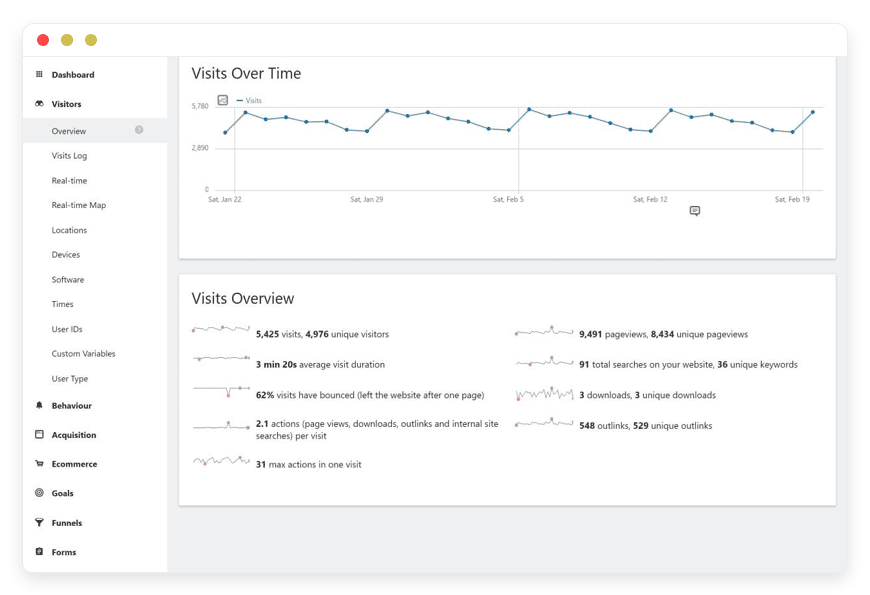
A newsroom's analytics report has quietly become a work of fiction. It counts only readers who clicked accept on the consent wall. It misses everyone running an ad blocker, because the tracker's domain sits on the default blocklists. And it ships the reading habits of a journalist's audience to a US ad platform that regulators across Europe have already ruled unlawful. This guide is about replacing that fiction with cookie-free Matomo analytics built for media sites: every visit counted, data first-party, editorial insights intact.
TL;DR
- Europe's top court confirmed in March 2024 that the consent strings behind most publisher consent walls are personal data, putting the industry's standard framework on legally shaky ground.
- About 29.5% of internet users run an ad blocker, and Google Analytics is on the default blocklists; a first-party Matomo endpoint is not, so your numbers stop excluding the most loyal readers.
- Configured cookieless, Matomo can qualify for the audience measurement exemption regulators describe: no banner, no consent string, no tracker stored on the reader's device.
- Editorial metrics survive the switch: section affinity, read time, completion, and the subscription funnel all measure fine without any identifier.
- Running it managed costs EUR 9 per month flat, with updates, backups, and load handling off your desk.
What the consent wall actually costs a newsroom
Most publishers in Europe bolted the IAB's Transparency and Consent Framework onto their sites, because it is what the advertising ecosystem speaks. The legal floor under it cracked. Belgium's Data Protection Authority found the framework non-compliant in 2022, and in March 2024 the Court of Justice confirmed the core: the consent strings the framework stores on a reader's device are personal data, and IAB Europe bears joint responsibility for that processing. A consent mechanism built to be legally bulletproof now carries its own documented legal problem, and it sits on the front door of your site.
Meanwhile the wall itself filters the audience. Field research on consent banners consistently shows meaningful refusal once regulators forced a one-click reject option; the exact numbers vary by study and market, and our agency guide covers them in detail. For a publisher the mechanics matter more than the decimals: the readers most likely to refuse tracking are the ones who read the most, subscribe the most, and trust the brand the most. Your analytics sample systematically undercounts your best audience.
The readers you never count: ad blockers
The second hole is bigger and less discussed in editorial meetings. GWI's survey data compiled by DataReportal puts global ad blocker adoption near 29.5% of internet users, with news-heavy audiences skewing higher, and eyeo's ad filtering research counted over 912 million active blocking installs. Industry estimates put publisher revenue losses in the tens of billions annually, but the analytics loss is quieter: default filter lists block requests to known tracking domains, and Google Analytics is on essentially all of them.
Google Analytics therefore vanishes for roughly a third of a typical news site's audience before consent is even asked. Matomo, self-hosted on your own domain or a managed instance, is a first-party script that default blocklists do not target. Same audience, same editorial questions, dramatically better coverage. That difference alone has changed traffic reporting for newsrooms that switch: not a sudden spike in readers, just the sudden absence of a systematic blind spot.
What cookieless measurement means for a newsroom
Cookieless is not a compromise mode. Configured correctly, Matomo measures without storing anything on the reader's device: no cookies, no local storage identifier, no fingerprint. Each pageview arrives with its referrer, section, device class, and country, and gets aggregated into the same dashboards your editors already use. What disappears is the ability to follow one identifiable person across sessions and sites, which is precisely the ability that created the legal exposure in the first place.
The audience measurement exemption that regulators in several member states describe fits this configuration: purpose limited to audience statistics, single-site scope, no cross-site merging, truncated IP addresses, signal lifetimes capped around 13 months, an opt-out available, and no raw data handoff to third parties. Meet those conditions and the consent wall can come down entirely in markets that recognize the exemption. Some countries apply stricter readings, so confirm yours before removing anything; treat this as engineering guidance, not legal advice.
Editorial metrics that survive without cookies
Editors do not need person-level tracking. They need to know what worked, where readers came from, and what they did next. All of that measures perfectly without identifiers:
- Section and topic affinity via custom dimensions on every pageview
- Read time and scroll completion per article, aggregated per desk and per author
- Internal navigation paths: which story sent readers to which
- Newsletter and app referral performance, measured at the campaign level
- Peak hours per weekday, per section, for scheduling decisions
The metrics that genuinely require individual profiles, cross-site retargeting and behavioral ad targeting chief among them, belong to the advertising side and are exactly what the courts keep making harder. Editorial analytics never needed them. If your team wants the deeper treatment, the publisher engagement guide covers scroll and attention measurement specifically.
The subscription funnel is a first-party job
Every serious outlet now runs on subscriptions, memberships, or donations, and the funnel that feeds them is a first-party data asset by definition: paywall hits, account creation, newsletter opt-in, first payment, renewal. Sending those conversion events through third-party trackers means the most commercially sensitive reader behavior sits in someone else's infrastructure, sampled, and partially blocked.
In Matomo those events are goals on infrastructure you control: how many anonymous readers hit the paywall this month, what percentage created an account, which sections convert subscribers fastest, and which acquisition source produces the readers who stay past renewal. Media teams that run this loop tend to find the same pattern: the channels that flatter raw traffic numbers are rarely the ones that fill the subscriber file. The editorial teams guide to subscription analytics walks that analysis end to end.
What to tell your advertising side, honestly
Cookieless analytics does not fix programmatic advertising, and no measurement tool will. What it does is give the commercial desk honest, complete numbers to sell with: real reach per placement, real attention metrics, and audience patterns that support contextual and first-party ad products instead of behavioral ones. The direction of the whole industry is that way regardless: third-party cookies are being deprecated, consent strings are personal data in the eyes of Europe's top court, and publishers with complete first-party measurement negotiate from stronger ground than publishers whose own numbers undercount a third of their audience.
For placements sold on attention rather than impressions, cookieless read-time data is a better sales asset than a cookie ever was. Complete attention metrics on 100% of readers beat partial behavioral data on 60% of them.
The implementation blueprint for a media site
A working migration is about a week of focused work, most of it planning rather than code:
- Provision a managed Matomo instance, one per publication, with the newsroom's dashboards segmented by desk
- Configure cookieless tracking: disable first-party cookies, truncate IP addresses, cap log retention at 13 months, disable cross-site features, respect Do Not Track, embed the opt-out on the privacy page
- Map every editorial template to dimensions: section, topic, author, article type, word count band
- Define goals for the subscription funnel: paywall view, account created, newsletter signup, first payment, renewal
- Import historical Google Analytics data for trend continuity, then run both systems in parallel for one month and compare coverage
- Retire the consent wall where your market's exemption allows it, and document the configuration for your records of processing
The parallel month is the step teams skip and regret. It is the moment you quantify exactly how many readers the old stack was hiding, and that number becomes the story you tell the board.
Frequently asked questions
Do media sites still need a cookie banner with cookieless Matomo?
Not where the audience measurement exemption applies. If nothing is stored or read on the reader's device and the other exemption conditions are met, several regulators' guidance in Europe says no consent prompt is required. Confirm your specific market with counsel before removing an existing wall.
Will ad blockers kill Matomo too?
Default blocklists target known tracking domains like the Google Analytics endpoint. Matomo served first-party from your own site or a managed instance is not on those lists, so coverage stays close to complete. Aggressive custom filter rules can block anything, but that population is small compared with default-list users.
Can we still measure unique visitors without cookies?
Matomo reports visitor counts using short-lived, privacy-preserving heuristics rather than persistent identifiers. For editorial questions like unique readers per section per week, aggregate accuracy is sufficient. What you lose is individual visitor profiles, which is the point.
Does cookieless analytics hurt our advertising revenue?
It does not touch programmatic demand, which lives or dies on its own consent infrastructure. It improves what you can sell directly: complete reach, verified attention time, and first-party audience patterns for contextual packages. Undercounting your own audience is the worse commercial position.
How much traffic can a managed instance handle?
Matomo Cloud scales to hundreds of millions of hits per month on its enterprise tiers, and a managed platform instance handles a mid-size publication comfortably. For very large news groups, run per-brand instances so peaks, retention, and access stay isolated.
What does the newsroom lose compared with Google Analytics 4?
GA4's deepest integrations are with Google Ads, which a subscription-first newsroom rarely relies on. What the newsroom gains is complete coverage, data ownership, no sampling, dashboards that editors can actually read, and a measurement stack that does not depend on the legal fate of a US ad platform.
Sources
- Court of Justice, judgment of 7 March 2024, case C-604/22, on IAB Europe's Transparency and Consent Framework
- Belgian Data Protection Authority, TCF decision, 2022
- GWI survey data compiled by DataReportal, ad blocker adoption, 2026 editions
- eyeo ad filtering report, active ad-blocking installs
- Matomo privacy and consent-free configuration documentation, matomo.org
- CNIL audience measurement exemption guidance