Open-source stack for content creators in 2026
The content creator’s open-source stack in 2026 — video, podcast, and audience tools you own
Six open-source tools cover the core of a creator business you actually own:
PeerTube for video, Castopod for podcasts, Owncast for live, Mautic for your newsletter, Comentario for comments, and Matomo for analytics.
We run each one on managed infrastructure for €9 a month per app — no servers to patch, no per-subscriber pricing, and no platform taking a cut of what you earn.
The short version
- The platforms rent you reach and take a cut. Owning your stack means owning the video files, the podcast RSS feed, the email list, and the analytics data.
- Six open-source tools cover most of a creator setup: PeerTube (video), Castopod (podcast), Owncast (live), Mautic (newsletter and automation), Comentario (comments), and Matomo (analytics).
- We host each one for €9/month per app — patched, backed up daily off-site, and monitored, with a named person. No per-subscriber fees, and no 10% cut taken from your paid subscriptions.
- Video is the cost to watch. Budget roughly 1.5–3 GB of stored space per hour of 1080p video after transcoding. Audio, comments, and analytics are cheap to store.
- The honest trade is discovery. You give up the big-platform algorithm and get the fediverse, search, and your own email list in return. Established creators usually win on that trade; brand-new ones often do not.
Who this list is for (and who it isn’t)
This self-hosted creator stack suits people who already have some audience and are tired of renting the relationship. It fits anyone who wants to own their content, their email list, and their numbers, and who is willing to do their own promotion. It is not the right starting point for a brand-new creator who needs a platform’s built-in reach to find a first thousand followers.
The pattern we see: a creator builds on YouTube, Spotify, or a hosted newsletter, grows an audience, and then notices the dependence. The algorithm decides who sees the work. A policy change can cut reach overnight. The email tool charges more every time the list grows. At some point the rented relationship starts to feel like a risk rather than a convenience.
If that describes you, owning the stack is a reasonable move. You keep the files, the feed, and the list, and you pay a flat price instead of a percentage. If you are still finding your first audience, the honest answer is to use the big platforms for now and bring the audience home as you grow. The tools below will still be here.
PeerTube — video you host
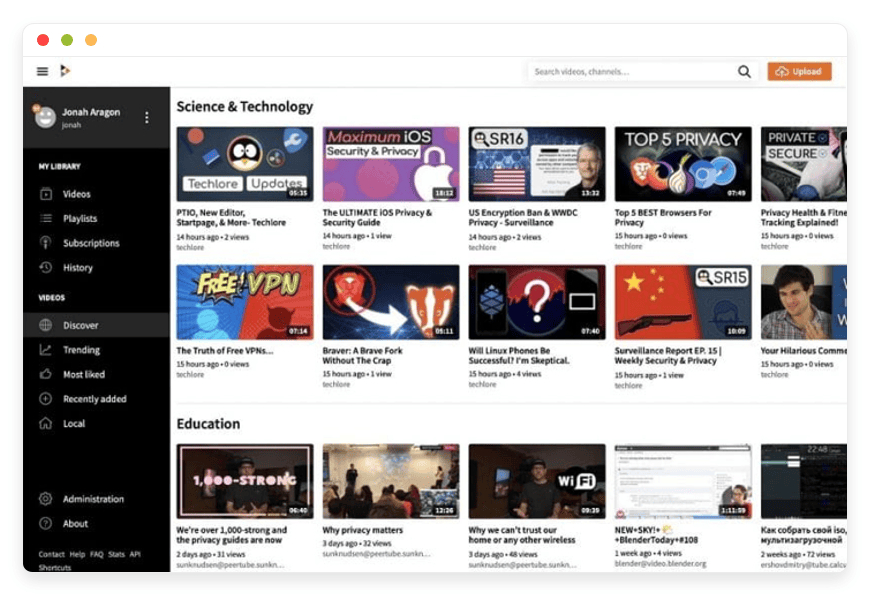
PeerTube is a video platform you run yourself, built by Framasoft, a French non-profit. It is the open-source answer to depending on YouTube or Vimeo for your back catalogue. You upload, you set the moderation rules, and the videos live on infrastructure you control rather than inside someone else’s recommendation engine.
For creators, the feature set is real. You can import an existing channel from YouTube or Vimeo, stream live over OBS or other RTMP software, keep replays, trim and watermark videos, and add chapters. PeerTube transcodes each upload into multiple resolutions so playback adapts to the viewer’s connection. It also federates over ActivityPub, so your channel can be followed and shared from Mastodon and the rest of the fediverse. Its peer-to-peer delivery shares some bandwidth with viewers’ browsers, which softens the load when a video gets popular.
PeerTube is licensed under AGPL-3.0.
We run PeerTube for video hosting at €9/month per instance, plus storage for larger libraries (more on that below). It suits creators with a video catalogue who want a permanent, owned home for it. The honest limitation: PeerTube gives you no built-in algorithm handing you free views, and a sizeable library is the one part of this stack where storage costs add up. Discovery and storage planning are the trade for control.
Castopod — podcasting on your own feed
Castopod is open-source podcast hosting built by Ad Aures, and it is the strongest case for owning your show outright. It replaces hosted services like Buzzsprout or Spotify for Podcasters by giving you the RSS feed itself. Because you own the feed, your show still lists in Apple Podcasts, Spotify, and other directories the usual way — and if you ever change hosts, your subscribers move with you instead of starting over.
Castopod is Podcasting 2.0 certified, which is where it pulls ahead. Beyond a standard feed, it supports chapters, full episode transcripts, listed guests and people, and locations — the richer metadata that newer podcast apps read. It also federates over ActivityPub, so each episode behaves a little like a social post: listeners can follow, like, share, and comment from the fediverse without any platform in the middle. Built-in analytics follow the IAB measurement standard and keep listener data anonymous.
Castopod is licensed under AGPL-3.0 and can also handle monetization through subscriptions, tips, and micropayments.
We run Castopod for podcasting at €9/month, and audio is light enough that storage rarely moves that bill. It fits any podcaster who wants to own the feed and the audience. The honest limitation: directories give you some discovery, but no host can hand you Spotify’s editorial push — growing the show is still your job.
Owncast — live streaming you control
Owncast is a self-hosted live video and chat server, created by Gabe Kangas and released under the MIT licence. It is the open-source alternative to depending on Twitch for your live presence. You point your existing broadcasting software — OBS or similar — at your Owncast server over RTMP, and you stream from a page you own, with a built-in chat that takes custom emotes and chat bots.
Like the video and podcast tools, Owncast plugs into the fediverse. Your stream can be followed and shared on Mastodon and other services, so going live can notify an audience that doesn’t depend on one platform’s notification system. The chat and emotes give viewers a way to be part of the stream without routing through a third-party account.
We run Owncast at €9/month per instance. It suits a single creator who wants a Twitch-independent home for live broadcasts. The honest limitation matters here: Owncast is built for one channel per instance. It has no browse page sending you new viewers, and no built-in subscriptions or tipping the way the big platforms bake in. You bring your own audience and your own way to make money — usually by pointing viewers at your email list or a paid event. For an established streamer who already has a following, that is a fair trade for owning the stream.
Mautic — the audience you actually own
Mautic is open-source marketing automation, and it is the tool that turns a scattered audience into an email list you own. It covers the job people hire Substack, Kit (formerly ConvertKit), or Mailchimp to do: collect subscribers, send a newsletter, and automate the follow-ups. The difference is ownership. Your list is a portable asset that belongs to you, not a balance you rent back at a higher price every time it grows.
Mautic does more than send email. It has a drag-and-drop campaign builder, an email and landing-page builder, contact segmentation, lead scoring, and channels beyond email such as SMS and web push. A REST API and a plugin ecosystem connect it to the rest of your tools. Tens of thousands of organizations run it, from small teams to large ones.
Mautic is licensed under GPL-3.0.
We run Mautic for your newsletter at €9/month, with no per-subscriber fee and no percentage taken from paid subscriptions. It fits creators who are ready to own their list and run automated sequences. The honest limitation: Mautic is full marketing automation, so it carries a learning curve a one-screen newsletter tool does not. It also has no built-in discovery network, and no single paid-newsletter button. To charge an audience, you assemble it — for paid events or workshops, pair Mautic with Pretix, the open-source ticketing tool in the same catalog, and segment paying attendees into their own Mautic list.
Comentario — comments without the ad tracker
Comentario is a lightweight open-source comment engine, written in Go, that you embed on your own site. It is a privacy-respecting replacement for Disqus. The contrast is the business model: Disqus pays for its free tier by putting ads and trackers in front of your readers, while Comentario carries none — the comment data stays yours.
It began as a near-complete rewrite of the abandoned Commento project and stays compatible with Commento’s database, so existing users can move across. The feature set is what a blog or a creator site needs: threaded replies, voting, single sign-on through Google, GitHub, GitLab, or X, markdown formatting, moderation tools, spam filtering, and an import path for old Disqus comments.
We run Comentario at €9/month per instance. It suits bloggers and site owners who want to give readers a voice without handing reader behaviour to an ad network. The honest limitation: comments need a human to moderate spam and the occasional troll, and that is your job. A comment system also only earns its place if you have an audience reading on your own site — it pairs with a website you control, not with a third-party feed.
Matomo — analytics that don’t feed an ad platform
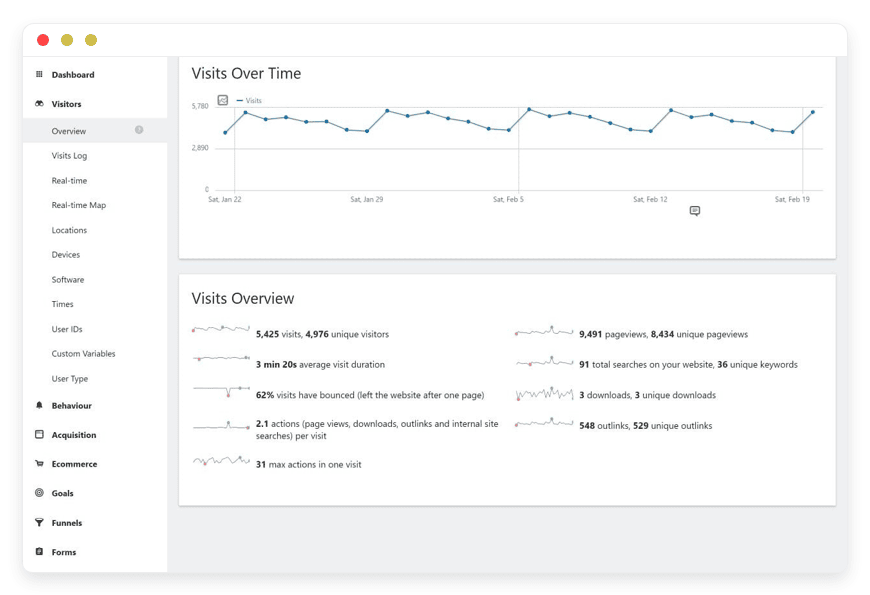
Matomo is privacy-first web analytics and the most-used open-source alternative to Google Analytics, running on more than a million sites. The point of switching is simple: you keep the data instead of handing your audience’s behaviour to an advertising company. You see the numbers, and the numbers stay on infrastructure you control.
Matomo gives you accurate, unsampled, first-party data, with a consent-light tracking mode that avoids the gaps consent banners and blockers create elsewhere. Beyond page views and traffic sources, it includes heatmaps, session recordings, funnels, segmentation, and A/B testing. You can import your Google Analytics history to start where you left off, connect it through more than a hundred integrations, and export the raw data whenever you want. Recent versions even break out how AI assistants and agents are sending you traffic.
Matomo is licensed under GPL-3.0. We run it at €9/month per instance, and analytics data is light enough that storage is rarely the concern. It fits any creator who wants to understand their audience without an ad platform sitting in the middle. The honest limitation: analytics only helps if you act on it, and owning the data also means you are the one responsible for looking after it.
The storage question — video is the line to watch
Most of this stack is cheap to host. Audio, comments, and analytics all sit comfortably inside the storage that comes with each plan. Video is the exception. Transcoding a 1080p library into several resolutions adds up, so it helps to know the numbers before you move a back catalogue across.
Each €9 plan includes 30 GB of storage and 1 TB of monthly traffic. Extra storage is €0.50 per GB per month, and traffic past the first terabyte is €0.03 per GB. Those three numbers are enough to estimate any of these apps.
Audio is the easy case. A one-hour episode at a normal podcast bitrate is around 58 MB, so a back catalogue of a hundred hour-long episodes lands under 6 GB — well inside the 30 GB that already comes with the plan. For Castopod, storage almost never changes the bill.
Video is where you plan. Budget roughly 1.5–3 GB of stored space per hour of 1080p video once PeerTube has transcoded it into multiple resolutions. A 50-hour library at that rate is around 100 GB: the 30 GB included, plus 70 GB at €0.50, which is €35 in storage. That PeerTube instance runs about €44 a month all-in. The included terabyte of traffic covers roughly 700 hours of 1080p viewing each month, and PeerTube’s peer-to-peer delivery shares some of that load with viewers’ browsers, so a popular video does not hit the bill as hard as you would expect.
The takeaway is steady: a podcast or a comment widget barely moves the price, while a video library is the one place to budget for storage. If you want to model your own setup, the numbers are on the pricing page.
How the tools fit together
You do not need all six. Most creators start with one and add the next when the need appears. The combinations that work share a spine: the content tool you publish on, Matomo to measure it, and Mautic to turn an audience into an email list you can reach without an algorithm deciding who sees it.
A video creator pairs PeerTube with Matomo, Comentario, and Mautic. Publish on your own PeerTube site, use Matomo to see what gets watched, let viewers discuss under each video through Comentario, and capture emails into Mautic so you can reach your audience directly. A podcaster pairs Castopod with Mautic and Matomo: Castopod hosts the show and the feed, Mautic runs the newsletter, and Matomo measures the site. A live streamer pairs Owncast with PeerTube and Mautic — stream live on Owncast, post the replays to PeerTube, and drive viewers to the email list.
There is a quiet through-line across the content tools. PeerTube, Castopod, and Owncast all federate over ActivityPub, so your video, podcast, and live stream can be followed and shared from Mastodon and the wider fediverse. That is a genuine discovery channel you do get — federated, not algorithmic, and not owned by any one company.
For making money, the stack is assembled rather than bundled. There is no single paid-subscription button here. You combine Mautic for segmenting and emailing paying members with Pretix for selling tickets to paid events. It is more setup than a hosted platform’s built-in paywall, and that is the honest cost of keeping the pieces — and the revenue — under your own control. To see the full set of apps that fit alongside these, browse the full catalog.
The trade you are making — discovery
Here is the honest part. The big platforms hand you reach. YouTube’s recommendations, Spotify’s charts, Twitch’s browse page, and the recommendation networks built into hosted newsletter tools all send you an audience you did not have to earn. Owning your stack means giving that up. Discovery becomes your job.
What you give up is real, so name it plainly. There is no recommendation engine surfacing your video to strangers, no chart placing your podcast in front of new listeners, no browse page steering viewers to your live stream. Hosted newsletter platforms add their own version of this: a built-in network that suggests your publication to other people’s readers. Drop the platform and that free introduction goes with it.
What you get instead is a different set of channels, all of which you control. The fediverse gives you follows and shares over ActivityPub from Mastodon and beyond. Your own URLs can rank in search and in AI answers. Your email list reaches people directly, with no algorithm gating who opens it. Cross-posting puts your work where audiences already are without anchoring your business there. None of these is as effortless as a recommendation feed, and together they compound in a way a rented feed never will.
So the trade splits cleanly. A creator who already has an audience and is tired of renting the relationship usually comes out ahead — the reach you give up is reach you have largely already built, and the ownership you gain is permanent. A brand-new creator with no audience and no distribution often does not. For them, the big platforms’ built-in reach is genuinely valuable. The sensible path is to start there, build the audience, and bring it home onto your own stack as you grow. We would rather tell you that than sell you a migration you are not ready for.
The six tools at a glance
The table maps each tool to what it replaces, what it costs on managed hosting, the kind of creator it suits, and where it runs. Every instance is €9 a month at the base tier; PeerTube adds storage once a library grows.
| Tool | Replaces | Managed price | Best for | Host region |
|---|---|---|---|---|
| PeerTube | Depending on YouTube or Vimeo | €9/mo + storage | Creators with a video catalogue | Your choice of 21 regions |
| Castopod | Buzzsprout, Spotify for Podcasters | €9/mo | Any podcaster who wants the feed | Your choice of 21 regions |
| Owncast | Depending on Twitch | €9/mo | Single-channel live streamers | Your choice of 21 regions |
| Mautic | Substack, Kit, Mailchimp (email engine) | €9/mo | Creators ready to own a list | Your choice of 21 regions |
| Comentario | Disqus | €9/mo | Bloggers and site owners | Your choice of 21 regions |
| Matomo | Google Analytics (GA4) | €9/mo | Anyone who wants to own their numbers | Your choice of 21 regions |
How to start
Do not migrate everything at once. Pick the one tool whose platform annoys you most this month, deploy it, and run it through the 7-day free trial. Point one real workflow at it — one video, one episode, one signup form — and judge whether it earns a place in your stack before you move anything else.
- Pick the highest-pain tool. If the per-subscriber email bill stings, start with Mautic. If a policy change spooked you, start with PeerTube or Castopod.
- Deploy it on the trial. We handle the setup; you get a working instance and a dashboard, with a named person if anything needs a human.
- Move one real thing across. Import a channel from YouTube into PeerTube, old comments from Disqus into Comentario, or your history from Google Analytics into Matomo.
- Keep your audience in the loop. Tell your existing followers where to find you, and capture their emails into Mautic so the next move does not depend on any platform.
- Add the next tool only when you feel the next pinch. A stack you grow into beats a migration you rush.
When you are ready, start your 7-day free trial — no card needed.
FAQ
Can I really replace YouTube or Spotify with these tools?
You can own the hosting, the files, and the audience relationship. What you give up is the built-in algorithm that hands you viewers for free. PeerTube and Castopod publish your video and podcast on infrastructure you control; discovery then becomes your job, helped by the fediverse, search, and your own email list.
What is the best open-source alternative to YouTube?
PeerTube is the most-established open-source video platform and the usual answer. It hosts your videos on infrastructure you control and transcodes them into multiple resolutions. It also federates over ActivityPub, so people can follow your channel from Mastodon, and its peer-to-peer delivery eases the load when a video gets popular.
How do I host a podcast without Spotify for Podcasters or Buzzsprout?
Castopod lets you own the RSS feed itself, so your show still lists everywhere while you control the host. It is Podcasting 2.0 certified, with chapters, transcripts, and listed guests. Because subscribers follow the feed rather than the host, changing providers later never costs you your audience.
Is there an open-source alternative to Twitch for live streaming?
Owncast is the open-source option. You point OBS or similar software at your own Owncast server over RTMP and stream from a page you control, with built-in chat and custom emotes. The honest limit: it runs one channel per instance and has no browse page sending you new viewers.
What can I use instead of Substack or Kit to own my email list?
Mautic is open-source marketing automation that holds your subscriber list as a portable asset you own. It sends newsletters, builds landing pages, and automates follow-ups, with no per-subscriber fee and no percentage taken from paid subscriptions. The trade is a steeper learning curve than a one-screen newsletter tool.
Which open-source tool replaces Google Analytics?
Matomo is the most-used open-source analytics platform and the common Google Analytics replacement. It gives you unsampled, first-party data on infrastructure you control, plus heatmaps, funnels, and session recordings. You can import your existing Google Analytics history, and the audience data stays yours rather than feeding an advertising company.
Is there a privacy-friendly replacement for Disqus comments?
Comentario is a lightweight open-source comment engine you embed on your own site. Unlike Disqus, it carries no ads or trackers, so reader data stays yours. It supports threaded replies, voting, single sign-on, moderation, and an import path for old Disqus comments. You do need to moderate spam yourself.
How much storage does video need, and what does it cost?
Video is the storage-heavy one. Budget roughly 1.5–3 GB per hour of 1080p video after PeerTube transcodes it into several resolutions. Each €9 plan includes 30 GB, and extra space is €0.50 per GB per month. Audio podcasts are far lighter — a hundred hour-long episodes fit inside the included 30 GB.
How much does it cost to run the whole creator stack?
Each app is €9 a month, so all six together come to €54 a month at the base tier. That price includes updates, daily off-site backups, monitoring, and support on every app. Video is the only one that may add storage cost; audio, comments, and analytics rarely move the bill.
Is self-hosting actually cheaper than paying for creator SaaS?
It depends on your size. Hosted tools often price per subscriber or take a percentage, so the bill climbs as you grow. A flat €9 per app stays the same whether your list has a hundred people or a hundred thousand. For a small new audience, a free SaaS tier can still cost less.
Will my podcast still show up in Apple Podcasts and Spotify?
Yes. Castopod publishes a standard RSS feed, so your show lists in Apple Podcasts, Spotify, and other directories the usual way. Because you own the feed, moving hosts later does not cost you subscribers — they follow the feed, not the host, so the audience travels with you.
What is Podcasting 2.0, and why does it matter?
Podcasting 2.0 is an open set of RSS features beyond the basics: chapters, episode transcripts, listed guests, and locations. Castopod supports them and also federates over ActivityPub, so episodes can be followed and shared from the fediverse. It is added richness and a discovery channel you control, rather than ones a platform rents to you.
Can I host my video and podcast on the same plan?
Each app runs on its own €9 plan, so video on PeerTube and a podcast on Castopod are two instances at €18 a month. Keeping them separate means each tool gets its own resources and storage, and you add only the apps you actually use rather than paying for a bundle.
Can I make money from a self-hosted creator stack?
Yes, though you assemble it rather than press one button. There is no built-in paywall here. You segment paying members in Mautic and sell tickets to paid events through Pretix, the open-source ticketing tool in the same catalog. It is more setup than a hosted paywall, and the revenue stays yours.
What is the fediverse, and how does it help creators get discovered?
The fediverse is a network of independent services that talk to each other over a shared protocol called ActivityPub. PeerTube, Castopod, and Owncast all support it, so your video, podcast, and live stream can be followed and shared from Mastodon and beyond. It is a discovery channel you control, not one a platform rents you.
Will moving to a self-hosted stack hurt my Google ranking or discoverability?
Your own site can rank in search and in AI answers like any other, and often better when the content lives on a domain you control. What you lose is the platform algorithm that pushes your work to strangers. You replace it with search, the fediverse, and your own email list.
Do I need to run servers or use the command line?
No. We run each app for €9 a month — deployment, updates, security patches, daily off-site backups, and monitoring. You get a working PeerTube, Castopod, or Mautic instance and a dashboard to manage it. When something needs a human touch, you reach a named person rather than a ticket queue.
How do I move my existing YouTube channel to PeerTube?
PeerTube has a built-in importer. You point it at your YouTube channel or individual videos, and it pulls them in and transcodes them into several resolutions. You can move the whole back catalogue or start with a few videos during the free trial to see how it runs before committing.
Is open-source software reliable enough to run a creator business on?
These are mature, widely used projects: Matomo runs on over a million sites, and tens of thousands of organizations rely on Mautic. We handle updates, security patches, daily backups, and monitoring so the software stays current. Because the code and your data are open, you are never locked to one provider.
Where is my content hosted?
You choose from 21 regions across six continents, so you can place each app close to your audience or wherever suits your needs. Every instance is patched, backed up daily to separate off-site storage, and monitored. Because the apps are open-source, you can also export everything and move it elsewhere whenever you want.
Can I move my data out later?
Yes. These are open-source apps and the data is yours. Export your video files, your podcast feed and audio, your email list and segments, and your analytics history. We run the software; we do not lock the exit. You can take everything to another host or self-host it whenever you decide to.
What to do this week
Owning your creator stack is a trade, not a free upgrade.
You give up the platforms’ free reach and you gain the files, the feed, the list, the data, and a flat €9-per-app bill instead of a rising percentage. For a creator who already has an audience, that trade usually pays off.
Pick the one tool whose platform frustrates you most, run it through the trial, and move a single real workflow across.
Keep the rest where it is until you feel the next pinch.
The point is not to leave every platform this week — it is to stop renting the parts of your business you can own outright.