After Bench shut down — own your books in 2026
After Bench Accounting shut down overnight — how small businesses took back their books in 2026
On 27 December 2024, the bookkeeping service Bench went dark the same morning it announced its closure. More than 12,000 small businesses lost access to their own financial records, with a hard download deadline of 7 March 2025. The lesson here is not which service to use next. It is about where your books live.
- Bench shut down on 27 December 2024 and took its platform offline the same day, leaving more than 12,000 customers scrambling to export their data before a 7 March 2025 cut-off.
- The failure was not bad software. It was a single point of control: the books lived in one vendor's account, and when that vendor stopped, so did access.
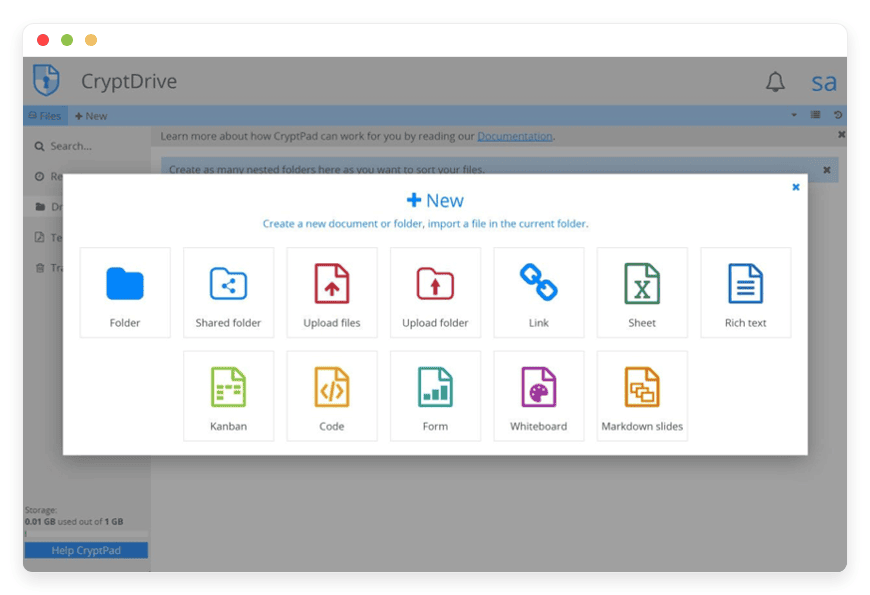
- Open-source tools — Invoice Ninja for billing, Dolibarr for ERP and accounting, Firefly III for cash-flow, Paperless-ngx for receipts — keep the records on infrastructure you control.
- These are software you or your accountant operate, not a done-for-you bookkeeping service. You trade the done-for-you part for ownership and continuity.
- DANIAN runs any of them for €9 per app per month: updates, daily off-site backups, monitoring, and a named person. Your data exports on demand, any time.
What happened to Bench, and why it became a data emergency
Bench was a venture-backed bookkeeping service for North American small businesses. On 27 December 2024 it told customers the platform would stop that day. The site went offline within hours, cutting access to statements, tax documents, and transaction history right before tax season.
Bench had raised over $100 million and, by its own September 2024 figures, served more than 12,000 clients. An archived snapshot of the site claimed 35,000 US customers; the company that later acquired its assets put the real number closer to 12,000. Founded in Vancouver in 2012, Bench paired bookkeeping software with human bookkeepers who did the books for clients.
Bench's model is worth understanding, because it explains the damage. The product was not only software; it was cash-basis bookkeeping done by people, with the finished books delivered back through the platform. When the platform went away, both halves went with it — the software and the place the records lived. Customers could not just switch to another tool, because the work and the data were bound to one account.
The closure was abrupt. Customers received an email the morning of 27 December and found the platform unreachable soon after. Bench first said people could download their data from 30 December until 7 March 2025, then pointed them to a different startup, then removed that referral within days. TechCrunch's reporting captured the confusion as it unfolded.
Three days later, Employer.com announced it had acquired Bench's intellectual property and customer data. As of 2026, former clients reach their historical records through Employer.com's portal. The people who exported in the first weeks fared best; the rest depended on a third party they never chose.
Strip away the corporate drama and one fact remains. For thousands of owners, their books sat inside someone else's account, and a board-level decision they had no part in froze that account overnight.
The real lesson is not “pick a better SaaS”
The reflex after a shutdown is to find a replacement service. That solves the wrong problem. If the replacement also holds your books inside its own account, you have changed the logo on the risk, not removed it. The durable fix is owning the tools and the data underneath them.
Bench's customers did not lose their records because the software was bad. They lost access because the records lived where they had no control. The same exposure exists with any service that stores your financials in its own cloud and can switch you off.
Owning the tools changes the failure mode. When the application runs on infrastructure you control, a vendor's business decision is no longer your emergency. You can export, you can move, you can keep running. That is the difference this article is about.
What “owning your books” actually means
There are three ways to run financial software, and they are not the same thing. You can self-host and run the server yourself. You can have someone manage the open-source app for you. Or you can pay a service to do the bookkeeping for you. Bench was the third kind.
Self-hosted, you run it.
You install the software on your own server and handle updates, backups, and security. Full control, and real operational work that lands on you.
Managed open-source.
The same open-source application, but someone else runs the server — updates, backups, monitoring — while you use the app and own the data. This is what DANIAN does.
Done-for-you bookkeeping.
A service where humans categorise transactions and prepare your books. Bench sat here. Software is only part of it; the labour is the product.
The honest point: the tools below replace the software layer and give you ownership. They do not replace a bookkeeper doing your books. If you need the work done for you, you need a person or a firm, and that is a fair choice. Naming the trade plainly matters more than selling around it.
The shortlist: five open-source tools that keep your records in your hands
These five cover the jobs a bookkeeping stack actually does: send invoices, run the books, track cash flow, keep receipts, and store the records. Each runs as open-source software. DANIAN hosts any of them for €9 per app per month, in the region you choose.
Invoice Ninja — invoicing, quotes, and expenses
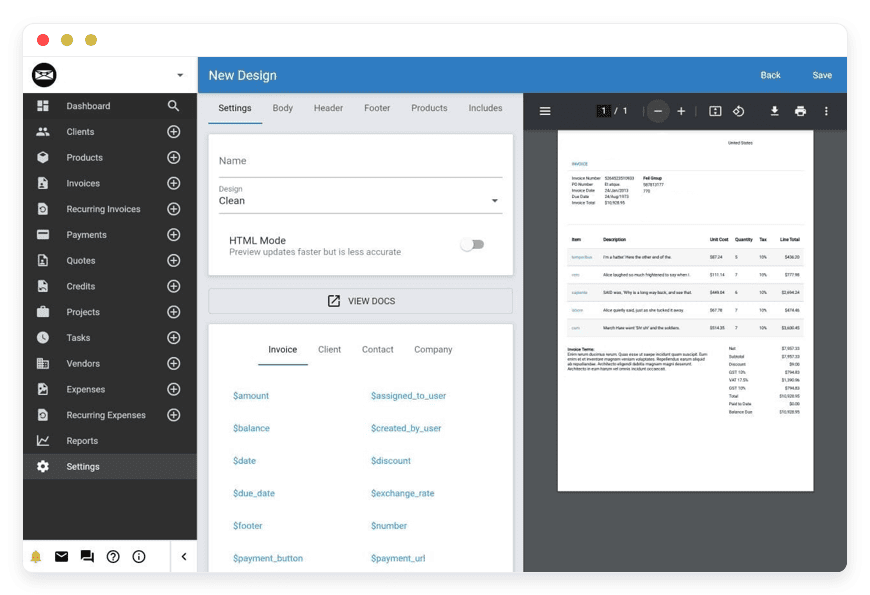
Invoice Ninja handles client billing: invoices, quotes, recurring charges, expenses, time tracking, and online payment links. It is source-available under the Elastic License 2.0 and free to self-host for billing your own clients. Built on Laravel, with around 9,600 GitHub stars.
Best for owners who mainly need to send invoices and get paid. We run it as managed Invoice Ninja.
Dolibarr — ERP with invoicing, banking, and accounting
Dolibarr is a business-management suite: invoicing, orders, expenses, bank reconciliation, inventory, and accounting modules in one application. It is fully open-source under the GPL-3 licence, with roughly 7,200 GitHub stars and a long record of clean version upgrades.
Best for a small business that wants invoicing and books in the same place. We run it as managed Dolibarr (ERP + accounting).
Firefly III — double-entry cash-flow tracking
Firefly III is a finance manager built on double-entry principles: every transaction has a source and a destination, so the numbers reconcile. It tracks budgets, multi-currency balances, and recurring transactions, and exposes a full API.
Open-source under the AGPL-3 licence, with about 23,000 GitHub stars. Best for owner-level cash-flow visibility rather than company books — a useful complement to your accounting, not a replacement for it. Managed Firefly III link.
Paperless-ngx — receipts, tax documents, and records
Paperless-ngx turns paper and PDFs into a searchable archive. It runs OCR in more than 100 languages, tags documents, and can pull receipts straight from a dedicated mailbox. Open-source under the GPL-3 licence, with more than 41,000 GitHub stars and thorough documentation.
Best for keeping every receipt, invoice, and tax document findable in seconds. We run it as Paperless NGX for receipts and records.
Nextcloud — the file store for everything you keep
Nextcloud is a self-hosted file platform: storage, sync, and sharing for the records you keep outside any single app — exports, signed documents, year-end packets. Open-source under the AGPL-3 licence, and available in 60+ languages.
Best for one private place to hold the files your accountant will ask for.
The five tools at a glance
The table maps each tool to the part of the Bench stack it replaces, its licence, and where the data lives. None of these is a bookkeeping service; they are the software underneath one.
| Tool | Replaces | Licence | Your data lives | DANIAN price |
|---|---|---|---|---|
| Invoice Ninja | FreshBooks-style invoicing | Elastic License 2.0 (source-available) | Your own instance | €9/month |
| Dolibarr | QuickBooks / Xero (invoicing + books) | GPL-3 | Your own instance | €9/month |
| Firefly III | YNAB-style cash-flow tracking | AGPL-3 | Your own instance | €9/month |
| Paperless-ngx | Dext / Hubdoc receipt capture | GPL-3 | Your own instance | €9/month |
| Nextcloud | Dropbox / Google Drive | AGPL-3 | Your own instance | €9/month |
How the tools fit together
Few owners need all five at once. They connect in a clear line, though, and you can add them one at a time as the gaps show up. Here is how a small business usually assembles them, starting from the part that touches customers and working back to the books.
Invoice Ninja is the front of the stack: it sends invoices, takes payment, and records what clients owe. Paperless-ngx sits behind your expenses — point a mailbox at it, and the receipts that back up every cost land in a searchable archive. Firefly III tracks the money moving in and out, so you can read your cash position without waiting for a month-end report. Dolibarr, or your accountant working inside it, ties the invoicing and the expenses into a set of books. Nextcloud holds everything else you keep: bank exports, signed contracts, the year-end packet your accountant assembles.
Each one is a separate €9-a-month app, so you pay only for the parts you run. A two-app start — Invoice Ninja for billing and Paperless-ngx for receipts — covers most of what a one-person business loses when a service like Bench disappears, for €18 a month.
What you give up, and what you get
Moving to open-source tools is an honest trade, not a free upgrade. You give up the done-for-you service Bench provided. You get ownership of the data, the ability to export at any time, and a cost that does not move with your headcount. Naming that trade plainly is the point of this section.
What you give up. Bench did the books. Humans categorised transactions and prepared financials. The tools here are software; they do not do the bookkeeping for you. If your month-end depends on someone else doing the work, plan for a bookkeeper or accountant alongside the software.
What you get. The data sits in an application you control. You can export it whenever you want. No vendor can switch off access on a Friday morning. The cost is a flat €9 per app per month, not a per-seat bill that climbs as your team grows.
A practical middle path. Many owners run the software and give their accountant access to it. The accountant works inside your instance; the data and the application stay yours. You get expert help without handing your records to a system you cannot reach.
For full company accounting, Dolibarr's accounting modules cover a lot of small-business ground, and a dedicated double-entry bookkeeping app is on our roadmap. Until that ships, pair these tools with your accountant's process rather than treating them as a one-to-one replacement for a bookkeeping firm.
The cost, honestly
Running these tools is cheap, and that is not the same as replacing a bookkeeping service. The software itself is open-source and free. What you pay for is the hosting and the operations — and on DANIAN that is €9 per app per month, with no per-seat fees.
Run it yourself. A production-class VPS at around $24 a month, plus roughly $5 for off-site backup storage and $15 for monitoring, comes to about $44 a month in infrastructure. Then add your time: 5 to 10 hours to set up, and 1 to 2 hours a month for patching, updates, certificate renewal, and backup checks. At freelance sysadmin rates, that is €60 to €240 a month in time alone. This path fits someone with a developer in-house who is comfortable being on call.
Run it at home. A business-grade mini-PC or small server, amortised over three years, plus electricity, business internet with a static IP, and off-site backup, runs €210 to €667 a month once you count the 2 to 4 hours a month it takes to keep healthy. This suits people who want total physical control of the hardware.
Have DANIAN run it. €9 per app per month. Patching, daily off-site backups, monitoring, and 24/7 support are included. Your operational time is zero. Three apps — say Invoice Ninja, Paperless-ngx, and Firefly III — come to €27 a month, flat.
The number that matters most here is not the euros. It is that none of these paths puts your books inside an account someone else can close.
How DANIAN runs these for you
DANIAN hosts open-source applications so you do not run the server. We deploy the app, patch it, back it up daily off-site, monitor it, and answer chat 24/7 with a named person. You pick the region from 21 datacenter locations across six continents. Your operational time is zero.
Deployment and updates. You choose an app and a region; we provision it and keep it current. Updates land without you scheduling downtime or reading release notes.
Backups and monitoring. Every instance is backed up daily, off-site. We monitor every instance and usually catch problems before they reach you. A backup on the same machine is not a backup; ours are kept separate by design.
Support from a person. Chat and email reach a named human, not a queue. We make the DNS edits, the SMTP setup, and the config changes that normally sit behind a ticket elsewhere.
The promise that matters after Bench. Your data is yours, and it exports on demand over SFTP or download. If your card fails, we wait. We do not delete your data. If you leave, you take the application and its data with you. The whole point of this article is that you should never be locked out of your own records, and our terms are written that way.
How to take back your books this week
You do not have to rebuild everything at once. Start by securing what you have, then replace the most exposed piece, then add the rest as you go. The Bench timeline is the lesson: there is always a deadline, so move while you still have access.
- Export everything you can, now. From whatever service holds your books today, download your data while access is open. Bench gave people weeks; not every vendor will. Keep a local copy regardless of what you do next.
- Replace your most exposed piece first. If client billing is the weak point, start with Invoice Ninja. If you want invoicing and books together, start with Dolibarr. If it is years of receipts, start with Paperless-ngx.
- Deploy one app and bring your accountant in. Start a 7-day trial, launch a single app in your region, and give your accountant access to it. Add the next app once the first is part of your routine.
FAQ
Why did Bench Accounting shut down?
Bench told customers on 27 December 2024 that it was ceasing operations, and its platform went offline the same day. The venture-backed company did not publish a detailed reason beyond stopping the service. Three days later, Employer.com acquired its assets. For customers, the cause mattered less than the effect: a decision they had no part in cut off access to their books overnight.
What happened to Bench customers' data after the shutdown?
Bench first gave customers a window to download their data, with a deadline of 7 March 2025. Shortly after, Employer.com acquired Bench's intellectual property and customer data. As of 2026, former clients reach their historical records through Employer.com's portal. The customers who exported early had the smoothest time; the rest depended on a third party they never chose.
Can I still get my data out of Bench?
The original self-service download window closed on 7 March 2025. Since then, historical Bench records have been held by Employer.com, the company that acquired Bench's assets, and former clients access them through its portal. If you still need those records, start there, export everything you can, and then rebuild on tools you control so you are never in this position again.
Is this the same as a bookkeeping service like Bench?
No. Bench did the books for you with human bookkeepers. These are open-source applications you or your accountant operate. They give you ownership of the data and the software, but they do not categorise transactions or prepare financials for you. For done-for-you work, you still need a bookkeeper or an accounting firm.
What is the best open-source alternative to Bench Accounting?
There is no single open-source app that replaces Bench, because Bench combined software with human bookkeepers. For the software layer, Invoice Ninja handles billing, Dolibarr covers invoicing and accounting, Firefly III tracks cash flow, and Paperless-ngx stores receipts. For the human work Bench did, you still need a bookkeeper or an accountant. What you gain is ownership: the data lives in your own instance.
Do these tools do my bookkeeping automatically?
No. These are applications that record, organise, and store your financial data; they do not categorise transactions or close your books for you the way a human bookkeeper does. They give you ownership and a clean set of records. If you want the work done for you, pair the software with a bookkeeper or an accountant.
What is managed open-source hosting?
Managed open-source hosting means a provider runs the server for an open-source application — installing it, updating it, backing it up, and monitoring it — while you use the app and keep ownership of the data. You get the convenience of a hosted service without handing your records to a vendor that can switch you off. DANIAN runs open-source apps this way for €9 per app per month.
How is managed open-source different from SaaS like Bench?
With SaaS, the vendor owns the platform and your data sits inside its account; if the vendor stops, so does your access. With managed open-source, the same convenience applies — someone else runs the server — but the application is open-source and the data lives in your own instance, exportable on demand. The difference is who controls the off switch.
What does it actually mean to "own" your accounting data?
Owning your data means it lives in an application instance you control, not in a vendor's account. You can export it whenever you want, move it to another host, or keep running the same open-source software anywhere. No board-level decision at a company you do not control can freeze your access. That is the practical difference between renting access and owning the records.
How do I avoid vendor lock-in with my financial software?
Run software that is open-source, where you hold the data in your own instance and can export it at any time. Avoid services that store your books inside their own cloud account, because that is the single point of control that failed for Bench customers. Managed open-source keeps the convenience of a hosted service while removing the lock-in.
How much does it cost to replace Bench with open-source tools?
The software itself is open-source and free; what you pay for is hosting and operations. On DANIAN that is €9 per app per month with no per-seat fees, so a two-app setup is €18 and a three-app setup is €27. Running it yourself instead costs roughly $44 a month in infrastructure plus several hours of your time each month.
Can I run more than one of these at once?
Yes. Each app is €9 per month, billed per app, with no per-seat fees. A common setup is Invoice Ninja for billing plus Paperless-ngx for receipts, with Firefly III for cash-flow on top. You add or remove apps as your needs change.
What happens to my data if I leave DANIAN?
You take it with you. Every instance can be exported on demand over SFTP or download, and the open-source application is yours to run anywhere. We do not hold your data hostage, and a failed payment never triggers deletion. The point of managed open-source is that you are never locked out.
What happens to my data if DANIAN shuts down?
Because the apps are open-source and your data lives in your own instance, you are not dependent on DANIAN continuing. You can export everything over SFTP or download at any time, and run the same software anywhere afterward. The whole point of this approach is that no provider, including us, should ever be a single point of failure for your records.
Where is my data stored?
In the region you choose. DANIAN runs across 21 datacenter locations on six continents, so you can place each app close to you or your customers. Application data stays in the region you select for that app, and you can ask us to move it.
Can I choose which country my data is hosted in?
Yes. DANIAN runs across 21 datacenter locations on six continents, and you pick the region for each app you deploy. Your application data stays in the region you select, you can place different apps in different regions, and you can ask us to move an app's data later.
Can my accountant use these tools?
Yes. Many owners run the software and give their accountant access to it. The accountant works inside your instance — your invoices, your transactions, your receipts — while the data and the application stay under your control. You get expert help without handing your records to a system you cannot reach.
Will my accountant accept books kept in open-source software?
Yes. An accountant works from your figures and documents, not from a particular brand of software. Dolibarr produces standard invoices, reports, and exports, and Paperless-ngx keeps the source documents findable. Many accountants are comfortable working inside the tools their clients run; if yours prefers a particular format, these apps export to common file types. Confirm the workflow with them first.
What if my business needs full company accounting today?
Dolibarr includes invoicing, bank reconciliation, and accounting modules in one application, which covers a lot of small-business needs. A dedicated double-entry bookkeeping app is on our roadmap. For now, pair these tools with your accountant's process rather than treating them as a full accounting department.
Which tool replaces QuickBooks or Xero?
Dolibarr is the closest fit: it combines invoicing, bank reconciliation, and accounting modules in one open-source application, which covers a lot of what small businesses use QuickBooks or Xero for. It is not a one-to-one match for every feature, and a dedicated double-entry bookkeeping app is on our roadmap. For now, pair Dolibarr with your accountant's process.
What is the difference between Firefly III and Dolibarr?
Firefly III is a personal and owner-level finance manager: it tracks cash flow, budgets, and balances so you can see the money moving in and out. Dolibarr is a business suite that handles invoicing, expenses, bank reconciliation, and company accounting. Use Firefly III for cash-flow visibility and Dolibarr for the books themselves; many owners run both.
Is Invoice Ninja really free to use?
The self-hosted version is free to run for billing your own clients. It is source-available under the Elastic License 2.0, and the features from the paid cloud version are included in the code. The one paid extra is an optional licence to remove Invoice Ninja branding from client-facing documents.
Do I need to be technical to run these?
No. DANIAN runs the server, the updates, the backups, and the monitoring. You log in and use the application the same way you would use any web app. When something needs a server-side change, you ask us and a person handles it. You never touch a command line.
The takeaway
Bench's shutdown was not a software problem. It was a control problem: the books lived in an account the owners could not reach. Open-source tools, hosted so you do not run the server, remove that single point of failure.
The owners who came through Bench best were the ones who got their data out early and rebuilt on something they controlled. You can put yourself in that position now, before the next vendor makes a decision for you.
Pick the one tool that covers your biggest gap, deploy it this week, and keep your data where no one can switch it off.
Start a 7-day free trial — no card — and add the rest as you go.
The catalog has the full list.