Fully Managed WBO
as a Service

Deploy WBO as a fully managed service starting at €9/mo. Get automated backups, SSL, updates, support and monitoring included.

WBO is an open-source collaborative whiteboard — drawings, sketches, diagrams, and annotations shared in real time through a single board URL. It pairs the lightweight feel of the now-shuttered Google Jamboard with the privacy and control of self-hosted infrastructure. No accounts, no per-editor pricing, no third-party trackers on the canvas.

Free 7-day trial  99.9% Uptime SLA  No credit card  Cancel anytime

Free 7-day trial  99.9% Uptime SLA
No credit card  Cancel anytime

WBO

WBO

STARTING AT

€9/month
Automated Backups
Monitoring
Automated Updates
Auto SSL

USAGE

Unlimited
Human Support
Custom Domains
Terminal Access
File Manager Access
Deploy in your region 21 locations worldwide
GermanyFinlandNetherlandsUKSwedenUnited StatesCanadaSingaporeJapanAustraliaBrazilSouth Africa+9 more →
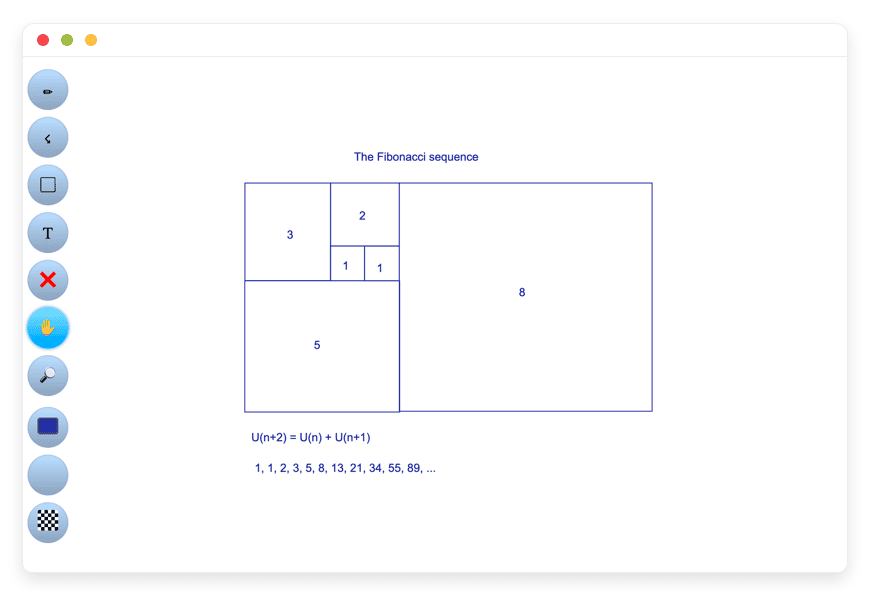
WBO Preview Image

ABOUT THE SOFTWARE

What is WBO

WBO is an open-source collaborative whiteboard — sketches, diagrams, handwritten notes, and freehand drawing shared in real time through a single shareable URL. There are no user accounts and no built-in analytics; the board is the document, and the document is the URL.

WBO is licensed under AGPL-3.0 and maintained by Ophir LOJKINE (GitHub: lovasoa), a Paris-based software engineer who has shipped the project since the early 2010s. The repository carries roughly 2,500 stars and 477 forks; the official Docker image lovasoa/wbo has passed one million pulls.

The stack is small and predictable: Node.js on the server, Socket.IO for realtime transport, and vanilla JavaScript with SVG on the client. Boards persist as individual board-<name>.svg files in a single directory — no database, no queue, no external dependency to manage. Notable public deployments include the maintainer's demo at wbo.ophir.dev, the YunoHost community catalog (packaged as whitebophir 1.22.1~ynh1), Coolab's Brazilian community-networks instance at quadro.coolab.org, and a documented integration as the whiteboard plug-in for Jitsi Meet through Etherpad's ep_draw.

FEATURES

What WBO does

WBO does one thing well: real-time multi-user drawing in a browser, shared by URL, persisted to disk as SVG. Touch and stylus input work on iPads and Surfaces. Optional JWT auth scopes access per board. No accounts, no trackers, no per-editor seat ceilings.

Real-time collaborative drawing

Socket.IO realtime transport. Multiple users edit the same board simultaneously; strokes appear with low-latency updates between connected clients.

JWT board scoping

Set AUTH_SECRET_KEY to sign JWTs scoped to specific board names. Tokens carry editor, moderator, or reader roles; moderators unlock the Clear tool.

SVG-native persistence

Boards save as individual board-<name>.svg files; the /preview/<boardName> endpoint returns a clean SVG snapshot at infinite resolution.

OpenTelemetry and StatsD export

Built-in observability hooks. Configure OTLP endpoints or STATSD_URL to push active-board and connection metrics into existing Prometheus or Datadog stacks.

URL-as-document

Every board is reached at a unique URL. Share the URL and you've shared the board. No account creation flow, no team invitation gate, no editor-seat math.

Touch and stylus input

Canvas accepts touch events natively. iPads, Surface tablets, and drawing tablets work without a plug-in. Strokes are constant-width SVG paths.

Per-IP rate limiting

WBO_MAX_EMIT_COUNT bounds socket writes per source IP (default *:250/5s); a separate anonymous lane caps unauthenticated traffic at half rate.

Translation and embedding

Translated by community contributors into multiple languages. The board page works embedded in an iframe, including as the documented whiteboard plug-in for Jitsi Meet.

WHAT'S ALWAYS INCLUDED

Every app. Fully managed.
Nothing extra to pay for.

Every app you deploy includes the full managed service — security, backups, updates, and support from day one.

Automatic updates and patches

Apps run the latest stable version. Security patches applied silently, with rollback if needed.

Daily off-site backups

Multiple daily backups in redundant off-site locations. One-click restore if anything goes wrong.

24/7 uptime monitoring

Continuous monitoring with instant alerting. We respond before you notice.

SSL, firewall, DDoS protection

Auto-renewing SSL, hardened firewall rules, DDoS mitigation on every deployment.

Performance and scaling

We monitor resource usage continuously. When your app needs more headroom, we flag it and upgrade with your explicit approval.

Dedicated engineering support

Real engineers on chat. DNS, SMTP & migration help. All included in €9.

WHY MANAGED

Why teams pick managed WBO

Google Jamboard shut down on 31 December 2024, leaving education and enterprise teams without an instant whiteboard. Miro's Free plan caps a whole team at three editable boards, which breaks the first multi-board workshop. Self-hosting WBO solves both — until production reveals two failure modes that managed hosting removes.

Running WBO yourself looks deceptively easy. Pull the lovasoa/wbo image, expose port 5001, point a reverse proxy at it, and the README's Quick Start is a few minutes of work. Production reveals what the Quick Start hides — patching the Node base image on a monthly cadence, snapshotting the SVG storage directory off-host every day, reading the OpenTelemetry stream when stroke latency spikes, and answering email at 02:00 when a reverse-proxy upgrade quietly broke WebSocket sync. None of this work is hard. All of it adds up.

The container persists every board as a flat board-<name>.svg file inside /opt/app/server-data. Run it without binding that path to a host volume — the default in most published Docker examples — and every board vanishes the moment the container is recreated for an image update, a host reboot, or a Watchtower upgrade pass. Mount the volume with the wrong owner (the WBO process runs as UID 1000) and the server logs EACCES: permission denied while appearing to work for the live session, then loads blank on next visit. Issue #164 on the upstream repo documents the failure pattern directly: "Reloading the board shows an empty board." The original symptom in production is usually a customer call about a missing whiteboard the morning after a Sunday auto-update.

REVIEWS

Hear from customers ​like you​​​​​​​

Successful businesses and professionals around the world rely on DANIAN every day

USE CASES

Three teams who run WBO on DANIAN

These are representative team types we set up most often. Each starts with the same flat €9 plan.

12-PERSON BERLIN DESIGN STUDIO

Dropping €2,300 a year on Miro Business after the team-wide Free cap broke

Twelve editors on Miro Business cost roughly €192 per month at the studio's contracted rate. A 2025 budget review pushed them back to Free; the three-board team cap broke on the first multi-day workshop. They moved to managed WBO in Germany and host roughly 40 sketch boards a month behind a moderator-only Clear tool, with /preview/<boardName> SVG snapshots piped into client decks.

24-STUDENT GRADUATE SEMINAR

Drawing inside the LMS without provisioning student accounts

The instructor used Jamboard until 31 December 2024. Education-tier Miro auto-bundled students into a team and exposed each other's draft boards. Managed WBO with AUTH_SECRET_KEY set mints a per-assignment JWT scoped to editor:lab-week-7; the tokenised URL pastes into the LMS module. Students draw without accounts; the SVG archives to the gradebook.

6-PARTNER MADRID CONSULTING PRACTICE

Sketching client process maps without routing them through US SaaS

Senior partners decided that while the EU-US Data Privacy Framework is under CJEU appeal, client whiteboard data does not transit US-controlled SaaS. Managed WBO sits on an EU-resident node; board URLs are unguessable random tokens; the moderator JWT role is held by two partners so juniors cannot accidentally clear a board mid-discussion. The arrangement replaces a $1,079/year Mural Business contract.

COMPARISON

Four ways to run WBO

Four paths get a team to a collaborative whiteboard. The proprietary SaaS path is the most polished; the self-host paths trade time for control; managed WBO trades €9 for both. The table below compares cost and operational time for the same five-editor design team.

 PATHAT 1 EDITORAT 5 EDITORSAT 10 EDITORS
Miro Starter (proprietary SaaS)
$8/editor/month annual ($10 monthly). Free tier caps the whole team at 3 editable boards.
$8/mo
($96/yr)
$40/mo
($480/yr)
$80/mo
($960/yr)
Self-host on a $24/mo production-class VPS
You own the patching, the WebSocket-proxy config, the volume backups, the rate-limit tuning, and the 02:00 page.
$24/mo
+ ~4 hrs/mo ops
$24/mo
+ ~6 hrs/mo ops
$24/mo
+ ~6 hrs/mo ops
Home server (Synology DS923+ or HP ProLiant ML30 Gen10)
One-time hardware + electricity. Add dynamic DNS, residential bandwidth ceiling, and ISP terms on inbound 443.
~€600 one-time
+ €8/mo
Same
+ dynamic DNS
Same
+ bandwidth ceiling
DANIAN Managed WBO
Flat €9. Hardware, updates, backups, security, monitoring, and human support — all included.
€9/mo€9/mo€9/mo

At one editor, Miro Starter is the cheapest paper number. At five editors, managed WBO is roughly 80% less than Miro Starter and 90% less than Miro Business. At ten editors, managed WBO is 90% less than Miro Starter. The VPS and home-server paths are real options for technical teams; both add ongoing ops time that managed hosting removes. WBO has no database, so the usual "DB tuning at 25+ users" caveat doesn't apply — but the WebSocket-proxy and per-IP rate-limit tuning still does.

BY INDUSTRY

WBO for specific industries

WBO suits teams that want shared drawing more than shared sticky-note workshops. Five industries hit that profile cleanly. Each has a specific configuration choice, a regulatory or operational constraint, a recurring workflow, and a quantifiable detail that decides whether managed hosting is worth €9.

Operational constraint. FERPA requires that institution-held student educational records aren't disclosed without consent; coursework retained in a teaching tool can constitute a record. Self-hosting keeps that data inside the institution's processing perimeter.

DANIAN configuration. JWT auth with AUTH_SECRET_KEY set; per-assignment tokens minted with editor:<courseweek> roles from the LMS; WBO_HISTORY_DIR mounted on an encrypted volume; the anonymous public board route disabled.

Workflow. Instructor links a tokenised board into a weekly LMS module; students draw without accounts; the SVG snapshot archives to the gradebook entry at week's end.

Quantifiable. Miro's Education plan caps a free team at 100 members. A 250-student lecture course splits across multiple board names on managed WBO with no licensing math.

Operational constraint. COPPA applies when learners are under 13; the operational reality is "no third-party tracker loaded on the board page."

DANIAN configuration.WBO_HTML_HEAD_SNIPPET_PATH deliberately empty; strict Content-Security-Policy on the reverse proxy; random board names generated server-side via /random; no public board listing.

Workflow. Tutor sends a single-use random URL by SMS; child opens the link on a tablet; managed cron archives boards 30 days after last edit and removes the live copy.

Quantifiable. A 4-tutor agency on Miro Starter pays $32 per month ($384 per year). Managed WBO is a flat €9 regardless of concurrent tutors, since WBO has no editor-seat concept.

Operational constraint. Client NDAs and IP confidentiality clauses; many studio contracts forbid uploading client materials to third-party SaaS without explicit consent.

DANIAN configuration. Moderator-role JWT for the studio lead (sole access to Clear); editor tokens for the rest of the team; random URL slugs per engagement; WBO_MAX_EMIT_COUNT raised to *:500/5s for smoother stylus input on iPad.

Workflow. Rapid concept sketching during a Jitsi client call via the ep_draw integration; SVG preview pulled into the deliverable deck; board cleared by the moderator role at engagement end.

Quantifiable. SVG-native persistence means line art exports at infinite resolution. No Miro "high-resolution PDF gated to paid tier" math.

Operational constraint. Client confidentiality plus EU procurement clauses requiring that working papers not transit US-controlled SaaS while the EU-US Data Privacy Framework is under CJEU appeal. Three Nordic data-protection authorities (Norway, Sweden, Denmark) publicly told businesses to prepare exit strategies in 2025.

DANIAN configuration. Single-tenant deployment on an EU-resident node; short-expiry JWTs (≈ 8 h) so screenshots of URLs don't constitute permanent access; daily encrypted off-host backups of the SVG files. DANIAN does not hold ISO 27001, SOC 2, or HIPAA attestation; the framing here is operational practice that maps to common requirements, not a certification claim.

Workflow. Consultant runs an as-is / to-be process sketch in a client workshop; board exported to SVG into the deliverable; board wiped by the moderator role at engagement close.

Quantifiable. Mural Business at $17.99 per user × a 5-partner practice is $89.95 per month ($1,079 per year). Break-even on managed WBO arrives below three partners.

Operational constraint. Internal source-of-truth retention; engineering diagrams often must persist alongside the pull request that referenced them for code-review audit purposes.

DANIAN configuration. WBO behind team SSO via a JWT bridge; STATSD_URL set to the team's existing Prometheus stack; OpenTelemetry exporter pointed at the team's OTLP collector with the parent-based sample rate at the WBO default of 5%.

Workflow. During architecture review, the staff engineer sketches a sequence diagram on a board linked from the RFC pull request; the /preview/<boardName> SVG attaches to the PR review comment for the permanent record.

Quantifiable. Observability tuning is identical to any other team-owned Node service. No separate observability SaaS line item for the whiteboard.

FAQ

Frequently asked questions

Everything teams ask before signing up — answered straight, without sales speak.

Three groups: technical setup, migration, and how DANIAN works as a service.

01

Technical and configuration

Yes. WBO uses Socket.IO realtime transport. Multiple editors on the same board see each other's strokes appear with low-latency updates between connected clients. The board state persists to disk as the canonical SVG; reconnections rebuild from there.
One SVG file per board at WBO_HISTORY_DIR/board-<boardName>.svg, with the default path mapping to /opt/app/server-data inside the container. Older deployments may still hold legacy .json board files; the server auto-migrates them to SVG on first load. We mount that path on a managed volume with daily snapshots to a separate off-host target.
WBO does not include a built-in PDF or PNG exporter. The /preview/<boardName> endpoint returns a clean SVG snapshot of any board; the README acknowledges the SVG renderer is not 100% faithful but is usually good enough for downstream conversion. PDF/PNG export is the longest-standing open feature request on the repo (Issue #15). We don't promise it.
No native accounts. Optional JWT authentication is enabled by setting AUTH_SECRET_KEY; tokens are passed as ?token=<jwt> on the board URL. The token payload carries roles — editor, moderator, or reader — and can be scoped to a specific board name (editor:my-board). We ship with AUTH_SECRET_KEY set by default and rotate the signing key per customer instance.
Not with a password as such, but you can scope a JWT to one specific board (roles: ["editor:mySecretBoard"]). Only token holders can open that board.
We don't publish a hard ceiling; the README doesn't either. WBO_MAX_EMIT_COUNT throttles any single client's socket-write rate (default *:250/5s per IP; we raise this to *:500/5s with the anonymous lane at *:250/5s). Concurrent client count is bounded by Node's event loop and host RAM. Community deployments routinely run dozens of simultaneous editors on small machines.
Yes. The canvas accepts touch events; iPads, Surface tablets, and drawing tablets work without a plug-in. Stylus pressure is not recorded — strokes are plain SVG paths with constant width.
Yes. The documented integration uses Etherpad's ep_draw plug-in to surface WBO inside a Jitsi conference. The upstream tracking issue (jitsi/jitsi-meet#5295) has over 60 thumbs-up reactions; the integration recipe lives in the WBO repo wiki.
It unlocks the Clear tool, which wipes the entire board. Editors can draw, undo their own strokes, and download a preview; only moderators can clear.

02

Migration and onboarding

We can activate your app on your own custom domain/subdomain. Examples: mydomain.com, anyword.mydomain.com.
Or, on our randomized free subdomain. Example: 963.apps.danian.cloud
If you wish to use a custom domain/subdomain, select that option when ordering your app (or notify us later). We will send you the required DNS records and if needed, our tech team will modify them for you.
21 datacenter locations across six continents. You choose the region at provisioning. Application data sits in the region you choose; pick whichever is closest to your users or matches your data-residency preference.
Yes. Request a region migration from the dashboard and we run the move in the background. The system emails you when the migration completes; total transfer time depends on data volume but typical instances finish in a few hours. There is no extra charge for a region change.
Yes. Full data export is available at any time, in a portable format you can bring to any infrastructure.
Jamboard files were deleted by Google after 31 December 2024, so the question rarely comes up with the original files in hand. If you have PDFs exported before the shutdown, they can be linked from a WBO board as static reference images. WBO itself doesn't import third-party whiteboard formats. We help configure the new boards and the LMS or wiki links that point to them.
Miro boards are not directly importable into WBO. The practical transition is to leave Miro as the historical archive and start new work in WBO from day one; export critical Miro boards to PDF before Miro's Free-tier three-board cap blocks editing. We help plan which boards stay archived and which get redrawn.

03

Billing, support, and platform

€9 covers everything we do for that app: hardware in the region you choose, daily off-site backups with one-click restore, automatic security patches and version upgrades, 24/7 monitoring, SSL and firewall, and engineering support on Email/LiveChat. There are no setup fees or hidden line items. For more info see our Pricing page.
If you decide to continue, we charge €9/app/month from day 8. If you don't, the trial ends and you can export your data. No card is required for the trial, and we never auto-charge you without explicit consent.
No. The €9/month is flat regardless of how many users log into your app. Add 5 users or 50; the price doesn't change.
24/7 Live chat and email support, both staffed by engineers who run the systems. We handle DNS configuration, SMTP setup, app integrations, performance tuning, troubleshooting, and migration help. Response time is typically under an hour. There is no tier system — every customer gets the same support.
Yes. Cancel from the dashboard. We don't charge a cancellation fee, we don't lock data, and we will export your data to you on request before deletion. data to you on request before deletion.
Every customer instance is backed up daily to a separate region from the primary. We test restores. You can request a restore at any backup point within the retention window — usually 7 days for daily backups.
Your application data sits in the region you choose at provisioning — 21 datacenter locations across six continents. Account-level data (billing, account email, support ticket history) is processed centrally. Application data region is picked by you, per app.
99.9% uptime SLA on every app, every tenant. Service credits are documented at danian.co/service-level-agreement. The status page is located at status.danian.co.
When your tenant approaches the resource ceiling — the base tier holds 1 vCPU/RAM, 30 GB storage — we notify you. Resource upgrades happen with your explicit consent; we will not upgrade your tenant or charge you without it.
We wait. We don't suspend the app or delete your data on the first failed charge. We email you, you fix the card on file, and we continue.
Invoices can be downloaded from the billing dashboard in PDF the day each charge succeeds. EU VAT is added where applicable and the VAT-reverse-charge regime applies for VAT-registered businesses with a valid number.
150+ open-source apps across automation, team chat, file sync, analytics, AI, password management, email marketing, dev tools, project management, smart home, CMS, and federated social. See the full catalog →
Yes. Every instance comes with a web-based terminal and a file manager in your DANIAN management dashboard. Useful for managing your data and customizations.
Resources scale with your usage. If your app needs more vCPU, RAM, or storage, we add it — and we ask first before any change to your plan. €9 is the floor; resource-heavy workloads may price higher, but you'll always know in advance.
Yes. We have both a Partner program and an Affiliate program available. Anybody can sign up.
No contract. No minimum commitment. Cancel anytime from the dashboard with one click. The 7-day free trial requires no credit card. After the trial converts to paid, you can still cancel at any month without notice or penalty.

DEPLOY IN YOUR REGION

21 datacenter locations on six continents

Pick the region closest to your users.

United States, Germany, Finland, Singapore, Australia, Brazil, Canada, Netherlands, UK, Spain, Italy, France, Sweden, Malaysia, India, Japan, Mexico, Poland, South Korea, Chile, South Africa and more coming soon
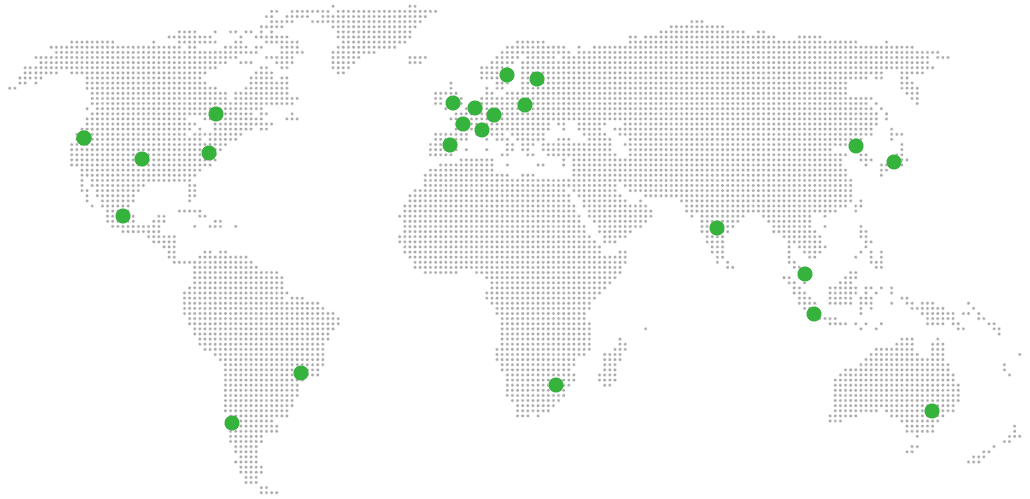
Global Reach Map

Try managed WBO for 7 days

No card. Cancel from the dashboard.