Fully Managed Tandoor
as a Service

Deploy Tandoor as a fully managed service starting at €9/mo. Get automated backups, SSL, updates, support and monitoring included.

Tandoor is an open-source recipe manager that imports recipes from any URL with schema.org markup, plans meals on a weekly calendar, generates aisle-sorted shopping lists, and tracks nutrition and cost per ingredient. It replaces Paprika 3, Plan to Eat, and Samsung Food without per-seat pricing.

Free 7-day trial  99.9% Uptime SLA  No credit card  Cancel anytime

Free 7-day trial  99.9% Uptime SLA
No credit card  Cancel anytime

Tandoor

Tandoor

STARTING AT

€9/month
Automated Backups
Monitoring
Automated Updates
Auto SSL

USAGE

Unlimited
Human Support
Custom Domains
Terminal Access
File Manager Access
Deploy in your region 21 locations worldwide
GermanyFinlandNetherlandsUKSwedenUnited StatesCanadaSingaporeJapanAustraliaBrazilSouth Africa+9 more →
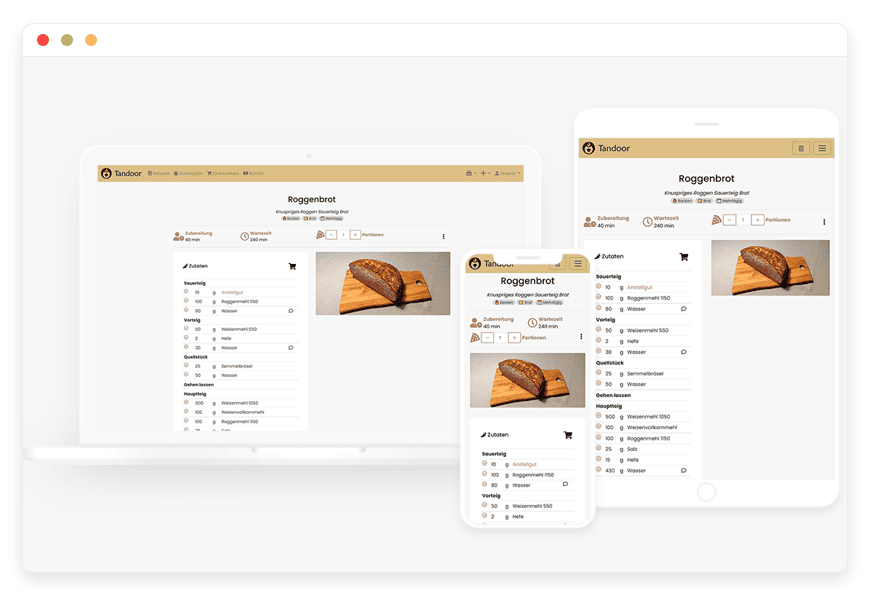
Tandoor Preview Image

ABOUT THE SOFTWARE

What is Tandoor

Tandoor is an open-source recipe manager and meal planner that imports recipes from any URL, organises them into cookbooks and Households, plans meals on a weekly calendar, and generates a real-time shopping list sorted by supermarket aisle. It replaces the subscription path most households end up on after a Paprika upgrade or a Samsung Food rebrand.

Tandoor is licensed under the GNU AGPL v3 with a Commons Clause selling exception. It is led by a single developer who goes by Benedikt on GitHub Sponsors (@vabene1111) and built openly by volunteer contributors. The project has accumulated over 8,300 GitHub stars and crossed 10 million Docker Hub pulls. There is no foundation, no incorporated entity, and no commercial SLA behind the upstream project — which is exactly the gap a managed host fills.

The stack is Django and gunicorn on the backend, Vue.js on the frontend, and Postgres in production. A typical household instance runs comfortably on 1 to 2 GB of RAM with 5 to 10 GB of disk for a few hundred recipes.

FEATURES

What Tandoor does

Eight capabilities cover what most households, caterers, schools, and bakeries actually use Tandoor for. None of these are platform-level — they are the application itself, shipped on every DANIAN tenant by default. No paid tiers; no feature flags.

URL recipe importer

Pulls recipes from any site that publishes JSON-LD schema.org markup, via the recipe-scrapers library. A browser bookmarklet handles sites that do not.

Aisle-sorted shopping list

Auto-generated from the meal plan, sorted by supermarket section. Real-time sync across devices so two people in the store cannot double-buy.

Recipe scaling

Adjust by servings or by pan diameter. The ingredient amounts update in place, and the shopping list inherits the scaled quantities downstream.

Public share links

Token-based links let you share a single recipe or cookbook with anyone, no account required. Revoke any link from the recipe view.

Weekly meal planner

Drag-and-drop calendar with meal-type assignment, recipe links, and copy-week templates. Multi-user editing keeps the household in sync.

Automatic unit conversion

Metric to imperial and weight to volume within the same domain since version 1.5.0. Cross-domain (cups of flour to grams) needs a manual density.

Cookbooks, spaces, and Households

Cookbooks group recipes by theme. Spaces separate fully independent groups. Households (added in 2.6.0) define who shares meal plans and lists.

Food properties

Per-ingredient nutrition, cost-per-100g, and allergen flags. Recipes inherit the totals automatically. OpenFoodFacts auto-fills common entries.

WHAT'S ALWAYS INCLUDED

Every app. Fully managed.
Nothing extra to pay for.

Every app you deploy includes the full managed service — security, backups, updates, and support from day one.

Automatic updates and patches

Apps run the latest stable version. Security patches applied silently, with rollback if needed.

Daily off-site backups

Multiple daily backups in redundant off-site locations. One-click restore if anything goes wrong.

24/7 uptime monitoring

Continuous monitoring with instant alerting. We respond before you notice.

SSL, firewall, DDoS protection

Auto-renewing SSL, hardened firewall rules, DDoS mitigation on every deployment.

Performance and scaling

We monitor resource usage continuously. When your app needs more headroom, we flag it and upgrade with your explicit approval.

Dedicated engineering support

Real engineers on chat. DNS, SMTP & migration help. All included in €9.

WHY MANAGED

Why teams pick managed Tandoor

Through 2025 and into 2026 the proprietary recipe-app market converged on one pattern: subscription pricing, hardware lock-in, AI personalisation running on user-uploaded recipes, and another paid-upgrade cycle. Paprika 4 entered public beta on 23 April 2026, gating family accounts and AI photo scanning behind another per-platform purchase. Samsung Food+ premium launched at IFA 2024 at $6.99/month, with the best features fenced behind Samsung Bespoke appliances. Plan to Eat holds at $49 per year per account. Tandoor's AGPLv3 architecture sidesteps all three pressures at once.

Self-hosting Tandoor is not hard. Keeping it running is. The operational work the upstream docs put on the operator includes: securing the SECRET_KEY and the ALLOWED_HOSTS setting (covered by the upstream advisory GHSA-x636-4jx6-xc4w), upgrading Postgres between major versions manually (the official docs warn "Postgres does not automatically upgrade database files when you change versions and requires manual intervention"), patching the Django dependencies on a monthly cadence, and — the gotcha that bit a measurable chunk of the community in 2025 — backing up the mediafiles directory separately because pg_dump does not include recipe images.

The single most-cited example is the Tandoor 2.6.0 Households migration. The release notes flag it verbatim: "If you had previously migrated to 2.6.0 or 2.6.1 and multiple users had meal plans that had the same name and all created meal plans those from some of these users might have been deleted by the migration." Fixed in 2.6.3. Irreversible if you had not backed up first. We held 2.6.0 and 2.6.1 in staging, verified the meal-plan tables against a snapshot, and rolled forward to 2.6.3 — a working week of lag that customers did not have to think about.

REVIEWS

Hear from customers ​like you​​​​​​​

Successful businesses and professionals around the world rely on DANIAN every day

USE CASES

Three teams who run Tandoor on DANIAN

These are representative team types we set up most often. Each starts with the same flat €9 plan.

 12-PERSON MULTI-GENERATIONAL HOUSEHOLD

Replacing five Paprika device purchases and a Samsung Food+ subscription

EU-anchored family across two cities. Region: Germany for low-latency shopping-list sync. Households feature on, signups disabled after onboarding, public share links per-recipe only. Nextcloud handles cookbook PDFs alongside Tandoor's recipe library. iOS and Android home-screen PWAs replace native apps. €9 flat replaces ~$45–60/mo of subscription and device-purchase amortisation.

 5-STAFF CULINARY SCHOOL + 80 STUDENT VIEWERS

Versioning a 12-week curriculum across academic terms

Region picked for student data residency. One Tandoor space per term so the spring syllabus stays frozen while autumn branches. Cookbooks group recipes by module. Public share-link tokens give students read access without per-student accounts or per-seat fees. JSON-LD export keeps the curriculum portable if the school migrates.

 3-PERSON MICRO-BAKERY

Scaling a 1 kg dough formula to 12 kg production batches

Region matches the legal entity for invoice residency. Food properties pre-configured for cost-per-100g and EU 1169/2011 allergen labelling. Unit conversion wired between grams, ounces, cups, and tablespoons. Owner enters a 1 kg formula, scales to a 12 kg batch in one step, exports shopping lists grouped by supplier.

COMPARISON

Four ways to run Tandoor

Each path is a real option for a real buyer. The math below is honest: subscription cost where it applies, hardware amortised over thirty-six months where it applies, and a realistic operational-time line where it applies. Pick the path that fits your team, not the one that flatters DANIAN.

 PATH1 SEAT5 SEATS 10 SEATSOPERATIONAL TIME
Proprietary SaaS
Plan to Eat ($49/yr per account)
$4.08/mo$20.42/mo$40.83/moNone — vendor runs it
Self-host on a VPS
$24/mo production-class VPS
$24/mo + time$24/mo + time$24/mo + time (DB tuning)1–2 hours/month patching, on-call
Home server
Synology DS923+ or HP ProLiant ML30 Gen10
€35–80/mo€35–80/mo€35–80/mo2–4 hours/month + on-call
DANIAN Managed Tandoor€9/mo€9/mo€9/moZero — we run it

Plan to Eat is the closest household comparator at multi-seat scale. Paprika 3 is per-device ($4.99 mobile, $29.99 desktop) and looks cheap at one seat amortised, but each new device or platform is another purchase; Paprika 4's announced family accounts and AI scanning will likely re-price the household case. VPS time is costed conservatively at €60–120/hour freelance sysadmin equivalent. Home-server cost stacks hardware amortisation, electricity, business-grade internet, and off-site backup.

Cost is only one axis. The dimensions that matter on a longer arc are data ownership (Path 1 holds your data in a vendor format; Paths 2, 3, and 4 all leave you in possession of an exportable archive), customisation (Path 1 is locked to the vendor's roadmap; Paths 2, 3, and 4 run the same open-source Tandoor codebase with the same import paths), and switching cost (Path 1 has the highest exit friction; Path 4 has the lowest — the JSON-LD export works in any direction).

The honest cases for the non-DANIAN paths: if you are one person on one device and like Paprika's UI, Path 1 wins. If you have a developer in-house and enjoy Linux operations on the weekend, Path 2 wins. If your data-sovereignty bar is total physical control of the hardware, Path 3 wins. DANIAN wins when your household, school, or business is past the first user, the first device, or the first time something broke and nobody had time to fix it.

BY INDUSTRY

Tandoor for specific industries

Four industries fit Tandoor closely enough to warrant a dedicated configuration brief. Each block names the regulation or standard at stake, the DANIAN configuration choice we apply, an example workflow, and the rough scale of the deployments we see. If your industry is not here and you want a brief — ask in chat.

Standard at stake: EU Regulation 1169/2011 requires the fourteen listed allergens to be declared per dish. The US FASTER Act of 2021 added sesame as the ninth federally recognised allergen, effective 1 January 2023. Either jurisdiction requires per-ingredient discipline a spreadsheet does not enforce.

DANIAN configuration: Food properties pre-loaded with allergen flags per ingredient; backups include the mediafiles directory so allergen reference photos survive a restore; one Tandoor space per service line (events, daily menu) for clean separation.

Workflow example: Caterer scales a 4-portion tasting recipe to 80 for a wedding, exports the auto-sorted shopping list to the supplier portal, and prints menu cards with the EU 1169/2011 allergen icons keyed off the ingredient list — all from one recipe view.

Typical scale: 150–400 recipes, 5–15 staff seats, 30–80 events per year.
Standard at stake: Curriculum integrity across academic terms. The recipes a student practised against in spring must still be intact and unmodified when assessed in autumn. Version drift across cohorts is what breaks accreditation reviews.

DANIAN configuration: One Tandoor space per academic term, branched at the start of each cohort and frozen at the end. Cookbooks group recipes per module. Public share-link tokens give students read access without paid seats. Signups disabled outside onboarding windows.

Workflow example: Instructor uploads a 12-week curriculum into a "Spring 2026" space, freezes it on day one of term, branches a "Autumn 2026" copy mid-term, and gives 80 students read access via tokens. Students never see one another's notes.

Typical scale: 200–500 recipes, 5 staff seats, 30–120 student read-only viewers per term.
Standard at stake: Formula-card discipline. Bakers think in percentages off a base flour weight; production needs the same formula scaled cleanly to a batch with no drift. EU 1169/2011 also applies to packaged-goods labelling for direct sale.

DANIAN configuration: Tandoor food properties pre-configured for cost-per-100g and allergen flags. Unit conversion enabled across weight units. Recipe scaling unlocked for arbitrary multipliers. Private space — no public sharing of formulas.

Workflow example: Owner enters a 1 kg dough formula with baker's percentages encoded as food properties, scales to a 12 kg production batch in one click, and exports a shopping list grouped by supplier. The same scale operation also recalculates the per-loaf cost downstream.

Typical scale: 50–200 recipes, 1–3 staff seats, batch scale 1× to 25×.
Standard at stake: Operational discipline appropriate to client data, region pinning for client residency, data minimisation, separation between clients.

DANIAN configuration: Region pinned to the client's jurisdiction. Public share links disabled by default. Single-tenant database per customer. Backups encrypted at rest in a separate region. Tandoor spaces used per client for separation; cookbooks for the shared meal-template library.

Workflow example: Dietitian creates a per-client Tandoor space, builds a 4-week meal plan with macro targets from food properties auto-filled via OpenFoodFacts, and exports a PDF for the client. Client never sees another client's data because they live in different spaces.

Typical scale: 20–60 active client spaces, 100–300 base recipes in a shared library cookbook, 1–2 staff seats.

FAQ

Frequently asked questions

Everything teams ask before signing up — answered straight, without sales speak.

Three groups: technical setup, migration, and how DANIAN works as a service.

01

Technical and configuration

We pin Tandoor at the latest stable release published on the TandoorRecipes GitHub repo. Upgrades land in a staging instance first, run through a migration check, and only roll forward to your instance once the database migration completes cleanly. Major-version jumps that need a Postgres upgrade are scheduled and announced in advance, never silent.
We back up the mediafiles directory alongside the Postgres database, every night, off-site. The Tandoor docs make image backup the operator's separate responsibility because pg_dump alone does not include images. We bundle both into one backup set so a restore puts your recipes and your photos back together — not the database without the photos.
We held the 2.6.0 and 2.6.1 builds in staging while the upstream issue was open. The Tandoor team flagged that the Households migration could delete meal-plan entries where multiple users had identically named plans. We rolled forward to 2.6.3, which contains the fix, after restoring our staging set from snapshot and verifying meal plans survived the migration.
Tandoor's URL importer reads JSON-LD schema.org Recipe markup using the recipe-scrapers library. If a recipe site does not publish that markup, the server-side import returns an error. The Tandoor browser bookmarklet works around this by reading the rendered page client-side. We ship the bookmarklet link prominently in the dashboard so you have both paths.
Since version 1.5.0 Tandoor converts automatically between common metric and imperial units within either weight or volume. Cross-domain conversions (cups of flour to grams) require a manual density entry per ingredient. We provision the standard unit table and leave the food-properties density values for you to fill in for ingredients where it matters.

02

Migration and onboarding

We can activate your app on your own custom domain/subdomain. Examples: mydomain.com, anyword.mydomain.com.
Or, on our randomized free subdomain. Example: 963.apps.danian.cloud
If you wish to use a custom domain/subdomain, select that option when ordering your app (or notify us later). We will send you the required DNS records and if needed, our tech team will modify them for you.
21 datacenter locations across six continents. You choose the region at provisioning. Application data sits in the region you choose; pick whichever is closest to your users or matches your data-residency preference.
Yes. Request a region migration from the dashboard and we run the move in the background. The system emails you when the migration completes; total transfer time depends on data volume but typical instances finish in a few hours. There is no extra charge for a region change.
Yes. Full data export is available at any time, in a portable format you can bring to any infrastructure.
Yes. Tandoor accepts the .paprikarecipes export file directly via Settings → Import. Recipe text and metadata import cleanly. Image import is sometimes incomplete on Paprika archives — this is a known upstream issue. We help you re-link missing images during the trial week if any are lost.
Tandoor supports Mealie 1.0 backup ZIPs, Nextcloud Cookbook ZIPs, Chowdown markdown, Cookmate .mcb, Cooklang .cook, RecetteTek .rtk, RezKonv .xml, RecipeSage, and CopyMeThat HTML. Plan to Eat and Samsung Food (formerly Whisk) require an intermediate export to a supported format.
After signup we leave ENABLE_SIGNUP on for a short onboarding window so household members can register themselves, then turn it off. You then group those accounts into a Household (introduced in Tandoor 2.6.0), which is the unit that shares meal plans, shopping lists, and cookbooks. Spaces, by contrast, separate completely independent groups — for example a catering business and a personal household on the same instance.

03

Billing, support, and platform

€9 covers everything we do for that app: hardware in the region you choose, daily off-site backups with one-click restore, automatic security patches and version upgrades, 24/7 monitoring, SSL and firewall, and engineering support on Email/LiveChat. There are no setup fees or hidden line items. For more info see our Pricing page.
If you decide to continue, we charge €9/app/month from day 8. If you don't, the trial ends and you can export your data. No card is required for the trial, and we never auto-charge you without explicit consent.
No. The €9/month is flat regardless of how many users log into your app. Add 5 users or 50; the price doesn't change.
24/7 Live chat and email support, both staffed by engineers who run the systems. We handle DNS configuration, SMTP setup, app integrations, performance tuning, troubleshooting, and migration help. Response time is typically under an hour. There is no tier system — every customer gets the same support.
Yes. Cancel from the dashboard. We don't charge a cancellation fee, we don't lock data, and we will export your data to you on request before deletion. data to you on request before deletion.
Every customer instance is backed up daily to a separate region from the primary. We test restores. You can request a restore at any backup point within the retention window — usually 7 days for daily backups.
Your application data sits in the region you choose at provisioning — 21 datacenter locations across six continents. Account-level data (billing, account email, support ticket history) is processed centrally. Application data region is picked by you, per app.
99.9% uptime SLA on every app, every tenant. Service credits are documented at danian.co/service-level-agreement. The status page is located at status.danian.co.
When your tenant approaches the resource ceiling — the base tier holds 1 vCPU/RAM, 30 GB storage — we notify you. Resource upgrades happen with your explicit consent; we will not upgrade your tenant or charge you without it.
We wait. We don't suspend the app or delete your data on the first failed charge. We email you, you fix the card on file, and we continue.
Invoices can be downloaded from the billing dashboard in PDF the day each charge succeeds. EU VAT is added where applicable and the VAT-reverse-charge regime applies for VAT-registered businesses with a valid number.
150+ open-source apps across automation, team chat, file sync, analytics, AI, password management, email marketing, dev tools, project management, smart home, CMS, and federated social. See the full catalog →
Yes. Every instance comes with a web-based terminal and a file manager in your DANIAN management dashboard. Useful for managing your data and customizations.
Resources scale with your usage. If your app needs more vCPU, RAM, or storage, we add it — and we ask first before any change to your plan. €9 is the floor; resource-heavy workloads may price higher, but you'll always know in advance.
Yes. We have both a Partner program and an Affiliate program available. Anybody can sign up.
No contract. No minimum commitment. Cancel anytime from the dashboard with one click. The 7-day free trial requires no credit card. After the trial converts to paid, you can still cancel at any month without notice or penalty.

DEPLOY IN YOUR REGION

21 datacenter locations on six continents

Pick the region closest to your users.

United States, Germany, Finland, Singapore, Australia, Brazil, Canada, Netherlands, UK, Spain, Italy, France, Sweden, Malaysia, India, Japan, Mexico, Poland, South Korea, Chile, South Africa and more coming soon
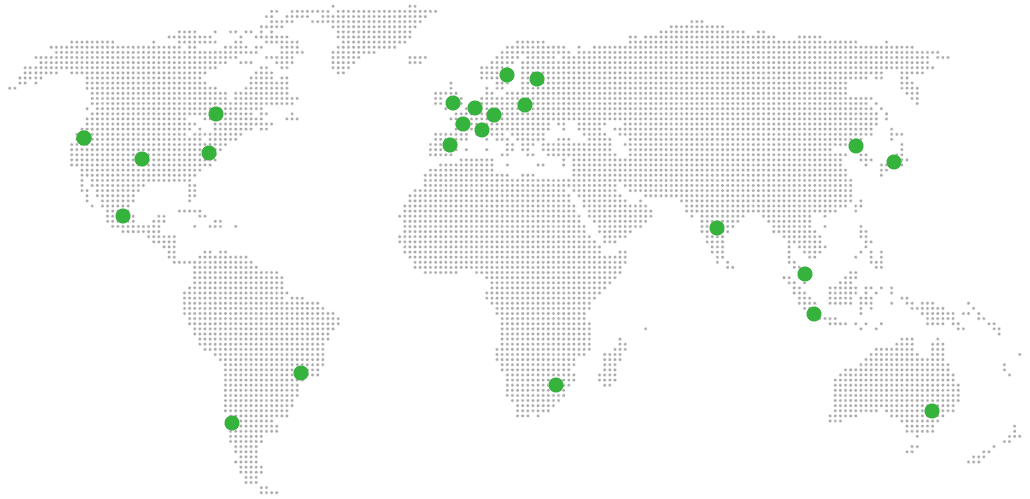
Global Reach Map

Try managed Tandoor for 7 days

No card. Cancel from the dashboard.