Fully Managed Taiga
as a Service

Deploy Taiga as a fully managed service starting at €9/mo. Get automated backups, SSL, updates, support and monitoring included.

Taiga is an open-source agile project management platform — backlogs, Scrum sprints, Kanban boards, epics, and integrated issue tracking — combining the workflow depth of Jira with the cost predictability and data control of self-hosted infrastructure.

Free 7-day trial  99.9% Uptime SLA  No credit card  Cancel anytime

Free 7-day trial  99.9% Uptime SLA
No credit card  Cancel anytime

Taiga

Taiga

STARTING AT

€9/month
Automated Backups
Monitoring
Automated Updates
Auto SSL

USAGE

Unlimited
Human Support
Custom Domains
Terminal Access
File Manager Access
Deploy in your region 21 locations worldwide
GermanyFinlandNetherlandsUKSwedenUnited StatesCanadaSingaporeJapanAustraliaBrazilSouth Africa+9 more →
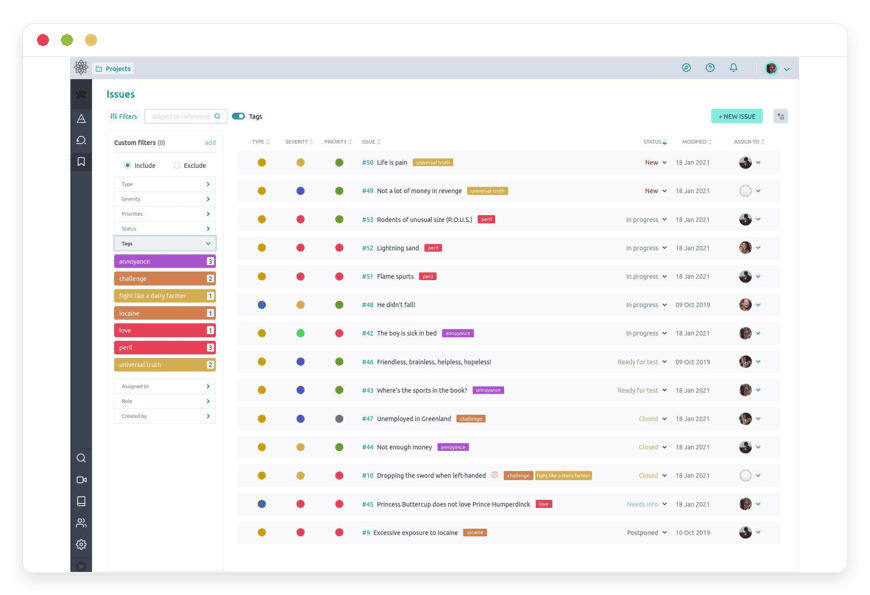
Taiga Preview Image

ABOUT THE SOFTWARE

What is Taiga

Taiga is an open-source agile project management platform built by Kaleidos in Madrid. It runs Scrum backlogs, Kanban boards, epics, sprint planning, and integrated issue tracking in a single instance. First released in 2014, it backs project work at agencies, distributed startups, and public-sector R&D groups worldwide.

The code is licensed under MPL-2.0 (the legacy CoffeeScript frontend carries an AGPL-3.0 reference), letting engineering teams audit, modify, and self-host without contributing changes back. The backend is Python on Django, the data layer is PostgreSQL, RabbitMQ handles asynchronous events and websockets, and the frontend runs on AngularJS. The project is in active maintenance with quarterly security and dependency updates while Kaleidos works on a successor codebase, TaigaNext.

A typical instance for 10 to 15 active users runs comfortably on 2 vCPU, 4 GB RAM, and 50 GB SSD. Project owners get backlogs, Scrum boards, Kanban boards, an issue tracker, a wiki, custom fields, custom workflows, GitHub and GitLab commit linking, OAuth single sign-on, and webhooks — all from the same installation. The rest of this page is about running Taiga as a managed service so the operational work isn't yours.

FEATURES

What Taiga does

Taiga covers the spread of agile workflow methods in one platform. Teams configure backlogs and Scrum sprints for fixed-scope new work, Kanban boards for ongoing maintenance, and an integrated issue tracker for bug intake. Epics group work across multi-sprint deliverables; a wiki holds the shared context.

Backlog management

Prioritise user stories with drag-and-drop ordering, assign story points via built-in planning poker, and slot stories into upcoming sprints from one view.

Kanban board

WIP limits per column, swim lanes, and continuous flow for ops teams that don't run fixed-length sprints. Same project can run Kanban and Scrum side by side.

Epics

Group stories across multiple sprints or projects into a roadmap unit. Track epic progress against the sum of its constituent stories and dependencies.

Custom fields and workflows

Add fields to any work item type. Define per-project state machines for stories, tasks, issues, and epics. Persist across upgrades.

Scrum board

Track sprint progress with burndown charts, daily standup view, and start/end sprint controls. Configure custom states beyond the default to-do/in-progress/done.

Integrated issue tracker

Bug and incident intake with severity, priority, and type. Custom fields capture environment context. Bidirectional links between issues and user stories.

GitHub and GitLab linking

Commit messages containing TG-123 syntax auto-link to user stories. Webhooks fire on state changes. OAuth login via the official contrib plugins.

Wiki and file attachments

A per-project wiki holds shared documentation. File attachments on every work item; storage limits configurable per project on managed instances.

WHAT'S ALWAYS INCLUDED

Every app. Fully managed.
Nothing extra to pay for.

Every app you deploy includes the full managed service — security, backups, updates, and support from day one.

Automatic updates and patches

Apps run the latest stable version. Security patches applied silently, with rollback if needed.

Daily off-site backups

Multiple daily backups in redundant off-site locations. One-click restore if anything goes wrong.

24/7 uptime monitoring

Continuous monitoring with instant alerting. We respond before you notice.

SSL, firewall, DDoS protection

Auto-renewing SSL, hardened firewall rules, DDoS mitigation on every deployment.

Performance and scaling

We monitor resource usage continuously. When your app needs more headroom, we flag it and upgrade with your explicit approval.

Dedicated engineering support

Real engineers on chat. DNS, SMTP & migration help. All included in €9.

WHY MANAGED

Why teams pick managed Taiga

Atlassian announced an 18–40% Data Center price increase effective 17 February 2026, on top of the 5–10% Cloud increase from October 2025 and the rollout of Maximum Quantity Billing. Teams that were already evaluating Jira alternatives now have a deadline rather than a maybe-next-year project.

Self-hosted Taiga removes the per-user-month meter that has been driving the Atlassian conversation for two years. A 15-person team paying Jira Standard at $7.91 per user per month is on the hook for roughly $1,424 a year for Jira alone, before Confluence and the marketplace plugins most teams add. The same headcount running Taiga on a single €9 instance pays €108 a year for the platform and adds users without watching the bill.

That is the easy part. The harder part is that running Taiga in production is more operational work than the docker-compose readme suggests. The signature failure mode is outbound email. Taiga relies on a working SMTP relay to send invitations, password resets, and notifications. Vanilla installs ship with EMAIL_BACKEND set to console and a one-line comment to change it later. Teams that flip to smtp find that TCP connects to Office 365 or Postfix succeed, no error appears in gunicorn.stderr.log even with DEBUG=True, and invitations silently never arrive. Threads on community.taiga.io stretch back five years on this exact symptom. Production teams discover it days into onboarding, often after losing a candidate to a missed invitation.

We ship every managed Taiga instance with a validated SMTP relay wired up on first boot, the security-patch cadence kept current through advisories like CVE-2025-62368, and a backup pattern that snapshots database and attachments together rather than separately. What you get by default:
  • Latest stable Taiga with timely security upgrades
  • SMTP relay pre-configured, DKIM and SPF aligned, smoke-tested on first boot
  • Coordinated nightly snapshot of database, static, and media volumes

REVIEWS

Hear from customers ​like you​​​​​​​

Successful businesses and professionals around the world rely on DANIAN every day

USE CASES

Three teams who run Taiga on DANIAN

Three shapes of team we host Taiga for. The team type, the region they picked, the integrations they wired up. Composite scenarios drawn from common customer patterns — concrete enough to recognise yourself in, not specific named customers.

12-PERSON DISTRIBUTED SOFTWARE AGENCY

Replacing Jira Standard after the October 2025 Cloud price increase

Project lead in London, developers in Lisbon, São Paulo, and Bangalore. One Taiga project per client engagement, archived to cold storage on contract close. We pinned the instance to our Germany region for sub-50ms latency from European clients, wired GitHub OAuth so commit messages auto-link to user stories, and routed SMTP from the agency's own domain so client invitations look professional.

18-PERSON DISCTRIBUTED STARTUP RUNNING SCRUM

Off Asana, onto a stack the team owns end to end

Three squads, two-week sprints, a single shared product backlog. Sprint planning runs in Taiga's planning poker; the daily burndown sits on a wall display. We host the instance in Singapore for centre-of-mass latency across the team's Asia and EMEA spread, and tuned RabbitMQ workers so websocket-driven board moves stay sub-second across continents.

UNIVERSITY DEPARTMENT TEACHING AGILE

30 students per semester, 8 capstone teams in parallel

Computer science department running a one-semester agile course. Eight teams of four, each cloned from a template project; the instructor sits in as super-admin. We host in the institution's preferred region, wire LDAP to the campus identity provider, and run a semester-cycle automation that archives all projects on the last week of term and provisions the next cohort.

COMPARISON

Four ways to run Taiga

The four real paths to running an agile project management tool: pay Jira per seat, run Taiga yourself on a VPS, run it on a home server, or pay DANIAN to run it. Below is the honest math at 1, 5, and 10 users, plus the non-cost factors that usually decide the question.

 PATH1 USER / MONTH5 USERS / MONTH 10 USERS / MONTHOPERATIONAL TIME
Jira Cloud Standard 
Atlassian's proprietary SaaS. Cloud list prices rose 5–10% on 15 Oct 2025; Data Center prices rise 18–40% on 17 Feb 2026; Maximum Quantity Billing bills against peak headcount with no mid-cycle refunds.
$7.91$39.55$79.10Zero (vendor-operated), but configuration, plugins, and admin still on you.
Self-host Taiga on a VPS 
$24/month production-class VPS + $5 object storage backup + $15 monitoring. Add DB pooling and SMTP setup yourself.
~$44~$44~$441–2 hours/month at €60–120/hour = €60–240/month in ops time.
Self-host on a home server 
Reference setup: HP ProLiant ML30 Gen10 tower (~€800–1,500) amortised over 36 months. Add electricity, business internet with static IP, and an off-site backup target — same hardware can't back itself up.
€210–667 effective€210–667 effective€210–667 effective2–4 hours/month at €60–120/hour = €120–480/month in ops time.
DANIAN Managed Taiga€9€9€90 hours/month customer time.

BY INDUSTRY

Taiga for specific industries

Some industries care about agile process specifically because of how their work is regulated, audited, or contractually structured. Below are the four where managed Taiga lands the cleanest fit, with the configuration choices we make for each. Click to expand the detail.

Agencies running client work hit two constraints at once: contracts that specify how client data must be handled, and the steady drag of per-user-month licensing across rotating contractor headcount. The standard contractual instrument is the data processing agreement — DPA — which most agencies' clients now require even for project-management tooling.

We host each agency on a region close to the client base, sign a DPA per relationship, and route SMTP from the agency's own domain so client invitations look professional. Each client engagement gets its own project on a shared instance; on contract close, the project archives to cold storage on a retention schedule the contract specifies. A 15-person agency replacing Jira Standard at $7.91 per user per month plus Confluence plus two marketplace plugins is on the hook for roughly $4,400 a year. Managed Taiga is €108 a year for the platform at any user count.
Public-sector buyers face two structural constraints: cross-border data transfer rulings (Schrems II for transfers out of regulated jurisdictions) and operational-resilience obligations like DORA for bodies in or adjacent to financial regulation. Atlassian Cloud's data location is a Schrems II problem for many public bodies; Atlassian Data Center's 18–40% price increase on 17 February 2026 makes the on-prem alternative progressively unviable.

We host single-tenant Taiga instances on dedicated infrastructure in the region the procurement specification requires, retain history-endpoint logs for the period the audit policy demands, and publish our subprocessor table at danian.co/trust for the DPIA. A 1,000-user Atlassian Data Center stack runs $180,000 to $240,000 per year before infrastructure; a managed Taiga deployment for the same headcount runs orders of magnitude less and stays predictable through pricing cycles.
Computer science and engineering departments use Taiga to teach Scrum and Kanban without sending student PII to a SaaS vendor under a separate institutional contract per platform. FERPA in the United States and equivalent national education-data laws elsewhere prefer self-hosted or managed-hosted infrastructure where the institution holds the data agreement directly.

We bind Taiga to the campus identity provider via LDAP or OIDC, clone template projects per team at semester start, and archive at semester end on a calendar the registrar approves. A 40-student capstone class running on Jira Standard at list price costs roughly $3,360 over two semesters before accounting for graduating-student offboarding. Managed Taiga is a flat institutional cost regardless of cohort size, with the semester-cycle automation handling onboarding and offboarding.
Medical-device software development is governed by IEC 62304 for the software lifecycle and ISO 13485 for the surrounding quality management system. Both standards demand traceability between requirements, design, implementation, and verification evidence — a paper trail auditors can follow from a customer complaint back to the line of code.

Taiga's epic-story-task-issue hierarchy with history endpoints supports auditable traceability when configured with custom fields for risk classification and links to verification evidence in the wiki. We ship pre-populated project templates with the standard risk-class custom fields (Software Safety Class A/B/C) and V&V evidence-link slots, run coordinated backups of database and attachments together so evidence stays consistent across restore points, and host the instance on dedicated single-tenant infrastructure for customers whose quality system can't accept multi-tenancy. A 20-person R&D team avoids the per-user-month meter entirely on a flat subscription.

FAQ

Frequently asked questions

Everything teams ask before signing up — answered straight, without sales speak.

Three groups: technical setup, migration, and how DANIAN works as a service.

01

Technical and configuration

We run a validated SMTP relay on every managed Taiga instance, wired before the customer touches it. The typical self-host symptom is that EMAIL_USE_TLS and EMAIL_USE_SSL clash with the relay's auth requirement — Office 365 wants modern app-passwords, MailCow wants PLAIN, Postfix wants something else again. We pre-configure the right combination per region and send a smoke-test invitation before any user is added.
We pin all instances to the current stable line — and roll forward within two weeks of each upstream release. We run staging upgrades on a sister instance first, take a coordinated database and media-volume snapshot before pushing production, and reschedule the window if regressions appear in staging.
Vanilla Taiga separates taiga-db-data from taiga-static-data and taiga-media-data. Backing up only the database leaves attachments orphaned — a gotcha self-hosters discover after their first attempted restore. We run a coordinated snapshot across all three volumes nightly, ship it off-site to a different region, and verify the restore weekly on a separate instance.
We front PostgreSQL with PgBouncer in transaction-pooling mode and set DISABLE_SERVER_SIDE_CURSORS=True — a flag Taiga 6.8.0 added specifically for this pooling pattern. Concurrent connections scale to several hundred without exhausting the database; the trade-off (no server-side cursor support) is irrelevant for Taiga's query workload.
Yes. Taiga emits webhooks on user-story, task, issue, sprint, and epic state changes. The webhook worker on a vanilla install shares a RabbitMQ host with the websocket events queue, which contends under load. We separate the two RabbitMQ instances on managed deployments so webhook delivery doesn't block board real-time updates.
Yes. Custom fields, custom states, custom workflows, and project templates live in the database and survive Taiga upgrades unchanged. We test this on staging before each production upgrade. The most common breakage in upgrades is environment-variable schema changes in docker-compose.yml; the data layer itself is stable.
All managed instances were upgraded to 6.9.0 within 48 hours of the October 2025 Kaleidos advisory. Any new instance ships on the latest line. We monitor the upstream security advisories feed and apply patches inside our standard upgrade window; emergency CVEs trigger an unscheduled window with customer notification on chat and email.

02

Migration and onboarding

We can activate your app on your own custom domain/subdomain. Examples: mydomain.com, anyword.mydomain.com.
Or, on our randomized free subdomain. Example: 963.apps.danian.cloud
If you wish to use a custom domain/subdomain, select that option when ordering your app (or notify us later). We will send you the required DNS records and if needed, our tech team will modify them for you.
21 datacenter locations across six continents. You choose the region at provisioning. Application data sits in the region you choose; pick whichever is closest to your users or matches your data-residency preference.
Yes. Request a region migration from the dashboard and we run the move in the background. The system emails you when the migration completes; total transfer time depends on data volume but typical instances finish in a few hours. There is no extra charge for a region change.
Yes. Full data export is available at any time, in a portable format you can bring to any infrastructure.
The built-in Jira importer has been unmaintained for several years, confirmed by Kaleidos staff on the community forum in June 2025. The supported migration path is a custom export-import using Jira's REST API on one side and Taiga's REST API on the other.
Trello, GitHub Issues, and Asana have functioning importers in Taiga. Each maps cards or issues to user stories, preserves comments and attachments, and runs from the project-creation dialogue inside Taiga. Jira is the exception — everything else is a one-click flow.
For a 10 to 20 person team with custom fields, typical onboarding runs one to two weeks elapsed: a few days for the API-to-API migration script, a few days for workflow and custom-field replication on the new instance, and one or two days of parallel-run before retiring the Jira instance.
GitHub and GitLab OAuth integrations are configured per-project on the new instance; the contrib plugins are bundled. Webhook URLs change because the hostname changes, so you'll re-add Taiga as a webhook target on each repository.

03

Billing, support, and platform

€9 covers everything we do for that app: hardware in the region you choose, daily off-site backups with one-click restore, automatic security patches and version upgrades, 24/7 monitoring, SSL and firewall, and engineering support on Email/LiveChat. There are no setup fees or hidden line items. For more info see our Pricing page.
If you decide to continue, we charge €9/app/month from day 8. If you don't, the trial ends and you can export your data. No card is required for the trial, and we never auto-charge you without explicit consent.
No. The €9/month is flat regardless of how many users log into your app. Add 5 users or 50; the price doesn't change.
24/7 Live chat and email support, both staffed by engineers who run the systems. We handle DNS configuration, SMTP setup, app integrations, performance tuning, troubleshooting, and migration help. Response time is typically under an hour. There is no tier system — every customer gets the same support.
Yes. Cancel from the dashboard. We don't charge a cancellation fee, we don't lock data, and we will export your data to you on request before deletion. data to you on request before deletion.
Every customer instance is backed up daily to a separate region from the primary. We test restores. You can request a restore at any backup point within the retention window — usually 7 days for daily backups.
Your application data sits in the region you choose at provisioning — 21 datacenter locations across six continents. Account-level data (billing, account email, support ticket history) is processed centrally. Application data region is picked by you, per app.
99.9% uptime SLA on every app, every tenant. Service credits are documented at danian.co/service-level-agreement. The status page is located at status.danian.co.
When your tenant approaches the resource ceiling — the base tier holds 1 vCPU/RAM, 30 GB storage — we notify you. Resource upgrades happen with your explicit consent; we will not upgrade your tenant or charge you without it.
We wait. We don't suspend the app or delete your data on the first failed charge. We email you, you fix the card on file, and we continue.
Invoices can be downloaded from the billing dashboard in PDF the day each charge succeeds. EU VAT is added where applicable and the VAT-reverse-charge regime applies for VAT-registered businesses with a valid number.
150+ open-source apps across automation, team chat, file sync, analytics, AI, password management, email marketing, dev tools, project management, smart home, CMS, and federated social. See the full catalog →
Yes. Every instance comes with a web-based terminal and a file manager in your DANIAN management dashboard. Useful for managing your data and customizations.
Resources scale with your usage. If your app needs more vCPU, RAM, or storage, we add it — and we ask first before any change to your plan. €9 is the floor; resource-heavy workloads may price higher, but you'll always know in advance.
Yes. We have both a Partner program and an Affiliate program available. Anybody can sign up.
No contract. No minimum commitment. Cancel anytime from the dashboard with one click. The 7-day free trial requires no credit card. After the trial converts to paid, you can still cancel at any month without notice or penalty.

DEPLOY IN YOUR REGION

21 datacenter locations on six continents

Pick the region closest to your users.

United States, Germany, Finland, Singapore, Australia, Brazil, Canada, Netherlands, UK, Spain, Italy, France, Sweden, Malaysia, India, Japan, Mexico, Poland, South Korea, Chile, South Africa and more coming soon
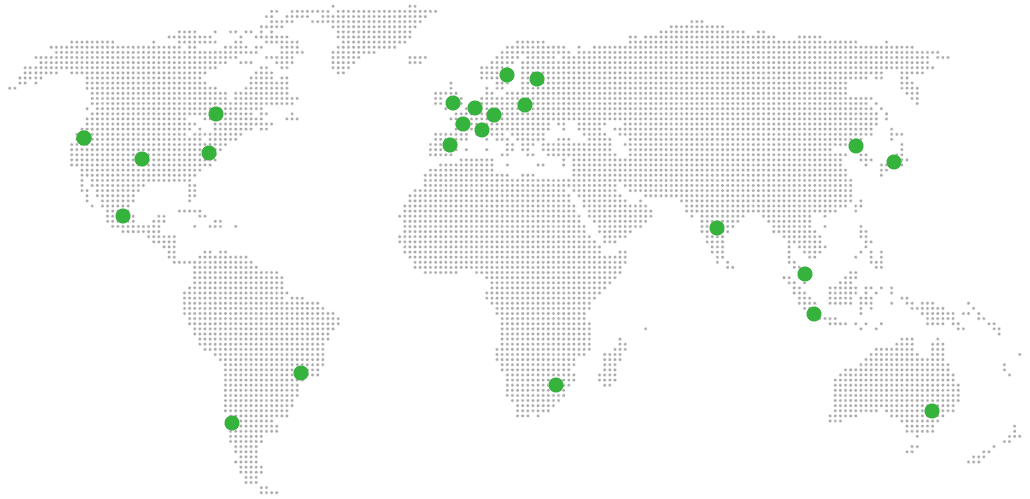
Global Reach Map

Try managed Taiga for 7 days

No card. Cancel from the dashboard.