Fully Managed GitLab
as a Service

Deploy GitLab as a fully managed service starting at €9/mo. Get automated backups, SSL, updates, support and monitoring included.

GitLab is an open-source DevOps platform — source control, code review, CI/CD pipelines, container registry, and issue tracking in one application — combining the convenience of GitHub with the security and control of self-hosted infrastructure. The Community Edition is MIT-licensed, maintained by GitLab Inc., and shipped from the unified gitlab-org/gitlab monorepo.

Free 7-day trial  99.9% Uptime SLA  No credit card  Cancel anytime

Free 7-day trial  99.9% Uptime SLA
No credit card  Cancel anytime

GitLab

GitLab

STARTING AT

€9/month
Automated Backups
Monitoring
Automated Updates
Auto SSL

USAGE

Unlimited
Human Support
Custom Domains
Terminal Access
File Manager Access
Deploy in your region 21 locations worldwide
GermanyFinlandNetherlandsUKSwedenUnited StatesCanadaSingaporeJapanAustraliaBrazilSouth Africa+9 more →
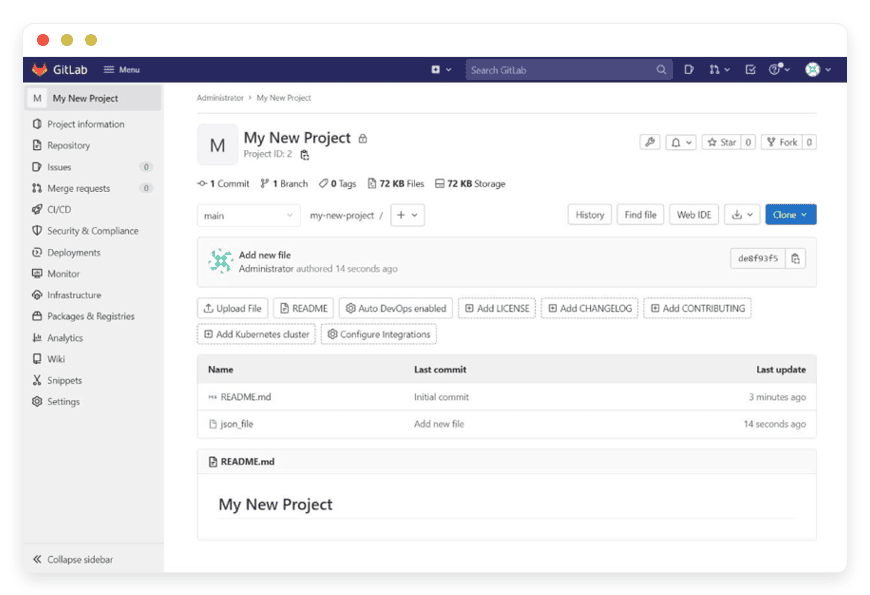
GitLab Preview Image

ABOUT THE SOFTWARE

What is GitLab

GitLab is the open-source DevOps platform that bundles Git repository hosting, merge-request review, CI/CD pipelines, a container registry, issue tracking, and a built-in wiki into one application. It runs as a single Linux service and replaces the patchwork of GitHub plus Jenkins plus Jira plus Artifactory that many teams stitch together.

The Community Edition is licensed under MIT and lives in the unified gitlab-org/gitlab monorepo on gitlab.com. GitLab Inc. — the Nasdaq-listed company (GTLB) behind the project, with Bill Staples as CEO since December 2024 — maintains both CE and the proprietary Enterprise Edition from the same codebase, with EE features gated behind a license file. The Omnibus package bundles PostgreSQL, Redis, Nginx, Sidekiq workers, Gitaly, the Container Registry, and optional integrations with Mattermost, Kroki, and PlantUML.

GitLab CE has been the default self-hosted Git host for over a decade, originally written by Dmitriy Zaporozhets in September 2011 in Kharkiv and incorporated as GitLab Inc. in 2014. The project ships a minor release on the third Thursday of every month and scheduled security patches on the second and fourth Wednesdays — a cadence the operator inherits whether they like it or not. The legacy gitlab-foss repository, once the CE-only fork, is now a read-only mirror; all development happens in the unified monorepo.

FEATURES

What GitLab does

GitLab consolidates the developer toolchain into one application: source control, code review, CI/CD pipelines, package and container registry, issue and milestone tracking, wiki, and static-site hosting via GitLab Pages. The Community Edition covers the open-source feature set; advanced security scanning and compliance dashboards remain Enterprise-only.

Git repository hosting

Hosts unlimited repositories with branch protection, merge-request review, and commit-signing verification. Supports SSH, HTTPS, and Git LFS for large binary assets.

Container registry

Stores Docker images per project on port 5050, integrates with CI for automatic image builds, applies cleanup policies to delete untagged or stale layers.

Merge requests with code review

Diffs, threaded comments, suggested changes, draft mode, and rebase-from-target. Approval rules and CODEOWNERS files supported in CE.

Authentication and SSO

Local accounts plus OmniAuth providers — SAML, OpenID Connect, LDAP/Active Directory, Entra ID, Google, GitHub, Keycloak. Two-factor authentication enforceable per group.

CI/CD pipelines

Defines pipelines in .gitlab-ci.yml, runs jobs on bundled or external gitlab-runner agents. Supports Docker, shell, SSH, and Kubernetes executors out of the box.

Issue tracking and milestones

Issues with labels, milestones, due dates, time tracking, and Markdown-rendered descriptions. Boards for kanban-style work, with WIP limits.

GitLab Pages

Hosts static sites generated by CI jobs, supports custom domains and TLS via Let's Encrypt. Useful for project documentation and small marketing sites.

Wiki, snippets, and integrations

Per-project wikis, code snippets, webhook delivery, ChatOps via Mattermost/Slack/Discord, and PlantUML/Kroki diagram rendering inside Markdown.

WHAT'S ALWAYS INCLUDED

Every app. Fully managed.
Nothing extra to pay for.

Every app you deploy includes the full managed service — security, backups, updates, and support from day one.

Automatic updates and patches

Apps run the latest stable version. Security patches applied silently, with rollback if needed.

Daily off-site backups

Multiple daily backups in redundant off-site locations. One-click restore if anything goes wrong.

24/7 uptime monitoring

Continuous monitoring with instant alerting. We respond before you notice.

SSL, firewall, DDoS protection

Auto-renewing SSL, hardened firewall rules, DDoS mitigation on every deployment.

Performance and scaling

We monitor resource usage continuously. When your app needs more headroom, we flag it and upgrade with your explicit approval.

Dedicated engineering support

Real engineers on chat. DNS, SMTP & migration help. All included in €9.

WHY MANAGED

Why teams pick managed GitLab

On January 27, 2026, GitLab Inc. capped new gitlab.com Free accounts at three top-level groups. Premium remains $29 per user per month, billed annually only, and the new GitLab Credits add usage-metered AI billing on top. Managed self-hosted CE trades that math for a flat €9 a month.

Self-hosting GitLab on a VPS looks tractable on day one. The Omnibus package installs in an afternoon. The work starts on day thirty. GitLab ships a minor release on the third Thursday of every month, with scheduled security patches on the second and fourth Wednesdays. Each one needs to be tested, applied in the documented version sequence, and watched for batched background migrations that can take up to 48 hours per batch on a busy instance. We've seen 18.10 upgrades stall on this exact pattern — gitlab:check reports All migrations up? no — and the fix is gitlab-rake gitlab:background_migrations:finalize with the queued job's exact arguments.

On top of upgrade choreography, the operator pays attention to PostgreSQL bloat from the artifacts table, Sidekiq queue health, the container registry's garbage-collection window (which requires read-only mode), Gitaly storage hot-spotting, and the LFS path layout when object storage joins the picture. We tune Sidekiq concurrency down from the Omnibus default of 20 to a value that fits the host's RAM, raise PostgreSQL shared_buffers above the 256 MB minimum, and run gitlab-backup off-site every night.

Defaults we ship: daily off-site backups, monthly minor-version upgrades on the documented path, scheduled security patches within the same week as upstream release, certificate auto-renewal, and a human on chat for the queue stalls that documentation alone won't unblock.

REVIEWS

Hear from customers ​like you​​​​​​​

Successful businesses and professionals around the world rely on DANIAN every day

USE CASES

Three teams who run GitLab on DANIAN

These are composite team archetypes — not specific customers — that match the shape of who runs managed GitLab CE in 2026. Each has chosen self-hosted CE over either gitlab.com Premium or the VPS-and-pray path.

12-PERSON SOFTWARE CONSULTANCY

Cutting the Premium bill after Duo Pro pushed the 10-dev annual to $5,760

Region: Germany for DACH client latency. One CE instance plus a separate gitlab-runner VM with the Docker executor. Container registry on port 5050 with a weekly cleanup policy for untagged images. SSO via the corporate Google Workspace. About 3,500 CI minutes a month — already eight times the gitlab.com Free cap.

EU OPEN-SOURCE PROJECT

Running CI for an MIT-licensed library with 80 contributors

Region: France. Single CE instance with GitLab Pages serving the docs site under a custom domain. OAuth via Keycloak for the maintainer team; public-by-default for the repo and issue tracker. PlantUML and Kroki enabled in Omnibus for architecture diagrams in MR descriptions. 15 GiB of LFS for the reference test corpus.

PRE-PROCUREMENT REGULATED TEAM

A 10-person dev cell rehearsing change-management before formal certification work begins

Region: UK. CE instance isolated from production systems. SAML SSO against the corporate IdP, local sign-in disabled, mandatory two-factor authentication. GPG-signed commits enforced at the project level. Two-reviewer merge-request approvals on critical repos. Backups land in a separate region.

COMPARISON

Four ways to run GitLab

The choice usually comes down to four paths: pay GitLab Inc. for the Premium SaaS tier, run the Community Edition yourself on a VPS, run it on a home server, or let someone else run it. The math below is at 1, 5, and 10 developers.

 PATH1 DEV5 DEVS 10 DEVSOPS TIME / MONOTES
GitLab.com Premium
$29/mo$145/mo$290/moNone
Annual billing only ($348/user/yr). Duo Pro AI add-on +$19/user/mo. New Free accounts capped at 3 top-level groups since Jan 27, 2026.
Self-host on $24/mo production-class VPS
$44+/mo$44+/mo$44+/mo5–10h initial, 1–2h ongoing$24 VPS + ~$5 backup target + ~$15 monitoring. Sysadmin time at €60–120/hr adds €60–240/mo effective.
Home server 
(Synology DS923+ / similar)
€210–667/mo totalsamesame2–4h ongoingHardware ~€18–55/mo amortised + ~€17–32/mo power + ~€40–80/mo business internet + ~€10–20/mo off-site target.
DANIAN Managed GitLab€9/mo€9/mo€9/moNoneRegion of your choice across 21 datacenter locations. Daily off-site backups. Upgrade and patching handled.

BY INDUSTRY

GitLab for specific industries

GitLab is the developer-platform of choice in industries where the alternative — pay-per-seat SaaS in a vendor's datacenter — fails the procurement or sovereignty test. The four industries below put distinct demands on the platform. Each block is operational reality, not a regulatory promise.

Government dev teams pick self-hosted GitLab CE for the same reason they pick on-premise databases: data residency and review posture trump per-seat economics. GitLab Inc.'s Dedicated tier holds FedRAMP Moderate authorization, sponsored by GSA — relevant context, but DANIAN's managed CE tier is not FedRAMP-authorized and should not be marketed as such.

Most public-sector teams begin with non-classified CE for internal services — form-builders, ETL pipelines, content sites — before formal authorization work begins on a separate tier.

We pin the region to the customer's jurisdiction, disable outbound Service Ping telemetry, and route backups to a same-jurisdiction region.

A 15-person digital-services unit typically runs about 6,000 CI minutes a month, with GitLab Pages serving the public-status sites.

The €9/month tier covers the full CE feature set; we remove the upgrade and patching choreography.
Financial-services dev teams care less about price and more about separation of duties, change management, and code-review controls.

GitLab CE supports SAML SSO with mandatory two-factor authentication, GPG-signed commit enforcement at the project level, and CODEOWNERS approval rules.

The EU's Digital Operational Resilience Act (DORA), in force since January 2025, codifies the change-management and incident-reporting expectations finance teams have been running unofficially for a decade — most of those controls land at the platform layer.

We disable local sign-in, route activity-relevant webhooks to the customer's SIEM, and enforce signed commits through the bundled gitlab-shell hook.

A 20-person quant team typically uses 8,000–15,000 CI minutes a month, with most runs hitting unit tests and a sample-data backtest job.

Goldman Sachs and Nasdaq are public GitLab references at the institutional tier; CE on DANIAN is the collaboration platform underneath that decision.
Defense primes run GitLab Self-Managed inside their air-gapped enclaves — Lockheed Martin maintains a Platform One presence on the DoD's Iron Bank.

A managed-hosting tier is not air-gapped and does not fit IL5 or IL6 environments.

Where it fits is the non-classified subcontractor and supply-chain layer: a 12-person engineering vendor maintaining tooling, build scripts, and non-CUI artifacts before exporting tarballs into the prime's classified instance.

CMMC Level 2 — NIST SP 800-171 Rev. 3 — is the relevant framework at the subcontractor tier; we run the CE instance in the customer's jurisdiction, disable Service Ping, and configure signed commits.

CI handles linting and unit tests; heavy scanning and simulation stay inside the air-gapped enclave.

The customer's activity log is the GitLab event stream and the off-site backup history — both of which we run, with the customer-controlled encryption key on the backup target.
University labs and research groups outgrow gitlab.com Free quickly: 400 CI minutes a month is one paper-submission week of activity.

Some qualify for GitLab Inc.'s for-Education program (Ultimate plus 50,000 minutes/month) but the application is non-trivial and constrained to non-commercial academic research.

CE on managed hosting is the pragmatic middle path.

We integrate with the university Shibboleth or SAML identity provider for SSO, set public-by-default visibility for teaching repos, and route LFS to a region close to the lab's HPC cluster.

FERPA constrains how student-record-adjacent code is handled — relevant when graduate teaching repos overlap with grading code.

A 60-person computational-biology group runs 20,000 CI minutes a month during submission windows, with about 200 GiB of versioned simulation outputs.

Backups go to a separate region with the institution's encryption key.

The €9/month covers the platform; the lab redirects what would have been a half-FTE of ops into actual research.

FAQ

Frequently asked questions

Everything teams ask before signing up — answered straight, without sales speak.

Three groups: technical setup, migration, and how DANIAN works as a service.

01

Technical and configuration

GitLab's official docs list 4 GB as minimum and 8 GB as recommended for up to 100 users. We start each with 4 GB as workable if Sidekiq concurrency is lowered from the Omnibus default of 20 to 5 or 10, and PostgreSQL shared_buffers is held near 256 MB. For active teams above ten developers we provision 8 GB or higher and let Puma scale to two or three worker processes.
Community Edition only. Required merge-request approval rules, advanced security scanning (SAST, DAST, secret detection, dependency scanning), the audit-events stream, value-stream analytics, and Geo replication are gated behind an Enterprise license. CE covers the open-source platform: repositories, CI/CD, container registry, issues, merge requests with code review, OmniAuth SSO, GitLab Pages, and the Mattermost/Kroki/PlantUML integrations. Same Omnibus binary, no paid license uploaded.
No. Geo requires Premium or Ultimate licensing and the Enterprise build, with a Premium license required on both primary and secondary sites. The €9/month tier is single-instance CE. Our continuity story is daily off-site backups in a region different from the primary, with a documented restore procedure. Teams that need active-active replication should run GitLab Inc.'s Dedicated tier or self-host EE on their own infrastructure.
Not on pure CE. GitLab Duo Core and the AI Gateway require an active online Premium or Ultimate license. Duo Self-Hosted, the air-gapped option, requires Ultimate plus the Duo Enterprise add-on. The €9/month tier provides the open-source CE feature set; AI assistance is a deliberate non-claim. Customers who want AI in their Git platform either pay GitLab Inc. directly or run a third-party assistant alongside the editor.
GitLab ships a minor release on the third Thursday of each month, with patches on the second and fourth Wednesdays. We apply minor upgrades within a week of upstream release, on the documented version path — no version-skipping.
OmniAuth in CE supports SAML, OpenID Connect (generic), Microsoft Entra ID, Google, GitHub, Auth0, and Keycloak. LDAP and Active Directory are supported. Local accounts can be disabled at the instance level, and two-factor authentication enforceable per group. SCIM provisioning is a Premium feature and not available on CE.

02

Migration and onboarding

We can activate your app on your own custom domain/subdomain. Examples: mydomain.com, anyword.mydomain.com.
Or, on our randomized free subdomain. Example: 963.apps.danian.cloud
If you wish to use a custom domain/subdomain, select that option when ordering your app (or notify us later). We will send you the required DNS records and if needed, our tech team will modify them for you.
21 datacenter locations across six continents. You choose the region at provisioning. Application data sits in the region you choose; pick whichever is closest to your users or matches your data-residency preference.
Yes. Request a region migration from the dashboard and we run the move in the background. The system emails you when the migration completes; total transfer time depends on data volume but typical instances finish in a few hours. There is no extra charge for a region change.
Yes. Full data export is available at any time, in a portable format you can bring to any infrastructure.
GitLab's direct-transfer feature handles groups and projects between any two GitLab instances, including SaaS to self-managed, on the same major version. Repositories, issues, merge requests, CI configurations, and most metadata transfer. Container registry images and CI minutes history do not — registry images need a separate skopeo push, and CI history resets on the new instance.
GitLab has importer support for GitHub, Bitbucket Server, Bitbucket Cloud, Fogbugz, and a generic Git URL import. We typically run the GitHub importer with a personal access token — repositories, branches, tags, issues, and pull requests transfer, with original authors preserved where possible. CI workflows do not auto-convert; a manual rewrite of GitHub Actions to .gitlab-ci.yml is part of any real migration.

03

Billing, support, and platform

€9 covers everything we do for that app: hardware in the region you choose, daily off-site backups with one-click restore, automatic security patches and version upgrades, 24/7 monitoring, SSL and firewall, and engineering support on Email/LiveChat. There are no setup fees or hidden line items. For more info see our Pricing page.
If you decide to continue, we charge €9/app/month from day 8. If you don't, the trial ends and you can export your data. No card is required for the trial, and we never auto-charge you without explicit consent.
No. The €9/month is flat regardless of how many users log into your app. Add 5 users or 50; the price doesn't change.
24/7 Live chat and email support, both staffed by engineers who run the systems. We handle DNS configuration, SMTP setup, app integrations, performance tuning, troubleshooting, and migration help. Response time is typically under an hour. There is no tier system — every customer gets the same support.
Yes. Cancel from the dashboard. We don't charge a cancellation fee, we don't lock data, and we will export your data to you on request before deletion. data to you on request before deletion.
Every customer instance is backed up daily to a separate region from the primary. We test restores. You can request a restore at any backup point within the retention window — usually 7 days for daily backups.
Your application data sits in the region you choose at provisioning — 21 datacenter locations across six continents. Account-level data (billing, account email, support ticket history) is processed centrally. Application data region is picked by you, per app.
99.9% uptime SLA on every app, every tenant. Service credits are documented at danian.co/service-level-agreement. The status page is located at status.danian.co.
When your tenant approaches the resource ceiling — the base tier holds 1 vCPU/RAM, 30 GB storage — we notify you. Resource upgrades happen with your explicit consent; we will not upgrade your tenant or charge you without it.
We wait. We don't suspend the app or delete your data on the first failed charge. We email you, you fix the card on file, and we continue.
Invoices can be downloaded from the billing dashboard in PDF the day each charge succeeds. EU VAT is added where applicable and the VAT-reverse-charge regime applies for VAT-registered businesses with a valid number.
150+ open-source apps across automation, team chat, file sync, analytics, AI, password management, email marketing, dev tools, project management, smart home, CMS, and federated social. See the full catalog →
Yes. Every instance comes with a web-based terminal and a file manager in your DANIAN management dashboard. Useful for managing your data and customizations.
Resources scale with your usage. If your app needs more vCPU, RAM, or storage, we add it — and we ask first before any change to your plan. €9 is the floor; resource-heavy workloads may price higher, but you'll always know in advance.
Yes. We have both a Partner program and an Affiliate program available. Anybody can sign up.
No contract. No minimum commitment. Cancel anytime from the dashboard with one click. The 7-day free trial requires no credit card. After the trial converts to paid, you can still cancel at any month without notice or penalty.

DEPLOY IN YOUR REGION

21 datacenter locations on six continents

Pick the region closest to your users.

United States, Germany, Finland, Singapore, Australia, Brazil, Canada, Netherlands, UK, Spain, Italy, France, Sweden, Malaysia, India, Japan, Mexico, Poland, South Korea, Chile, South Africa and more coming soon
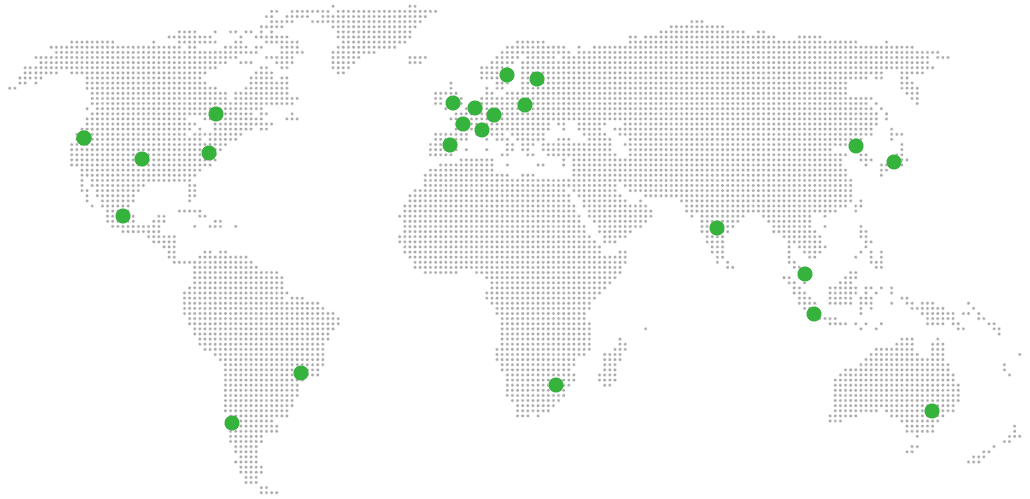
Global Reach Map

Try managed GitLab for 7 days

No card. Cancel from the dashboard.