Reselling managed Nextcloud to clients in 2026
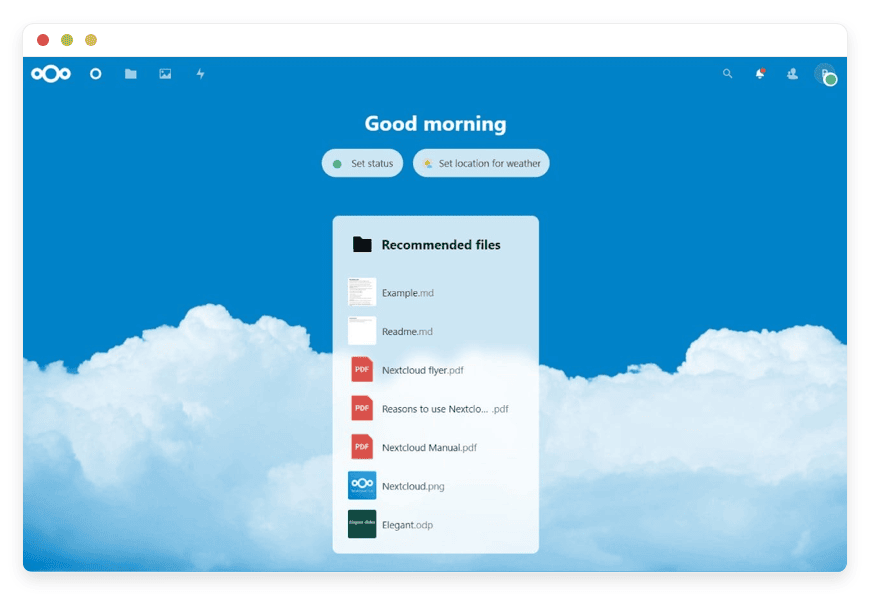
A client asks if you can host their files too. You do not want to become a hosting company. Managed Nextcloud lets you resell file storage as a flat recurring line: one isolated instance per client, your domain, your invoice, €9 wholesale, and someone else on call for the patching and backups.
TL;DR
- The model is one managed Nextcloud instance per client, billed to you at €9/month wholesale. No shared-tenant workarounds.
- The margin: retail at €30–50 per client per month for light-storage clients. That is €21–41 gross per client, before your own support time.
- The headline number: at 20 clients, roughly €420–820/month of recurring margin — about €5,000–9,800 a year — on a line you do not operate.
- Per-seat SaaS punishes client growth; a flat Nextcloud instance does not. A 30-person client costs the same to host as a 5-person one, until storage or compute grows.
- Storage is the variable that decides your margin. The €9 base covers 30 GB; above that it is €0.50/GB/month. Price for it or cap it.
The 60-second version: who this is for, and the shape of the deal
This is for a 3–25-person agency that already owns client relationships and wants a recurring line it does not have to operate.
You sell the file-storage service under your brand.
A managed host runs the instance.
You keep the margin and the client, and the operations sit somewhere else.
The job is narrow. You are not starting a hosting company. You are adding one productized line — managed file storage and collaboration — to a catalog you already sell from. The skill you charge for is the client relationship, not the patch cycle.
The deal has three parties. The client pays you a monthly fee. You pay a wholesale fee per instance. The host patches, backs up, monitors, and answers the 2am question. Your work stays where your margin is: onboarding, support triage, and the next upsell.
One thing decides whether this sells: trust that it stays up. Your reputation is on the line, and one outage hits a client you spent years earning. So the part to weigh first is operational discipline — who patches, who restores, who replies when it breaks — not the feature list.
The agency math: €9 wholesale, €30–50 retail, and the margin at 5, 10, and 20 clients
The arithmetic is simple because the pricing is flat.
You pay €9 per client instance per month at the base tier.
You retail it at €30–50 for a light-storage client.
The gap — €21–41 per client — is your gross margin before the time you spend on the relationship.
A managed Nextcloud instance on managed Nextcloud at €9/month includes one vCPU, 30 GB of storage, and 1,000 GB of monthly traffic, with patching, daily backups, monitoring, and 24/7 email and ticket support. Here is the margin at three client counts, for light-storage clients on the €9 base:
| Clients | Wholesale (you pay) | Retail at €40/client | Gross margin / month | Gross margin / year |
|---|---|---|---|---|
| 5 | €45 | €200 | €155 | €1,860 |
| 10 | €90 | €400 | €310 | €3,720 |
| 20 | €180 | €800 | €620 | €7,440 |
Across the €30–50 retail range, 20 clients produce roughly €420–820/month of recurring margin. That is a meaningful line for a small agency, and it renews every month.
Adjust it honestly. The wholesale fee buys the operations, not your time with the client. Budget for first-line questions — how do I share a folder, can you add my colleague — even when the host handles the hard parts. Route the technical ones to the host’s chat and keep the relationship ones. At 20–30 minutes a month per client, the margin still clears, but it is not free money.
The flat instance is the structural advantage.
A 10-person team on Dropbox Business Standard pays $15 per user per month — $150/month, $1,800/year, on Dropbox’s published business pricing. On Google Workspace Business Standard, that is $14 per user, about $140/month. Box Business runs $20 per user. Each new hire raises the bill. A single Nextcloud instance does not charge per seat, so the client’s eleventh employee adds nothing until storage or compute grows. You sell that as the win: a file line that does not get more expensive every time the client hires.
Why your clients are open to leaving Dropbox, Google Workspace, and Box
The trigger is per-seat creep. File storage is priced per user, and that bill grows with every hire and every annual increase. A client with ten people and a renewal notice is the moment the question gets asked: is there a flat-priced alternative we control?
Per-seat math is the recurring frustration. Dropbox Business runs $15–24 per user per month. Google Workspace business tiers run $14–22 per user. Box business tiers run $20–33 per user. For a growing team, the line climbs on a schedule the client does not set, and the increases land at renewal whether or not usage changed.
Then there is control. The files sit on infrastructure the client did not choose and cannot point to. For some clients — a studio handling client assets, a practice handling records, an association handling member data — where does this live and who can reach it is a real question with a vague answer. Managed Nextcloud gives a concrete one: one instance, one region you pick, files the client owns.
You are not selling against the SaaS on features. Dropbox sync is excellent and Workspace editing is mature. You are selling on price shape and ownership. The persuasive move is the per-seat math at ten people and a renewal date, not a feature war you will not win.
The model that works: one Nextcloud per client, never one shared instance
Run one Nextcloud instance per client. Do not try to fit several clients into one install with folders and groups. Nextcloud’s user directory, branding, and admin are built for a single organization. One instance per client gives clean isolation, separate backups, and a per-client off switch.
Nextcloud is single-organization by design. One install has one user directory, one set of admin settings, one brand. It is the open-source file platform behind 34,000-plus stars on GitHub, licensed AGPL-3.0, with the server reaching version 33 in February 2026 — mature, but built around one organization per instance. You can carve folders and groups inside it, but mixing unrelated clients in one install is fragile: one client’s admin sees the shape of the whole instance, one restore touches everyone, and one noisy client’s storage spills into the shared pool.
The per-client-instance model removes those problems. Each client gets an isolated instance in its own hardened container, with its own storage allocation, its own backups, and its own subdomain, in a region you pick across 21 datacenter locations on six continents. If one client leaves, you delete one instance and nothing else moves. If one client needs more room, you size that instance alone. The isolation is the product, not an upsell.
This is also why the wholesale price is per instance. You are not buying a seat pool to sub-divide. You are buying one managed install per client, and the host runs each one the way it would run a single customer’s.
What white-label actually requires in 2026, and what a managed host supports today
White-label means three concrete things: the client sees your domain, your branding on the sign-in, and your invoice. Custom domain and branded sign-in are available on managed Nextcloud today. Billing pass-through is yours to run through your own invoicing — there is no partner control plane that bills your clients for you yet.
The word gets used loosely, so pin it to the three things the client actually sees:
- Custom domain. The client reaches their files at files.theirbrand.com, not a host’s subdomain. The host points the instance at the domain you choose on setup.
- Branded sign-in. The login page and the instance carry the client’s name and logo. Nextcloud’s theming handles this per instance, and update banners and version chrome can be kept quiet so the client sees a clean product.
- Billing pass-through. The client pays you, and you pay the host. This part is yours. You invoice the client through the system you already use for retainers and treat the €9 wholesale as cost of goods.
Be straight with yourself about the last point. A mature reseller program would give you a control plane: one login, every client instance, provisioning and billing in one place. That does not ship yet. Today the model runs on a working relationship with the host — you ask, instances get provisioned, and you keep the client list yourself.
For an agency with a handful to a few dozen clients, that is workable. For an agency that wants to self-serve hundreds of instances from a console tonight, it is not the fit, and saying so up front is the honest thing. See our Partner program for more info.
Storage is the variable that decides your margin
File-storage clients use storage; that is the point. The €9 base covers 30 GB. Above that, it is €0.50 per GB per month. A 100 GB client costs €44 wholesale, not €9. Price your retail per storage band, or cap client storage, or the overage quietly eats the margin you modeled.
This is the part most reseller math skips, and it decides whether the line is profitable. The flat €9 holds only at the 30 GB base. Beyond that, storage is metered at €0.50/GB/month. Work an example with a client that wants 100 GB:
- 30 GB base, included in the €9
- 70 GB over, at €0.50 = €35
- Wholesale: €44/month, not €9
At €44 wholesale, a €40 retail price loses money. You would retail that client at €90–120/month — still under their per-seat Dropbox bill, with €45–75 of margin — but only because you priced for the storage.
A heavier client makes the point sharper. At 1 TB, the math is 30 GB base plus 970 GB over at €0.50, which is €485 plus the €9 base — about €494/month wholesale. That is real money, and more than a pooled-storage SaaS plan charges for the same terabyte. The honest read: managed Nextcloud at €9 plus €0.50/GB is margin-friendly for light-to-moderate storage — document collaboration, a shared drive, the 30–200 GB range. It is not a cheap home for a multi-terabyte media archive. For storage-heavy clients, size the instance’s compute up (RAM and vCPU add at +€9 per unit) and negotiate, or recognize the client is a different kind of job.
Three ways to price it cleanly:
- Retail in storage bands. €40 up to 30 GB, €90 up to 150 GB, €150 up to 300 GB. The client picks a band and you keep a fixed margin in each.
- Cap and notify. Set a storage ceiling per plan; when a client nears it, that is an upsell conversation, not a surprise on your cost.
- Pass storage through transparently. Charge a flat service fee plus metered storage at your markup. This works best with clients who already understand usage-based billing.
Pick one and write it into your service description before the first client signs. The margin you keep is the margin you planned for, not the one left after the overage.
Rounding out the package: editing in the browser, and the wider bundle
Files alone is a thin product. Add document editing so clients open and co-edit documents in the browser, and the line looks like a Workspace replacement, not just a drive. OnlyOffice Docs slots onto Nextcloud for that, and a wider open-source bundle extends the same per-client model to CRM, automation, and analytics.
A drive that only stores files competes weakly with Dropbox. A drive that also edits documents competes with Google Workspace and Microsoft 365. Nextcloud gains that with OnlyOffice Docs, an open-source editor (AGPL v3) that opens Word, Excel, and PowerPoint formats and supports real-time co-editing inside the client’s own instance. You can add OnlyOffice Docs for editing as its own managed line, and pairing the two turns file storage into the office suite your client controls.
The same per-client, flat-instance model extends past files. The clients who want a private drive often want a private CRM, a private automation tool, or privacy-respecting analytics next. Each is one more managed instance at the same €9 base, resold under your brand, on the same isolation model. How an agency stacks several open-source apps into one client offering is its own piece; the point here is that file storage is a clean entry product that opens the rest.
When this works, and when it doesn’t
This works when you own the client relationship, your clients are light-to-moderate on storage, and you would rather sell a line than run a server. It does not work when you need a self-serve console for hundreds of instances tonight, your clients are storage-heavy, or you already run your own infrastructure and enjoy it.
It fits when:
- You already hold the client relationship. You bill retainers, you are the trusted vendor, and the file line rides on trust you have already earned. The host stays invisible and the client stays yours.
- Your clients are light-to-moderate on storage. Document collaboration, shared drives, project files — the 30–200 GB range where the per-GB overage stays small and the margin stays clean.
- You want a product, not a project. You would rather add a priced line to your catalog than own a patch cycle, a backup schedule, and a pager.
It does not fit when:
- You need a full self-serve control plane today. If provisioning and billing hundreds of client instances from one console tonight is the requirement, the partner tooling is not there yet. Be honest about that before you sell it.
- Your clients are storage-heavy. A multi-terabyte media archive priced at €0.50/GB is expensive. Those clients are a different conversation, and sometimes a different provider.
- You already run infrastructure and like it. If you have an in-house engineer who enjoys the work, self-hosting Nextcloud on a production-class VPS — with something like Coolify to manage deployments — is a genuine path. You trade the wholesale fee for on-call and the patch cycle, and for a team that wants that control, it is a fair trade.
There is also an official route worth knowing. Nextcloud GmbH runs a channel partner program with reseller and service-provider tiers. It is built around enterprise system integrators and distributors deploying for thousands of seats, with partner-level commitments and seat minimums. For a small agency reselling to a handful of clients, that program is shaped for a different scale. The managed-host route — pay per instance, resell under your brand, no enterprise commitment — fits the small-agency shape the official program does not.
FAQ
Is reselling managed Nextcloud worth it for a small agency?
For a 3–25-person agency that already owns client relationships, usually yes. At €9 wholesale per client instance and €30–50 retail, that is €21–41 of monthly margin per client before your support time. At 20 light-storage clients it works out to roughly €420–820 a month of recurring revenue on a line you do not operate. It is worth it when you would rather sell a productized line than run a server.
How much should I charge clients for managed Nextcloud?
A common retail range is €30–50 per client per month for light-storage use, against a €9 wholesale cost. Price in storage bands rather than one flat figure, so each band keeps a fixed margin — for instance €40 up to the 30 GB base, then higher bands as storage grows. Storage above 30 GB costs you €0.50/GB/month, so set retail above your real per-client cost, not a number the overage erodes.
What's a realistic profit margin on reselling managed Nextcloud?
For a light-storage client, gross margin is €21–41 per month — the gap between €30–50 retail and the €9 wholesale fee — before your support time. Budget 20–30 minutes a month per client for first-line questions, since the technical work sits with the host. Margin compresses as storage grows, because anything above the 30 GB base adds €0.50/GB to your cost, so model storage before you quote.
How many clients do I need before reselling Nextcloud is profitable?
There is no break-even threshold to clear, because each client instance carries its own margin from the first one. Five light-storage clients at €40 retail return about €155 a month after the €45 wholesale; ten return about €310; twenty about €620. The line is profitable at one client and compounds from there. The real constraint is your support time per client, not a minimum count.
What happens to my margin when a client needs more storage?
The €9 base covers 30 GB; above that, storage is €0.50/GB/month. Price your retail in storage bands so each band keeps a fixed margin, or cap storage per plan and treat overage as an upsell. Model the overage before you sign the client, not after.
How do I start reselling managed Nextcloud to clients?
Start with one client, not ten. Pick the client most frustrated by a per-seat file bill, model their instance honestly — €9 base, plus €0.50/GB above 30 GB, retailed in a band that keeps your margin — and write a short service description. The host provisions the instance on your chosen domain and runs it, so your work is the client conversation, not the deployment. Live with one instance before you sell it across your book.
Do I need to become a Nextcloud partner to resell it?
No. Nextcloud's own channel program is built for enterprise integrators with seat minimums. Reselling through a managed host means you pay per instance and invoice your client under your brand, with no partner tier and no enterprise commitment. You manage the client; the host runs the instance.
Does reselling Nextcloud require technical skills?
No deep technical skill is required, because the managed host handles patching, backups, monitoring, and the 2am incident. You need enough fluency to answer first-line client questions — how to share a folder, how to add a colleague — and to route the harder ones to the host's support. The skill you charge for is the client relationship and the onboarding, not server administration.
How do I bill my clients?
Through your own invoicing, using the system you already run for retainers. You pay the host €9 wholesale per instance plus any storage overage and treat that as cost of goods. There is no partner dashboard that bills your clients for you today, so the billing relationship stays yours.
Can each client get their own domain and branding?
Yes. Each client instance can run on a custom domain like files.theirbrand.com, with the client's name and logo on the sign-in. The host applies the theming and points the instance at your chosen domain on setup. The client never sees a host's branding.
What is white-label Nextcloud hosting?
White-label Nextcloud hosting means your client sees your brand, not the host's: a custom domain like files.theirbrand.com, the client's name and logo on the sign-in, and your invoice. The managed host runs the instance behind the scenes and stays invisible to the client. One part is not yet white-labelled — there is no partner console that bills your clients for you, so billing runs through your own invoicing.
What does managed Nextcloud include?
A managed Nextcloud instance at €9/month includes one vCPU, 30 GB of storage, and 1,000 GB of monthly traffic, with patching, daily backups, monitoring, and 24/7 email and ticket support. Each instance runs in its own hardened container in a region you pick across 21 datacenter locations on six continents. More compute adds at +€9 per unit of vCPU or RAM; storage above 30 GB is €0.50/GB/month.
Is Nextcloud a good alternative to Dropbox for business clients?
For many business clients, yes, and the reason is price shape. Dropbox Business runs $15–24 per user per month, so the bill climbs with every hire. A single managed Nextcloud instance is flat — a 30-person client costs the same to host as a 5-person one until storage or compute grows. Nextcloud trades Dropbox's excellent sync for a flat, client-owned instance, which fits clients who feel per-seat creep and want to control where files live.
Can Nextcloud replace Google Workspace for my clients?
It can cover the file-storage and document side. Google Workspace Business tiers run $14–22 per user per month; a flat Nextcloud instance does not charge per seat. Add OnlyOffice Docs and clients open and co-edit Word, Excel, and PowerPoint files in the browser, which makes the line a Workspace-style office suite rather than only a drive. Workspace still wins on email and its wider app set, so position Nextcloud on file storage, editing, and flat pricing.
Can clients edit documents, or only store them?
Both, once you add document editing. OnlyOffice Docs runs on a Nextcloud instance and opens Word, Excel, and PowerPoint formats with real-time co-editing in the browser. That turns the line from a file drive into an office suite the client controls, closer to a Workspace replacement than a Dropbox one.
Can I move a client from their current file storage to Nextcloud?
Yes. Most clients move from a per-seat service like Dropbox Business or Google Workspace, and the practical path is to run the new Nextcloud instance alongside the old service during a short transition, copy files over, then cancel the old subscription once the client is settled. The host provides the instance and the storage, so you manage the client side of the move, from folder structure to the handover.
Is my client's data safe on managed Nextcloud?
Each client runs on its own isolated instance in a hardened container, with its own storage, its own daily backups, its own subdomain, and its own off switch — one client's instance never shares space with another's. You pick the region from 21 datacenter locations on six continents, so files sit where you choose. Nextcloud is open-source, so its code is public and widely reviewed. The host manages patching and backups, and the client owns the data on the instance.
What are the risks of reselling managed Nextcloud?
The main risks are reputational and operational. Your name is on the service, so an outage hits a client you spent years earning — which is why who patches and who restores matters more than the feature list. Storage is the margin risk: a client who grows past 30 GB adds €0.50/GB to your cost, and unpriced overage eats margin. And the partner tooling is early, with no self-serve console for hundreds of instances yet, so this fits a handful to a few dozen clients, not hundreds overnight.
What if a client's instance breaks outside business hours?
The managed host is on call. Patching, backups, monitoring, and 24/7 email and ticket support sit with the host, not with you. When something breaks at 2am, a named engineer responds. Your reputation rides on that, which is why operational discipline is the part to check first.
What happens if a client wants to leave or cancel?
Because each client has its own isolated instance, off-boarding one client touches only that instance. You export the client's files, hand them over, and the instance is deleted, so nothing else in your book moves. There is no shared pool to untangle and no other client affected. The per-client-instance model is what makes both onboarding and cancellation clean.
Can I resell other open-source apps to the same clients?
Yes, and it is the natural next step. The same flat, per-client model extends past file storage — a private CRM, an automation tool, or privacy-respecting analytics, each as one more managed instance at the same €9 base, resold under your brand. The client who wanted a private drive often wants a private version of the next tool too. File storage is a clean entry product that opens the rest of the catalog.
Conclusion: what to do this week
Pick one client who is frustrated with a per-seat file bill. Model the instance — €9 base, plus €0.50/GB above 30 GB, retailed in a band that keeps your margin. Price the line, write the service description, and run one instance before you sell ten.
Start with one. Choose the client most annoyed by their Dropbox or Workspace renewal, the one with a growing headcount and a flat-fee wish. Model their instance honestly — base fee, storage band, your retail price — and confirm the margin clears your support time.
Then run one before you scale. Deploy a single managed Nextcloud instance, put it on a client’s domain, and live with it for a month. You will learn the support shape — what clients ask and what the host handles — before it is ten clients and a line in your catalog.
The line compounds the way your agency already does. Every client instance is recurring revenue you do not operate, and every happy client is a reference for the next. That is the part an automated competitor cannot copy: the trust you hold with the client, and the relationship the file-storage line rides on.
From here you can see managed Nextcloud at €9/month,and add OnlyOffice Docs for editing when files alone are too thin.