Open-source npm and Artifactory alternatives 2026
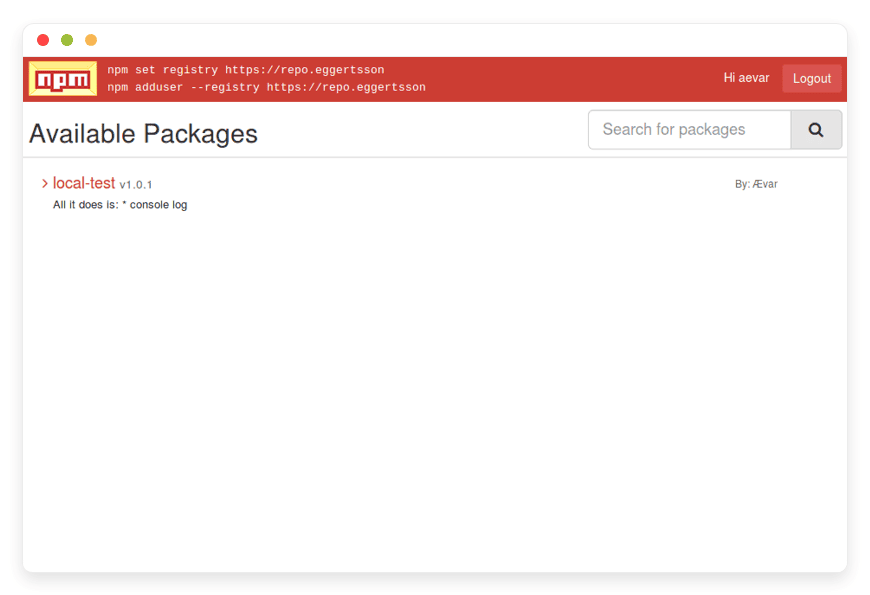
Open-source alternatives to private npm and Artifactory in 2026 — Verdaccio for a package registry you own
TL;DR
- npm bills private packages per seat: $7 per user per month, with a two-user minimum. A five-person team pays $35; ten developers pay $70. The registry stays npm’s.
- JFrog Artifactory is a universal artifact manager. Its SaaS Pro tier lists at $150/month; self-managed plans start at $27,000/year.
- Verdaccio is an open-source private npm registry and caching proxy. It is MIT-licensed and has 17,500 GitHub stars.
- A managed Verdaccio instance on DANIAN is €9/month, flat. No per-seat fee. A three-person team and a thirty-person team pay the same for the registry.
- Verdaccio covers the npm slice only. If you also need Docker, Maven, PyPI, or NuGet repositories, you need a universal manager, not Verdaccio.
Why teams move off private npm and Artifactory in 2026
Two costs push teams to look elsewhere. npm charges $7 per user per month for private packages, billed per seat with a two-user minimum, so the bill grows with headcount. Artifactory solves the wider problem but prices for it: SaaS Pro lists at $150/month and self-managed starts at $27,000 a year.
Most teams start on free public npm. Then one package needs to stay internal — a design system, a shared config, a client SDK. Private packages on npm require a paid plan. The plan is $7 per user per month. Every developer who installs or publishes a private package adds another $7.
At five seats that is $35 a month. At ten it is $70. At twenty it is $140. The number tracks your hiring, not your usage. And the registry itself stays npm’s, not yours.
The trigger is rarely a big decision. A team ships one internal package, hits the paywall, and pays. Six months later there are five private packages and eight seats on the bill. A renewal cycle, or a finance review, is often the moment someone asks whether a registry the team owns would cost less and behave better.
Larger teams reach for JFrog Artifactory because it does far more than npm. It is a universal artifact manager. The SaaS Pro tier lists at $150 a month, recently promoted at $50, with 25 GB of base consumption and metered storage above that. The self-managed Pro X plan starts at $27,000 a year, and the enterprise tiers run higher.
For a team that only shares JavaScript packages, that is a large bill for one format. Both prices are fair for what they cover. The mismatch is scope. npm’s per-seat plan is a thin slice priced like a subscription. Artifactory is a heavyweight priced like enterprise software. A small team that wants a private registry it controls, at a price that does not move with headcount, sits between the two.
What “alternative” actually means here
An alternative is not always a like-for-like swap. npm private packages and Artifactory’s npm support both handle JavaScript packages. Artifactory also handles Docker, Maven, PyPI, NuGet, and 50-plus other formats. Verdaccio handles npm. Naming the scope first keeps the comparison honest.
Three paths exist. You can stay on a per-seat plan such as npm private packages. You can run a universal artifact manager such as Artifactory, paid or self-hosted. Or you can run a focused open-source registry such as Verdaccio. Each path solves a different shape of problem.
One distinction matters more than the others: owning the registry versus renting space on someone else’s. npm private packages rent you a private corner of npm’s registry. A self-hosted or managed Verdaccio gives you a registry the team controls — the cache, the access rules, the region. Both store private packages. Only one is yours to move.
Here is the honest line on scope. Verdaccio is a private npm registry and a caching proxy. It stores your private packages and proxies public ones from npmjs.org. It does not store Docker images, Maven jars, PyPI wheels, or NuGet packages. If your toolchain needs those formats in one place, Verdaccio is the wrong tool and a universal manager is the right one. This post is about the npm slice, and only that.
DANIAN runs Verdaccio for you as a managed instance. You get the registry without running the server, the patches, or the backups. The price is €9 a month, flat, for one instance. The registry bills for the instance, not for the people using it.
Verdaccio — a private npm registry you own
Verdaccio is a lightweight, zero-config private npm registry written in Node.js. It is MIT-licensed, and has around 17,500 GitHub stars. It ships with its own small database and proxies public registries, caching what it downloads.
Four things it does well:
- Private packages. Publish internal packages and install them the way you install public ones, without sending code to the public registry.
- Caching proxy. It proxies npmjs.org and caches the tarballs it downloads. Installs get faster, and a public-registry outage or a removed package hurts less.
- Multiple registries. Uplinks let you chain several upstream registries and resolve them through one endpoint.
- Override public packages. Publish a patched version of a third-party package locally under the same name while you wait for an upstream fix.
Verdaccio is maintained by a volunteer team and funded through Open Collective. It works with npm, pnpm, and yarn clients. Projects like create-react-app, Babel, Angular CLI, pnpm, and Docusaurus use it for end-to-end testing.
Scoped packages work the way you expect. Publish @yourcompany/ui to your registry and install it like any public dependency. User accounts, tokens, password changes, and ownership transfers are all supported, so access maps to your team rather than to a shared key.
It starts with its own file storage and no external database. Community plugins add Amazon S3 or Google Cloud Storage backends when you need them. Best fit: a team that shares internal JavaScript or TypeScript packages, or wants a faster, owned npm cache, without paying per developer.
See how the managed Verdaccio registry works →
Verdaccio, private npm, and Artifactory at a glance
The table below sets the three options side by side. The axis that matters for a small team is how the price behaves. npm scales with seats. Artifactory scales with consumption and tier. Managed Verdaccio is a flat €9 per instance per month.
| Feature | npm private packages | JFrog Artifactory | Managed Verdaccio (DANIAN) |
|---|---|---|---|
| Pricing model | Per seat: $7/user/mo (two-user min) | Per consumption + tier: SaaS Pro from $150/mo;self-managed from $27,000/yr | Flat: €9/instance/mo |
| Cost at 5 developers | ~$35/mo | $150/mo (SaaS Pro base; not per-seat) | €9/mo |
| Formats covered | npm | 50+ (npm, Docker, Maven, PyPI, NuGet…) | €9/mo |
| Caching proxy you control | No | Yes | Yes |
| Open source | No | No | Yes (MIT, 17.5k stars) |
| Who runs the server | npm | You or JFrog | DANIAN |
| Region choice | npm’s regions | 30 locations / 3 clouds | Your choice across 21 regions |
What an owned registry changes day to day
An owned registry is not only cheaper to run flat; it changes a few daily mechanics. Installs pull from a local cache, so continuous integration runs faster. A public-registry outage or a yanked package stops breaking your builds. And your internal packages live where your team controls them.
Once Verdaccio caches a package version, later installs read it from your instance, not from npmjs.org. A pipeline that installs the same dependencies on every run stops re-downloading them across the public internet. The effect grows with the number of runs.
Public registries have bad days. Packages get removed, get republished, or return errors. A cache that already holds the versions you use keeps building while the public registry recovers. The 2016 left-pad incident is the usual example of how one removed package can break thousands of builds.
Verdaccio serves scoped packages such as @yourcompany/ui under your own registry. Your design system, shared config, and internal SDKs install the same way as any public dependency, without leaving your control.
When a third-party package has a bug and the fix is not yet merged, publish a patched version locally under the same name. Your projects pick it up, and you revert when upstream catches up.
What managed Verdaccio costs
A managed Verdaccio instance on DANIAN is €9 a month, flat, for one registry. The base instance includes 30 GB of storage and 1,000 GB of traffic. There is no per-seat fee, so the registry costs the same for three developers or thirty.
Against npm private packages, the math is short. npm costs $7 per user per month, with a two-user minimum. Two seats cost $14 a month. Five cost $35. Ten cost $70. Managed Verdaccio is €9 a month regardless of seat count. The break-even against npm lands at roughly two developers, and the gap widens with every hire after that. The trade-off: npm needs nothing from you, while Verdaccio is a server someone runs — DANIAN, in this case.
Against Artifactory, the gap is wider because the products are not the same size. Artifactory’s SaaS Pro lists at $150 a month, recently promoted at $50, with 25 GB of base consumption. Self-managed Pro X starts at $27,000 a year. Managed Verdaccio is €9 a month. Artifactory manages 50-plus formats and adds dependency scanning. Verdaccio manages npm. Pay for the universal manager when you need the universal manager.
A worked example makes the flat price concrete. A ten-developer team on npm private packages pays $70 a month, or $840 a year. The same team on a managed Verdaccio instance pays €9 a month, or €108 a year, and the figure does not move when the eleventh developer joins. The registry is the same size; only the bill differs.
One caveat on storage. Verdaccio caches the public packages it proxies. A busy continuous-integration pipeline that pulls a large dependency tree across many runs will cache a lot. The €9 base includes 30 GB. Storage beyond that is €0.50 per GB per month, and traffic above 1,000 GB is billed per GB. For a private-packages registry with a modest cache, 30 GB is usually enough. For heavy caching, plan for the extra storage.
The €9 covers patching, daily off-site backups, monitoring, and 24/7 support from a named person. Your operating time on the registry is zero hours a month. Resource upgrades happen only after you approve them, so there are no surprise charges.
When Verdaccio is the wrong tool
Verdaccio is focused, and focus has limits. If your toolchain needs Docker images, Maven jars, PyPI wheels, or NuGet packages in one registry, Verdaccio cannot hold them. A universal artifact manager such as Artifactory is the correct tool for that job.
A team shipping containers, JVM libraries, Python wheels, and npm packages wants one registry for all of them. Verdaccio does npm. Running four focused registries is more moving parts than one universal manager. If that describes you, Artifactory earns its price.
Some teams ask about monorepos. A single repository plus a workspace tool covers a lot of internal sharing without any registry at all. If your packages never leave one repository, you may not need a registry yet. Verdaccio earns its place when packages are shared across repositories, teams, or pipelines.
Artifactory also bundles dependency scanning and policy controls that Verdaccio does not. If you need that inside the registry rather than in your pipeline, factor it in.
Verdaccio is lightweight and runs as a single instance well. Teams with very high request volumes or strict redundancy targets architect differently. For most small and mid-sized teams sharing JavaScript packages, a single managed instance is the right size.
You can also run it yourself. Verdaccio is open source, so a $24-a-month production-class VPS runs it well. You then own the patching, backups, monitoring, and on-call. If you have a developer who enjoys that work, Coolify on that VPS is a reasonable way to self-host it. The managed instance exists for teams that would rather not.
Where the registry fits in your toolchain
A private registry rarely stands alone. Most teams pair it with source hosting, continuous integration, and issue tracking. Gitea covers that side — Git repositories, pull requests, and CI — and runs on the same €9 floor as the Verdaccio registry.
The pattern is familiar. Your code lives in Git. Your pipeline builds and tests it. Your private packages live in the registry the pipeline publishes to and installs from. Keep both inside infrastructure you control and the handoffs get simpler.
A concrete handoff looks like this. A pull request merges in Gitea. The pipeline builds the package, runs the tests, and publishes the new version to your Verdaccio registry. Another service installs it on its next build. No public registry sits in the middle of your internal release.
Gitea is an open-source, self-hosted Git service with pull requests, an issue tracker, and Actions-style CI. We covered the developer toolchain around it in a recent post. Point its pipelines at your Verdaccio registry and the two work as one stack.
Both run as managed instances at €9 a month each. You pick the region. We patch, monitor, and back up. The team writes code instead of running servers.
Run Gitea for the wider toolchain →
How to pick — three questions
Three questions settle most decisions here. What formats do you need? How does the price behave as you hire? And who runs the server? Your answers point at npm, Artifactory, or a managed Verdaccio registry without much agonising.
- Which formats do you need? If the answer is “npm, and that’s it,” a focused registry fits. If it is “npm plus Docker, Maven, or PyPI,” you need a universal manager.
- How should the price behave as you hire? If a per-seat bill that grows with headcount is fine, npm’s plan works. If you want a flat cost that does not move when the team grows, a per-instance registry fits.
- Who should run the server? If you have a developer who wants to own patching and backups, self-host Verdaccio. If you would rather not, a managed instance does that part for you.
FAQ
What is Verdaccio used for?
Verdaccio is used to host private npm packages and to cache the public registry. Teams publish internal packages — a design system, a shared config, an SDK — to a registry they run. It also proxies npmjs.org, so installs get faster and survive a public-registry outage. It is the npm slice, not a universal artifact store.
Is Verdaccio free?
Verdaccio is open-source software under the MIT license, free to download and run yourself. Running it in production still costs something: a server, patching, backups, and monitoring. On DANIAN, a managed Verdaccio instance is €9 a month, which covers the hosting and the operating work.
What is the difference between Verdaccio and Artifactory?
Verdaccio is a private npm registry and caching proxy. It handles JavaScript packages. Artifactory is a universal artifact manager that handles 50-plus formats, including Docker, Maven, PyPI, and NuGet, plus dependency scanning. Use Verdaccio for npm alone; use Artifactory when you need many formats in one registry.
How does Verdaccio compare to GitHub Packages?
GitHub Packages hosts a private npm registry tied to your GitHub account and plan. Free accounts include 500 MB of storage and 1 GB of transfer; beyond that, storage is $0.25 per GB and transfer outside Actions is $0.50 per GB. Its npm registry needs scoped names. Verdaccio is a registry you own — scoped and unscoped packages, a flat €9 a month managed.
What is the best self-hosted npm registry?
Verdaccio is the most widely used open-source option for a self-hosted npm registry. It is MIT-licensed, has 17,500 GitHub stars, and runs as a single lightweight service. For teams that only need npm, it is the common default. If you need many artifact formats in one place, a universal manager such as Artifactory fits better.
Can Verdaccio replace npm’s paid private packages?
For the npm slice, yes. Verdaccio publishes and serves private and scoped packages, and npm, pnpm, and yarn clients work against it. It also caches the public registry, which npm’s hosted plan does not give you. The difference is that you, or DANIAN, run the registry instead of npm.
Is Verdaccio a good alternative to Artifactory for npm-only teams?
For npm-only teams, yes. Verdaccio covers private packages, scoped names, and a caching proxy — the parts most JavaScript teams use. Artifactory adds Docker, Maven, PyPI, and dependency scanning, which an npm-only team does not need. Paying enterprise pricing for one format is the mismatch. If npm is the whole job, a focused registry is the better fit.
Do I need a private npm registry?
You need one when packages are shared across repositories, teams, or pipelines. If all your code lives in a single repository, a workspace tool may cover internal sharing without any registry. The moment one internal package must be installed by another project, a private registry — Verdaccio or a hosted plan — earns its place.
Why run a private npm registry instead of using the public one?
Three reasons. Internal packages stay private instead of being published to the public registry. A local cache makes installs faster and keeps builds working when the public registry has a bad day. And you control the registry — the cache, the access rules, the region. The public registry covers open-source dependencies; a private one covers code you do not want to share.
Is Verdaccio worth it for a small team?
For most small teams, yes. The registry costs a flat €9 a month rather than $7 per developer, so the price holds as you hire. You also get a faster install cache and packages you control. The trade-off is that a registry is a server someone runs — DANIAN, on the managed plan.
How does the cost compare to npm private packages?
npm charges $7 per user per month, with a two-user minimum, so the bill grows with the team. A managed Verdaccio instance is €9 a month, flat, no matter how many developers use it. The break-even is around two seats; past that, the flat price saves more as you hire.
What does a managed Verdaccio instance include?
A €9-a-month instance includes 30 GB of storage, 1,000 GB of traffic, patching, daily off-site backups, monitoring, and 24/7 support from a named person. You pick the region from 21 datacenter locations. Resource upgrades happen only after you approve them, so there are no surprise charges.
How do I point npm at a Verdaccio registry?
Set the registry URL and npm sends installs and publishes there. Run npm set registry http://your-registry-url/, or add a registry line to your project’s .npmrc file. For scoped packages, map one scope to the registry: @yourcompany:registry=http://your-registry-url/. pnpm and yarn read the same .npmrc. Nothing else about your workflow changes.
How do I publish a private package to Verdaccio?
Add a user with npm adduser --registry http://your-registry-url/, then run npm publish from the package folder. The package lands in your registry, not on the public one. Scoped names such as @yourcompany/ui publish the same way. On a managed instance, the registry, accounts, and storage are already running.
How do I migrate from npm private packages to Verdaccio?
Stand up the registry, then republish your packages to it. Point npm at the new registry, run npm publish for each internal package, and update each project’s .npmrc to install from it. Public dependencies proxy through automatically. Move one project first, confirm installs work, then switch the rest. Cancel the per-seat plan once nothing depends on it.
Does Verdaccio work with GitHub Actions and other CI pipelines?
Yes. Any pipeline that runs npm can install and publish through Verdaccio — point the job’s registry at the URL. GitHub Actions, GitLab CI, and others work the same way. Cached public packages make CI installs faster and steadier. Verdaccio also ships an official Docker image, which some teams run as a throwaway registry inside a pipeline.
Can Verdaccio proxy more than one upstream registry?
Yes. Verdaccio calls these uplinks. You can chain several upstream registries — the public npm registry plus another internal or partner registry — and resolve them through one endpoint. Your projects point at a single URL, and Verdaccio decides where each package comes from. Cached copies of proxied packages stay on your instance.
How does access control work in Verdaccio?
Verdaccio uses an htpasswd user file by default, with per-package rules for who can read, publish, and unpublish. You can keep @yourcompany/* private to logged-in users while proxying everything else. Auth plugins connect external providers such as GitLab or an identity service. On a managed instance, accounts and tokens map to your team rather than a shared key.
Can I run Verdaccio in Docker?
Yes. Verdaccio publishes an official Docker image, and a container is the common way to run it. One thing to keep straight: the container hosts npm packages, not Docker images. If you also need a registry for container images, that is a separate tool. DANIAN runs the container, patches, and backups for you on the managed plan.
Does Verdaccio work with pnpm and yarn?
Yes. Verdaccio works with npm, pnpm, and yarn clients, and its compatibility tests cover npm 6 through 11, pnpm 8 through 10, and several yarn versions. You point the client at the registry URL, and publish, install, and update commands work as usual. No change to how your team uses its package manager.
Does caching the public registry use a lot of storage?
It can. Verdaccio caches the tarballs it proxies, and a busy continuous-integration pipeline pulling a large dependency tree will cache more. The €9 base includes 30 GB, which suits a private-packages registry with a modest cache. Storage above that is €0.50 per GB per month.
Is Verdaccio secure for storing private packages?
Private packages stay behind authentication and never reach the public registry. You control who can read and publish, per package or per scope. Packages are stored as standard tarballs you can back up and move. On a managed instance, the server is patched, traffic is encrypted, and daily off-site backups run — so a lost disk does not lose your packages.
Can I run Verdaccio on my own server instead?
Yes. Verdaccio is MIT-licensed and lightweight, so a $24-a-month production-class VPS runs it well. You then own the patching, backups, monitoring, and on-call. If you have a developer who enjoys that work, self-hosting is a fair path. The managed instance exists for teams who would rather not.
What happens to my packages if I leave?
Your packages are yours. Verdaccio stores them as standard tarballs with metadata, not a proprietary format. You can download them, move them to another Verdaccio instance, or republish to npm. Daily backups mean a copy is always available, and support helps with the export if you decide to go.
Is Verdaccio production-ready?
Verdaccio has ~17,500 GitHub stars and ~298 contributors. Major projects use it for end-to-end testing, including create-react-app, Babel, and Angular CLI. For a private-packages registry at small-to-mid scale, a single instance is a settled, well-used choice.
Conclusion — what to do this week
If npm’s per-seat bill or Artifactory’s price is the reason you are reading this, the next step is small. Stand up a private npm registry, point one project at it, and publish a single internal package. Measure the difference for a week.
The short version: npm private packages need nothing from you but bill per seat. Artifactory is powerful but priced for teams that need every format. Verdaccio is the focused middle — a private npm registry and cache you control, at a flat price.
This week, pick one repository with an internal package. Deploy a managed Verdaccio instance, set the registry URL, and publish that package. Install it from another project. If it saves the per-seat math, keep it.
A managed Verdaccio registry is €9 a month, with a 7-day free trial and no card.
Pricing referenced from npmjs.com/products, jfrog.com/pricing, github.com/pricing, and verdaccio.org, current as of June 2026. SaaS prices change; verify before you decide. This is operational guidance, not legal or financial advice.