
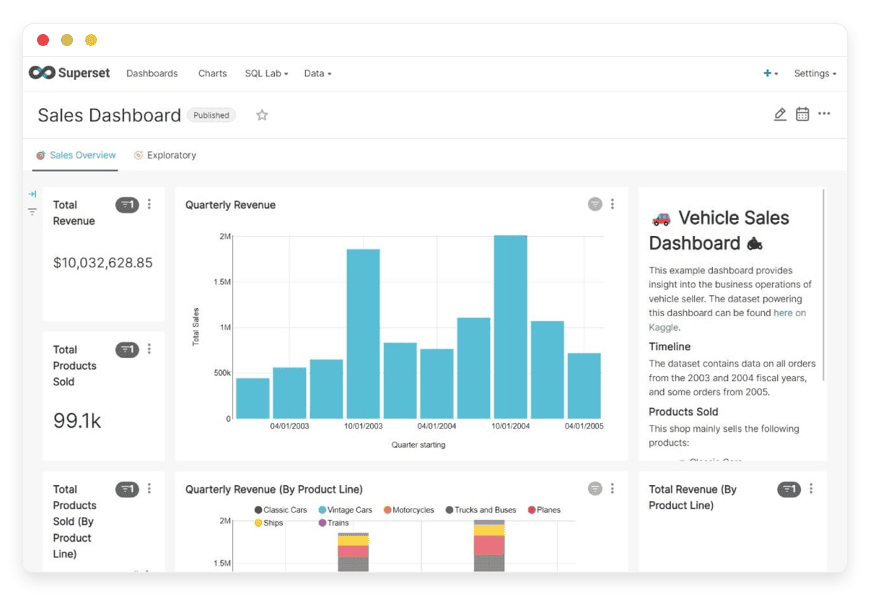
Managed Apache Superset Hosting: The Ultimate Guide for Data Teams
Data visualization often feels like a trap. You are usually forced to choose between two extremes. On one side, you have proprietary software giants charging exorbitant licensing fees that scale aggressively with your headcount. On the other side, you have open-source tools that are free to download but cost a fortune in engineering hours to maintain.
Apache Superset offers a powerful third path. It provides enterprise-grade business intelligence capabilities that rival the top proprietary tools, yet it remains free of licensing costs. However, getting it running reliably, securing it, and scaling it is a significant engineering challenge.
This comprehensive guide explores why Managed Apache Superset Hosting is the smartest strategic move for modern data teams. We will look deep into the software's capabilities, its advanced features, specific industry applications, and how you can start visualizing data in minutes, not months.
TLDR: The Quick Answer
If you are looking for a fast way to understand the value proposition, here is the summary.
What is it? Apache Superset is a modern, open-source data exploration and visualization platform. It connects to any SQL-based datasource.
The Problem: Self-hosting Superset requires managing a complex stack: Python dependencies, Redis caches, Celery workers for async tasks, and a metadata database. It is heavy and fragile if not configured correctly.
The Solution: Managed hosting removes the infrastructure burden entirely. You get a ready-to-use, optimized environment immediately.
The Benefit: You focus on writing SQL and building dashboards. We ensure the lights stay on, the software stays updated, and the security protocols are enforced.
Introduction
Every company sits on a mountain of data. The problem is rarely the volume of data; it is the accessibility. You need to answer questions fast. You need to visualize trends without waiting for a monthly report from a specialized data team. Apache Superset was built exactly for this purpose. It allows you to slice, dice, and visualize data with incredible speed.
But there is a catch. While the software is free, your time is not.
Running Superset yourself is a second job. You become responsible for server maintenance, security patches, and fixing dependency conflicts between Python libraries. When the server goes down during a critical board presentation, it is on you to fix it. This is where the conversation shifts from "software" to "infrastructure."
DANIAN acts as your invisible infrastructure team. We take the complex architectural requirements of Superset and turn them into a simple, reliable service. You log in, connect your database, and build charts. We handle the servers, the security, and the scaling.
What is Apache Superset?
Apache Superset is a data exploration and visualization platform designed to be modern, fast, and intuitive. It was originally created at Airbnb by Maxime Beauchemin, the same engineer behind Apache Airflow. It started as a hackathon project and grew into a top-level project at the Apache Software Foundation.
The software allows users to explore data using a rich set of visualizations, from simple pie charts to complex geospatial decks. It is fast, lightweight, and intuitive. It sits on top of your existing databases and speaks SQL. If your database can speak SQL, Superset can likely visualize it.
Why is it trending?
The data landscape is shifting. Teams are tired of per-user licensing fees that punish growth. Superset is trending because it democratizes data access. It offers features that rival major proprietary competitors but remains open source. It supports a modern workflow where code and configuration can define your analytics, fitting perfectly into modern engineering practices (analytics-as-code).
Why Choose Apache Superset?
The primary reason teams choose Superset is freedom. You are not locked into a specific ecosystem. You can connect a PostgreSQL database today and a ClickHouse cluster tomorrow without changing your visualization tool.
When you opt for Hosting Apache Superset with a managed provider, you amplify this freedom. You get the flexibility of open-source software with the reliability of a SaaS product. You can customize the semantic layer, define granular security rules, and create pixel-perfect dashboards without ever touching a command line.
It scales effortlessly. Superset is cloud-native by design. It works just as well for a startup with 10,000 rows of data as it does for a tech giant processing petabytes. The interface remains snappy because the heavy lifting is done by your database, while Superset handles the presentation.
Key Features of Apache Superset
Superset is packed with features that cater to data engineers, analysts, and business users alike. It is not just a charting library; it is a full-stack data exploration application. Here is a deep dive into what makes it powerful.
World-Class SQL IDE (SQL Lab)
Superset includes a feature called SQL Lab. This is a robust SQL IDE that allows you to write queries, visualize the results, and save them for later. It is far more than a text box. It supports multi-statement queries and parameterization. It is an excellent environment for data preparation. You can preview data, view table metadata, and see query history all in one place. This bridges the gap between raw data and visual dashboards, allowing analysts to "massage" data before visualizing it.
Extensive Database Support
Connectivity is king. Superset speaks SQLAlchemy, a Python SQL toolkit. This means it supports nearly every major SQL-speaking database and data engine. Whether you use MySQL, PostgreSQL, Oracle, Microsoft SQL Server, Redshift, Snowflake, or Google BigQuery, Superset connects easily. It also supports modern real-time databases like Druid and Pinot, allowing for sub-second query responses on massive datasets.
Powerful Semantic Layer
A common pain point in BI is defining metrics repeatedly. Superset solves this with a lightweight semantic layer. You can define calculated columns and metrics (like "Gross Revenue" or "Active Users") at the dataset level. Once defined, these metrics are available across all charts and dashboards. If the definition of a metric changes, you update it in one place, and it propagates everywhere. This ensures a "single source of truth" for your organization.
Enterprise-Grade Security
Security is not an afterthought here. Superset comes with an extensible security model. It supports major authentication providers like database auth, OpenID, LDAP, and OAuth. More importantly, it offers Row-Level Security (RLS). You can define filters so that specific users only see the data relevant to them. For example, a regional manager in Europe will only see European sales data, even if they are looking at the same dashboard as the US manager.
Caching and Performance
Dashboards need to load fast. Superset allows you to configure caching rules at multiple levels. You can cache chart data, SQL query results, and dashboard metadata. It integrates with Redis and Memcached to store these results. It also supports asynchronous query execution using Celery workers. This means long-running queries won't time out your browser; they run in the background and notify you when ready. This architecture is critical for handling big data without freezing the user interface.
Advanced Geospatial Visualization (Deck.gl)
One of Superset's standout features is its integration with Deck.gl, a WebGL-powered framework for visual exploratory data analysis of large datasets. This allows you to create stunning, interactive maps. You can visualize millions of data points, creating screen-grid maps, hexagonal heatmaps, and path visualizations (like flight paths or shipping routes). Unlike standard map charts, these are highly performant and interactive, allowing users to tilt, rotate, and zoom into geospatial data smoothly.
Alerts and Reporting
Automation is key to modern BI. Superset has a built-in alerting and reporting mechanism. You can configure it to send emails or Slack messages based on specific triggers.
Reports: Schedule a screenshot of a dashboard to be sent to your executive team every Monday at 9:00 AM.
Alerts: Set a trigger that notifies the engineering team if "Error Rate" exceeds 5%. The system runs the query, checks the condition, and fires the alert if the threshold is breached.
Jinja Templating for Dynamic SQL
For power users, Superset supports Jinja templating within SQL queries. This allows you to write dynamic SQL code that changes based on the context. You can inject the current time, the current user's ID, or custom URL parameters directly into your query. This is incredibly powerful for creating dynamic dashboards that adapt to the person viewing them, effectively reducing the number of dashboards you need to maintain.
No-Code Visualization Builder
The "Explore" interface is where the magic happens. Users select a dataset, choose a chart type, and drag-and-drop columns to visualize data. You do not need to know SQL to build a chart. The interface guides you through grouping, filtering, and aggregating your data. It offers instant feedback, so you can iterate on your visualization until it looks exactly right. It supports over 60 chart types out of the box.
Solutions per Industry
Managed Apache Superset Managed hosting fits into various verticals. The flexibility of the tool allows it to solve distinct pain points across different sectors. Here is how different industries apply it.
eCommerce and Retail
Online stores generate massive amounts of transactional data. Managers need to see inventory levels, sales velocity, and cart abandonment rates in real-time.
The Pain Point: Standard platform reports (like Shopify or WooCommerce analytics) are often limited. They are hard to combine with ad spend data from Facebook or Google Ads, leading to a fragmented view of profitability.
The Use Case: Superset connects to the data warehouse where all these sources merge. A dashboard can show real-time profit margins by subtracting ad spend and COGS from revenue instantly. Retailers can build heatmaps of shipping destinations to optimize warehouse locations or track "return rates" by product category to identify quality control issues.
Marketing Agencies
Agencies struggle with client reporting. They often waste hours every week downloading CSVs from Facebook, Google Ads, and CRMs to build Excel sheets.
The Pain Point: Manual reporting is slow, prone to error, and static. Clients cannot interact with the data, and by the time they get the report, the data is stale.
The Use Case: Agencies use Superset to build white-labeled, interactive dashboards for clients. They share a secure link, and the client can filter the data by date range or campaign. It saves hours of manual work and increases client retention by providing transparency. Agencies can also use Jinja templating to serve a single dashboard structure to 50 different clients, with data filtered securely by Client ID.
FinTech and Banking
Finance requires precision and strict security. Analysts need to detect fraud patterns or track portfolio performance without exposing sensitive data.
The Pain Point: Proprietary tools can be difficult to audit and expensive to deploy on-premise or in private clouds. Data leakage is a massive risk.
The Use Case: Superset’s Row-Level Security (RLS) is the hero here. Banks can give branch managers access to data without exposing other branches. The SQL Lab allows auditors to run complex, read-only queries directly against the ledger to verify transactions. Risk teams can build real-time monitoring dashboards that visualize transaction volume spikes, helping to identify potential fraud attacks as they happen.
Healthcare and Hospitals
Healthcare organizations deal with complex operational data, from bed occupancy rates to patient outcome trends.
The Pain Point: Data is often siloed in legacy Electronic Health Record (EHR) systems that are notoriously difficult to visualize. Administrators struggle to see a holistic view of hospital operations.
The Use Case: Superset can sit on top of a data lake that aggregates EHR data. Hospital administrators can view real-time dashboards of ER wait times, bed availability, and staffing ratios. Medical researchers can use the exploration tools to visualize patient outcomes across different demographics or treatment protocols, aiding in fast, data-driven medical decisions without compromising patient privacy controls managed at the database level.
Logistics and Supply Chain
Moving goods requires tight coordination and constant monitoring of routes, fuel costs, and delivery times.
The Pain Point: Supply chains produce messy, high-volume data. Visualizing thousands of moving trucks or shipping containers on a standard map crashes most browser-based tools.
The Use Case: Using Superset’s Deck.gl integration, logistics companies can visualize the exact location of their entire fleet in real-time. They can overlay weather data to predict delays. Operations managers can track "On-Time In-Full" (OTIF) metrics by region, drilling down from a global view to a specific warehouse. This visibility helps in route optimization and reducing fuel consumption.
Education and EdTech
Schools and universities need to track student performance, enrollment numbers, and resource utilization.
The Pain Point: Educational data is often locked in rigid Student Information Systems (SIS). Identifying at-risk students usually happens after it is too late to intervene.
The Use Case: Superset allows educators to build "Early Warning Systems." By visualizing attendance, grade trends, and LMS login activity, administrators can identify students who are falling behind. Universities can analyze enrollment funnels to understand which marketing channels bring in the most qualified applicants. Research departments can also use it to visualize grant funding and publication metrics.
Manufacturing and IoT
Modern factories are filled with sensors sending temperature, vibration, and pressure data every second.
The Pain Point: This is time-series data at high velocity. Standard BI tools struggle to render millions of data points rapidly to show machine health.
The Use Case: Superset connects to time-series databases like Druid or TimescaleDB. Plant managers can view dashboards showing Overall Equipment Effectiveness (OEE). They can set alerts for when a machine's vibration threshold exceeds safety limits, enabling predictive maintenance. This prevents costly downtime by fixing machines before they break.
Government and Public Sector
Government agencies are under increasing pressure to be transparent and data-driven.
The Pain Point: Public sector budgets are tight, and proprietary software licenses are difficult to approve. Furthermore, public-facing dashboards need to handle high traffic without costing tax-payers per-click fees.
The Use Case: Superset is ideal for public transparency portals. Cities can publish dashboards showing budget spending, crime statistics, or public transit performance. Because Superset is open-source, there are no licensing fees, making it a responsible choice for public funds. Internal agencies can use it to track project progress and resource allocation across departments.
Apache Superset vs Other Software
How does Superset compare to the proprietary giants?
| Feature | Apache Superset | Proprietary Alternatives (Tableau/PowerBI) |
| License Cost | Free (Open Source) | High Monthly Per-User Fees |
| Connectivity | Universal (via SQLAlchemy) | Often limited or requires premium connectors |
| Extensibility | High (Custom plugins/Python) | Low (Closed ecosystem) |
| Hosting | Flexible (Any cloud/Managed) | Vendor Cloud or Expensive On-Prem |
| Semantic Layer | Lightweight & Reusable | Complex & Proprietary Logic |
| Source Code | Auditable & Transparent | Closed & Black Box |
| Embedding | Easy & Flexible (SDK available) | Expensive & Restrictive |
Proprietary tools charge you for every pair of eyes looking at a dashboard. This penalizes you for being data-driven. Superset allows you to scale your user base without scaling your costs linearly. You pay for the infrastructure (hosting), not the headcount.
Use Cases and Applications
The versatility of Superset allows for diverse applications beyond standard BI reporting.
Embedded Analytics: Companies use Superset to embed charts directly into their own SaaS products. This gives their customers analytics without the engineering team needing to build a charting engine from scratch.
Geospatial Analysis: With Deck.gl integration, Superset excels at mapping. It is used to visualize delivery routes, density heatmaps, and urban planning models.
A/B Test Monitoring: Product teams build dashboards to track live A/B tests. They visualize conversion rates and statistical significance in real-time to make product decisions faster.
System Health Monitoring: DevOps teams connect Superset to time-series databases to monitor server loads, API latency, and error rates. It serves as a visual layer on top of their logging infrastructure.
Sales Leaderboards: Sales teams display real-time leaderboards on office screens (or virtual workspaces) to drive competition and transparency.
Customer Support Analysis: Support teams visualize ticket volume, response times, and sentiment analysis to improve support quality and resource allocation.
How DANIAN Helps
We position ourselves as the "Quiet Enabler." You have data to analyze and a business to run. You do not want to spend your Friday night debugging a Redis connection string or figuring out why a Celery worker is stuck.
Fully Managed
We handle the hosting completely. Our team manages everything from the initial launch to regular updates, security patches, and performance monitoring. Your software is always optimized without you having to lift a finger. We take the "ops" out of DevOps for you.
Backup & Monitoring
Data loss is not an option. We configure automated daily backups and store them securely off-site. If you make a mistake or delete a critical dashboard, we offer a one-click restore. We also watch your server 24/7. CPU spikes, memory leaks, and downtime risks are often detected and resolved before you even notice a blip in performance.
SSL & Firewall
With cybersecurity threats on the rise, we take security seriously. From automated updates to proactive monitoring and custom firewalls, we make sure your environment is secure 24/7. Your data stays private, and your connection is always encrypted via SSL by default.
Updates
Superset evolves fast. New features, chart types, and bug fixes arrive frequently. We apply these updates and security patches without your intervention, ensuring you always have the latest tools. You never have to worry about a "migration guide" again.
Guaranteed Performance
Downtime is detrimental to your business. With our scalable infrastructure, we ensure consistent performance even as your user base grows or your queries become more complex. We optimize the underlying layers—the web server, the cache, and the message queue—so your dashboards load instantly.
7-Day Free Trial
We believe you should try before you trust. There is no risk to getting started. You can spin up a robust instance, connect your data, and see the value immediately.
At DANIAN, our philosophy is simple: Less Setup, More Development. Affordable from the Start. Real Help When You Need It.
How to Get Started
Getting your own Superset environment running takes minutes.
Visit DANIAN: Go to our signup page and create your account.
Select Superset: Choose Apache Superset from our catalog of open-source applications.
Launch: Sit back. We provision the server, configure the database, set up the cache, and secure the network.
Visit DANIAN: Go to our signup page and create your account.
Select Superset: Choose Apache Superset from our catalog of open-source applications.
Launch: Sit back. We provision the server, configure the database, set up the cache, and secure the network.
FAQ
Do I need to know SQL to use Superset?
To build the initial datasets and "virtual tables," basic SQL knowledge is helpful. However, once the data is connected and metrics are defined, business users can build charts and dashboards using the no-code drag-and-drop interface without writing a single line of code.
Can I connect my private database?
Yes. You can whitelist the IP address of your DANIAN server to allow it to connect securely to your database, whether it is on AWS, Google Cloud, Azure, or an on-premise server behind a firewall.
Is this the full version of Superset?
Yes. You get the full, unadulterated open-source version. We do not restrict features, we do not watermark charts, and we do not put capabilities behind a paywall. You get the exact same powerful tool used by Airbnb and Dropbox.
How does pricing work?
You pay for the server resources (CPU, RAM, Storage) required to run the software. You do not pay per user. You can have as many users as your server resources can handle. This model is significantly cheaper than per-seat licensing for growing teams.
What happens if traffic spikes?
Our infrastructure is designed to scale. You can upgrade your server plan with a click to handle increased load during peak reporting times.
Do you offer support?
Yes. We support the infrastructure. If the server is down, slow, or throwing 500 errors, we fix it. For specific questions about how to write a complex SQL query or design a specific chart, the active Superset community is your best resource, though we are always happy to point you in the right direction.
Does Superset support embedding?
Yes, Superset has excellent embedding capabilities. You can embed dashboards into your own applications using the Superset Embedded SDK, making it a great choice for customer-facing analytics.
Conclusion
Data is the lifeblood of modern decision-making. Apache Superset gives you the tools to visualize that data clearly, effectively, and affordably. It breaks the shackles of expensive licensing and limited features. But the tool is only as good as the infrastructure it runs on.
Don't let server maintenance, dependency hell, and upgrade anxieties slow down your insights. Choose a managed solution that gives you the freedom of open source with the reliability of a professional service.


