
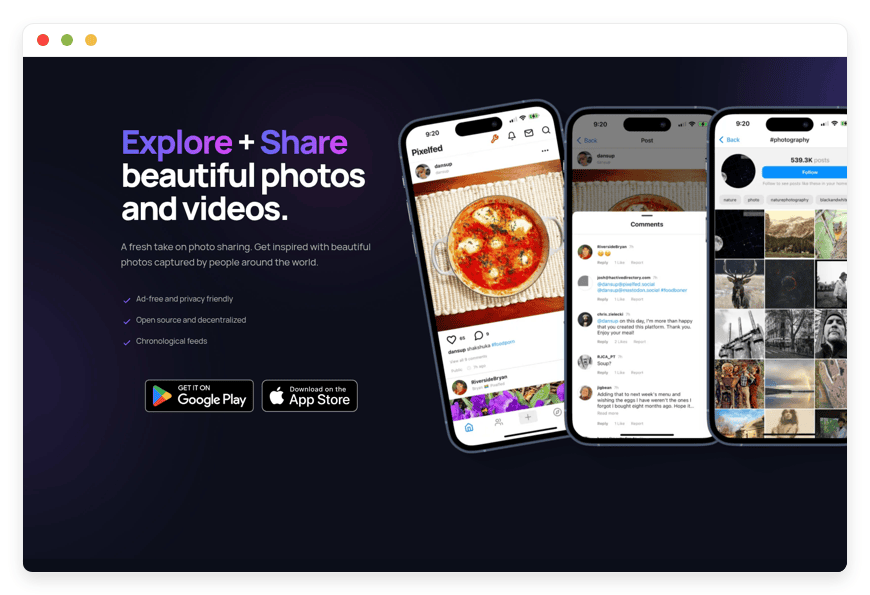
Managed Pixelfed Hosting: The Privacy-Focused Instagram Alternative
TLDR - Quick Answer
Pixelfed is the ethical, open-source answer to modern photo sharing. It restores the joy of photography by removing the algorithms, advertisements, and data harvesting that plague centralized platforms. It is a powerful community-building tool that connects to the wider Fediverse (Mastodon, etc.).
Managed Hosting bridges the gap between wanting privacy and having the technical skills to maintain a server. Running a robust social network involves complex infrastructure—databases, job queues, media storage, and security protocols.
Why this is the solution you need:
True Chronological Feeds: See the content you followed, in the order it happened. No "suggested" clutter.
Ad-Free Ecosystem: A clean, distraction-free environment for your photography.
Federated Reach: Your photos can be seen, liked, and commented on by millions of users across different platforms (like Mastodon).
Zero Technical Debt: DANIAN handles the updates, security patches, and server optimization. You just log in and post.
Introduction
We have reached a tipping point in social media. You open a major app to catch up with friends or find inspiration, but instead, you are bombarded. Your feed is 80% advertisements, "sponsored" content, and algorithmic suggestions designed to keep you doom-scrolling. The platform no longer works for you; you are working for the platform, generating data points for their ad engine.
Pixelfed flips this script entirely. It returns photo sharing to its original purpose: high-quality imagery, genuine chronological timelines, and authentic community interaction. It is not just a clone; it is a superior, ethical alternative that respects your time and your art.
However, freedom often comes with a complexity cost. Pixelfed is sophisticated software. Running a server (instance) yourself is a significant undertaking. You need to manage Laravel dependencies, configure Redis queues for background processing, tune Nginx for media delivery, and constantly monitor for security updates. One misconfigured firewall rule or a failed database migration can take your community offline instantly.
This is where DANIAN steps in. We act as your invisible infrastructure team. We provide the enterprise-grade stability and performance you need, without the headache of system administration. We ensure the lights stay on so you can focus on building your community.
What is Pixelfed?
Pixelfed is a free, open-source image sharing platform powered by the ActivityPub protocol. Created by Daniel Supernault, it has grown from a passion project into a robust, feature-rich network that rivals billion-dollar incumbents.
Unlike centralized giants where one company controls the servers and the rules, Pixelfed is decentralized. Anyone can run a server. These servers can "talk" to each other, forming a massive network known as the Fediverse.
When you launch a Pixelfed server, you are not isolating yourself. You are joining a global conversation. A user on your server can follow a user on a Mastodon server. They can like each other's posts and comment across platform boundaries. It effectively breaks down the "walled gardens" of big tech, allowing for a seamless flow of information and art.
Why is it trending?
The trend toward Pixelfed is driven by a desire for digital autonomy. Creators are tired of having their reach throttled because they didn't pay to boost a post. Photographers are tired of aggressive compression algorithms ruining their work.
Recent updates have accelerated this growth. Features like "Sign in with Mastodon" have lowered the barrier to entry, while the introduction of "Loops" (short video) proves that open-source can compete with modern trends without sacrificing privacy. It is currently the go-to platform for anyone who values visual fidelity and ethical software.
Why Choose Pixelfed?
When you decide to start Hosting Pixelfed, you are making a statement. You are choosing transparency over obscurity.
The primary reason to choose Pixelfed is the User Experience (UX). It feels familiar immediately. If you have used other photo-sharing apps, you already know how to use Pixelfed. But the difference lies in what isn't there: no ads, no tracking scripts, and no manipulation.
Additionally, Pixelfed offers granular control over media. It supports high-resolution uploads and preserves the metadata (Exif data) you want to share, while scrubbing the data you don't. This level of respect for the photographer's intent is rare in today's landscape.
Finally, the moderation capabilities are superior. On a managed instance, you set the rules. You can block toxic domains, filter specific keywords, and create a safe haven for your specific community. This makes it ideal for groups that are often marginalized or harassed on larger, unmoderated platforms.
Key Features of Pixelfed
Pixelfed is dense with features designed for creators, communities, and casual users. It handles complex media workflows that require robust hosting to function smoothly.
1. True Chronological Timeline
This is the "killer feature" for many. Pixelfed does not reorder your feed based on what an algorithm thinks you should see. If a friend posts a photo at 10:00 AM, and another posts at 10:05 AM, you see them in that order. This linear experience reduces anxiety and ensures you never miss updates from the people you actually care about.
2. ActivityPub Federation
Pixelfed is built on the W3C standard ActivityPub. This is the engine of the Fediverse.
Interoperability: Your Pixelfed profile is accessible to millions of users on Mastodon, Lemmy, PeerTube, and Friendica.
Remote Following: You can follow users on other servers without creating accounts on those servers.
Universal Search: Content travels across the network (based on privacy settings), giving your local community global reach.
3. Instagram Import Tool
One of the biggest hurdles to leaving big tech is the fear of losing your history. Pixelfed includes a powerful import tool. You can request your data archive from Instagram and upload it to Pixelfed. The system will import your photos, videos, captions, and even your profile avatar. This ensures your digital legacy moves with you.
4. Stories and Loops
Pixelfed is modern. It supports Stories, allowing for ephemeral updates that disappear after 24 hours—perfect for "behind the scenes" content. Recently, Pixelfed introduced Loops, a short-video format similar to TikTok or Reels. This allows for dynamic, engaging video content without the invasive tracking associated with other video platforms.
5. Advanced Privacy Scopes
Privacy is granular in Pixelfed. You aren't just "Public" or "Private."
Unlisted: Anyone with the link can see it, but it doesn't appear in public timelines.
Followers Only: Only people you approve can see the content.
Circles: You can create specific groups (e.g., "Close Friends," "Family") and share posts only with them.
Content Warnings (CW): You can blur images and require a click to view, allowing you to discuss sensitive topics or share spoilers without forcing them on your followers.
6. Portfolio Mode
For professionals, Pixelfed offers a dedicated Portfolio feature. This transforms your profile into a sleek, gallery-style showcase. It removes the social clutter (likes, comments) from the view, presenting your work in a clean grid that looks professional enough to send to clients.
7. Built-in Licensing and Copyright
Pixelfed respects creator rights. When you upload a photo, you can assign a specific license to it (e.g., All Rights Reserved, Creative Commons BY-SA, Public Domain). This license is displayed clearly with the image, informing viewers of how they can (or cannot) use your work. This is a massive advantage for artists protecting their IP.
8. AutoSpam and Moderation
Running a community requires defense. Pixelfed includes AutoSpam, a system that uses Naive Bayes filtering to detect and hide spam comments and registrations automatically. It learns over time, keeping your instance clean without constant manual intervention.
9. Curated Onboarding
To solve the "empty feed" problem for new users, Pixelfed supports curated onboarding. You can recommend specific users or topics for new sign-ups to follow immediately. This ensures that when someone joins your server, they instantly have a vibrant, interesting timeline.
10. Mobile Apps
Pixelfed has a growing ecosystem of mobile apps. The official Pixelfed app is available, but because the API is open, third-party developers have built incredible alternatives (like Vernissage). This gives your users the freedom to choose the interface that works best for them.
Solutions per Industry
Managed Pixelfed hosting is not just for hobbyists; it is a business solution for industries that require visual fidelity, privacy, and community control.
1. Professional Photography Cooperatives
Photographers are increasingly frustrated by platforms that crop their photos and crush their resolution.
The Pain: A group of landscape photographers wants to share work, but mainstream apps degrade the image quality and surround their art with ads for cheap gear.
The Solution: They launch a cooperative Pixelfed server. They configure the server to accept large file sizes and disable compression. It becomes a premium gallery where the art is respected, and the "Portfolio Mode" acts as a business card for every member.
2. Independent Journalism and Media
Trust is the currency of journalism. Relying on third-party algorithms to distribute news is risky.
The Pain: An independent news outlet finds their photo-essays are being down-ranked by algorithms that prefer sensationalist video content.
The Solution: A dedicated Pixelfed instance allows the outlet to publish photo-journalism directly to their subscribers. They control the narrative and the presentation. Content Warnings allow them to share important but graphic conflict photography responsibly, without fear of an automated ban.
3. Museums, Archives, and Libraries
Cultural institutions have a mandate to preserve history and make it accessible, not to monetize user data.
The Pain: A museum wants to digitize a collection and share it online, but using a commercial platform means their educational content is monetized by a third party.
The Solution: An institutional Pixelfed server serves as a digital archive. High-resolution scans of artifacts are uploaded with detailed descriptions. The "Collections" feature organizes items by era or exhibition. Other museums can federate with them, creating a global, decentralized digital museum network.
4. Educational Institutions (Universities & Schools)
Schools need safe spaces for students to interact that comply with strict privacy standards.
The Pain: A university art department wants a space for students to critique each other's work digitally. Public social media is too exposed and harvests student data.
The Solution: A campus-hosted Pixelfed instance (managed by DANIAN) provides a walled garden. Only students and faculty can join. Critiques happen in a safe, moderated environment. Alumni can be given "Observer" accounts to view graduate showcases.
5. Fashion and Retail Brands
brands are looking for "Organic" reach that is actually organic.
The Pain: A sustainable clothing brand builds a following, but then has to pay the platform just to ensure their own followers see their new lookbook.
The Solution: The brand launches a community server. They encourage customers to post photos wearing the clothes. It becomes a hub of authentic user-generated content. The "Stories" feature is used for flash sales, reaching 100% of the audience that opted in, not just the 5% the algorithm allows.
6. Tourism and Local Government
Promoting a region visually is powerful, but local governments must be careful about privacy laws and data ethics.
The Pain: A tourism board wants to showcase the beauty of their region but cannot officially endorse a platform known for privacy violations.
The Solution: They create a regional Pixelfed server (e.g., photos.visittown.com). Locals and tourists post scenic shots. The server becomes a beautiful, crowd-sourced travel guide that the city controls, free from corporate tracking.
7. Game Development Studios
Visuals are everything in game dev.
The Pain: Studios need to share "Work In Progress" (WIP) shots and devlogs. On standard platforms, these often get lost in the noise or stolen by bots.
The Solution: An indie studio uses Pixelfed to host their devlog. They use the "Loops" feature to show short gameplay mechanics. They use the licensing features to clearly mark concept art as "All Rights Reserved," protecting their IP while building hype.
8. Non-Profits and NGOs
Donors want to see the impact of their money, but NGOs often work in sensitive areas.
The Pain: An NGO working in a conflict zone needs to share updates but must protect the identities of the people they help.
The Solution: Pixelfed’s face-blurring tools and privacy scopes are vital here. The NGO can share visual proof of their work with donors via a private or unlisted stream, ensuring transparency without endangering their beneficiaries.
9. Event Organizers (Conferences & Festivals)
Events generate thousands of photos that usually disappear into the void.
The Pain: After a music festival, photos are scattered across ten different apps, using different hashtags, intermixed with spam.
The Solution: The festival launches a temporary or permanent Pixelfed server. Attendees upload their shots there. It becomes the "Official Digital Memory" of the event. The chronological feed allows people to relive the weekend as it happened.
Pixelfed vs Other Softwares
Understanding the landscape is critical. Pixelfed is not just "Open Source Instagram"; it is a fundamental shift in how software architecture handles social interactions.
| Feature | Pixelfed | Proprietary Alternatives |
| Feed Algorithm | None. Strictly Chronological. | Aggressive. Optimize for watch time/ads. |
| Business Model | Free software; Community supported. | Ad revenue; Selling user behavior data. |
| Federation | Yes. Connects to Mastodon, Lemmy, etc. | No. Walled garden (isolated). |
| Privacy | High. Granular scopes, no tracking. | Low. Tracking pixels, cross-site tracking. |
| Image Compression | User Controlled. High fidelity. | High. Aggressive compression to save cost. |
| Licensing | Creative Commons Built-in | Platform License. (They often own rights to use) |
| Portability | Full Import/Export | Difficult. "Lock-in" tactics used |
Use Cases and Applications
1. The Family Archive
In an era of AI scraping, families are rightly paranoid about posting photos of their children on public networks. A private Pixelfed instance creates a secure family album. Grandparents can comment, aunts can upload from the reunion, and parents can rest easy knowing the photos aren't being used to train facial recognition AI.
2. The Niche Hobbyist Hub
Whether it is mechanical keyboards, analog synthesizers, or fountain pens, niche hobbies rely on visual detail. These communities often fragment on large platforms. A dedicated Pixelfed server acts as a clubhouse. Moderation is handled by experts in the hobby who understand the nuance, not underpaid contract workers.
3. The Artist Collective
Art collectives use Pixelfed to cross-pollinate audiences. When ten artists share a server, their combined followers (via Federation) see all the work. It creates a "Network Effect" that benefits the artists, not the platform owner.
4. The Personal Brand Hub
Influencers and thought leaders are realizing the danger of building on rented land. If your account is banned on a major platform, you lose everything. By hosting your own Pixelfed instance, you own the relationship with your audience. You can still syndicate content to other places, but your "Home Base" is secure.
5. The Wedding Album
Instead of a hashtag, modern couples are spinning up temporary Pixelfed servers for their weddings. Guests scan a QR code, join the server, and upload their candid shots. It creates a live, private feed of the reception that the couple owns forever.
How DANIAN Helps
We are the "quiet enablers" of the open web. You have the vision for a community, a portfolio, or a safe space. We have the servers.
Self-hosting Pixelfed is rewarding but demanding. It requires knowledge of Docker, Nginx, Redis, PHP, and database management. It requires setting up cron jobs for cleanup and managing storage buckets for media. It requires vigilance against security threats.
At DANIAN, we handle the mess so you get the glory.
Fully Managed Infrastructure: We handle the hosting. Our team manages everything from the initial launch to regular updates, security patches, and performance monitoring. Your Pixelfed software is always optimized without you having to lift a finger.
Automated Backup & Monitoring: We implement automated daily backups that are stored securely off-site. If you delete a database table by accident, we have a one-click restore process. We monitor your instance 24/7; if a queue gets stuck, we fix it before you even notice.
Security First: Security is not optional. We provide automated SSL certificates, custom firewalls, and proactive DDoS protection to ensure your environment is secure against threats.
Seamless Updates: Pixelfed development moves fast. When a new feature like "Loops" drops or a security patch is released, we apply it. You get the new features without the downtime risk or the fear of breaking your installation.
Guaranteed Performance: Downtime kills communities. Our scalable infrastructure ensures that your photos load instantly, whether you have ten users or ten thousand. We optimize the media caching specifically for image delivery.
Less Setup, More Development. Affordable from the Start.
How to Get Started
Launching your own photo-sharing community is easier than you think. You do not need to hire a DevOps engineer.
Visit DANIAN: Go to our website and sign up for an account.
Select Pixelfed: Choose Pixelfed from our catalog of open-source applications.
Launch: Sit back. In just a few minutes, we will configure the database, set up the queues, secure the connection, and hand you the keys to your new instance.
FAQ
1. Is Pixelfed free?
The Pixelfed software itself is open-source (AGPL-3.0) and free to use. However, running it requires server resources (storage, RAM, CPU, Bandwidth). DANIAN charges a fee to provide and manage this high-performance infrastructure for you, saving you the cost and time of doing it yourself.
2. Can I use my own domain name?
Absolutely. Connecting your custom domain (e.g., photos.yourname.com) is a standard part of our service. It makes your community look professional and unique.
3. Does Pixelfed have mobile apps?
Yes. There are official apps for both iOS and Android. Additionally, because Pixelfed uses an open API, there are excellent third-party apps available. They all connect seamlessly to your DANIAN-hosted instance.
4. If I leave DANIAN, can I take my data?
Yes. We believe in total freedom. You can export your data—images, database, and configuration—and move it to another provider or your own server at any time. There is no vendor lock-in.
5. How much storage do I need?
Photos take up space, especially high-resolution ones. We offer scalable plans. You can start with a smaller plan and upgrade your storage instantly as your community and library grow, without migrating servers.
6. Does it work with Mastodon?
Yes, seamlessly. Pixelfed and Mastodon both use ActivityPub. You can follow Mastodon users from Pixelfed, and they can follow you. Comments and likes travel across the two platforms instantly.
7. Can I keep my profile private?
Yes. You can set your account to private, meaning you must approve followers. You can also set your instance to "Private Mode," where only registered users can see any content at all.
Conclusion
Pixelfed represents the future of social media—a future that is decentralized, ad-free, and user-centric. It gives you the power to curate your own experience and build a community on your own terms. It proves that you don't have to trade your privacy for a great user experience.
Don't let technical hurdles stop you from joining the Fediverse. Let us handle the servers, the backups, and the updates while you focus on the photos and the people.


