
Managed Directus Hosting: The Instant Backend for Your Data
Building a backend from scratch is a rite of passage for many developers, but it is rarely the best use of your time or budget. You spend weeks—sometimes months—designing database schemas, writing repetitive CRUD endpoints, building a custom admin panel, and configuring complex authentication flows. By the time you are ready to write the front-end code that your users actually see and interact with, you are already exhausted. The budget is burned, and the deadline is looming.
This is where Managed Directus Hosting changes the game.
Directus is an open-source data platform that instantly layers a dynamic API and an intuitive admin interface on top of any SQL database. It democratizes your data, making it accessible to developers via REST or GraphQL, and to non-technical users via a beautiful, no-code "App Studio."
However, the power of Directus comes with a price: operational complexity. Running Directus yourself requires maintaining a Node.js environment, managing Docker containers, handling Redis for caching, configuring websockets for real-time data, and ensuring your database allows the right connections without exposing security vulnerabilities. It is a second job that takes focus away from your core product.
At DANIAN, we handle the infrastructure so you can handle the innovation. We turn a complex DevOps requirement into a simple service.
TLDR; The Quick Answer
If you are looking for a powerful backend without writing boilerplate code, Directus is the answer. If you want that power without the headache of server maintenance, Managed Directus Hosting is the solution.
Instant APIs: Directus introspects your database and generates exhaustive REST and GraphQL endpoints automatically.
No-Code Admin: A fully functional, intuitive dashboard for managing content, users, and assets is ready the moment you launch.
Database Mirroring: Directus reflects your actual SQL schema. It does not hide your data in a proprietary format or a black box.
Zero Ops: With DANIAN, you get automated backups, security updates, and performance monitoring without touching a terminal.
Total Control: You retain full administrative access to your application logic while we keep the lights on and the servers cool.
The Problem with Building Backends from Scratch
Every modern application needs the same core components: a structured database, an API layer to talk to that database, and an administrative panel to manage the data.
Traditionally, you have two choices.
The Rigid CMS: You use a platform that forces its own structure on you. You have to mold your data to fit their "Posts" and "Pages" logic.
The Custom Build: You build a custom backend using a framework like Laravel, Django, or Express. This gives you freedom but eats up your budget and timeline. You find yourself writing code for "Reset Password" emails for the hundredth time.
Even if you choose to use the Directus software to solve this, self-hosting presents its own hurdles. You need to keep the Node.js runtime updated. You need to configure the file storage adapters correctly so your images don't vanish when a container restarts. You need to manage SMTP for emails and ensure your WebSocket connections are stable for real-time updates.
This is where "configuration fatigue" sets in. You stop building your app and start fighting with your server.
DANIAN removes this friction. We provide the invisible infrastructure that makes Directus fly. You simply click a button, and within minutes, you have a production-ready environment complete with SSL, database, and storage.
What is Directus?
Directus is an Open Data Platform. While it often competes in the Headless CMS space, calling it just a CMS sells it short. It was created by Rijk van Zanten and the team at Directus, Inc. to solve a fundamental problem: bridging the gap between raw database data and the people who need to use it.
At its core, Directus is a database wrapper. It connects to your SQL database (PostgreSQL, MySQL, SQLite, etc.) and performs Database Introspection. This means it reads your schema—your tables, columns, and relationships—and instantly builds a control panel and API based on that structure.
Why is it Trending?
Directus is exploding in popularity because it is unopinionated.
Most platforms force you to import data into their system, locking it away in a proprietary black box. Directus does the opposite. It sits on top of your pure SQL database. If you decide to stop using Directus tomorrow, you can simply uninstall it. Your database remains exactly as it was, clean and accessible. This respect for your architecture makes it a favorite among senior engineers and CTOs who value long-term data integrity.
Why Choose Managed Directus Hosting?
When you choose Managed Directus Hosting, you are choosing speed, reliability, and peace of mind.
The software itself allows you to replace months of backend development work with a few clicks. You get authentication, file management, and image transformation out of the box. But the hosting component is what ensures your project stays online.
Hosting Directus on a managed platform means you never have to worry about a breaking change in a minor update crashing your server. It means you don't have to manually configure SSL certificates or set up cron jobs for database backups. It means you don't have to wake up at 3 AM because your disk is full.
You get the freedom of open-source software with the reliability of a dedicated DevOps team. You build the schema; we ensure the engine keeps running.
Key features of Directus
Directus is packed with features that replace dozens of standalone SaaS tools. It is a dense, feature-rich platform. Here is a deep dive into what makes this software indispensable for modern development.
Database Introspection & Abstraction
This is the superpower of Directus. Unlike other tools that store data in a confusing JSON blob or a proprietary format, Directus mirrors your actual SQL database. When you add a column in Directus, it adds a real column in your SQL table.
No Vendor Lock-in: Since the data is standard SQL, you can connect other tools (like Tableau or Metabase) to the database simultaneously.
Support for Complexity: It handles complex relationships (One-to-Many, Many-to-Many, Many-to-Any) seamlessly, creating the junction tables for you automatically.
Instant REST & GraphQL APIs
The moment you create a collection (table), Directus generates fully documented API endpoints.
REST: Standard endpoints for GET, POST, PATCH, and DELETE operations. It follows strict RESTful standards, making it predictable.
GraphQL: A complete schema for complex querying. This is perfect for modern frontend frameworks like React, Vue, or Svelte, allowing you to fetch relational data in a single request.
You get filtering, sorting, pagination, and relational data fetching without writing a single line of backend code.
The App Studio (Admin Panel)
The Data Studio is a Vue.js application that serves as your administrative dashboard. It is polished, fast, and user-friendly.
Granular Permissions: You can control exactly who sees what down to the field level. You can even set conditional permissions (e.g., "Users can only edit articles they created").
Custom Interfaces: If the standard text input isn't enough, you can use WYSIWYG editors, map interfaces, color pickers, or build your own Vue.js extensions.
Directus Flows (Automation Engine)
Think of this as an internal "Zapier" or "Make" built right into your backend. Flows allow you to automate logic based on triggers inside or outside the system.
Triggers: A record is created, a webhook is received, or a scheduled cron job runs.
Operations: Send an email, make a request to an external API, update data, generate a notification, or trigger a custom script.
Logic: You can add conditional logic (If/Else) to create complex workflows.
This allows you to build complex business logic visually, keeping your codebase clean and reducing the need for external microservices.
Insights & Visualization
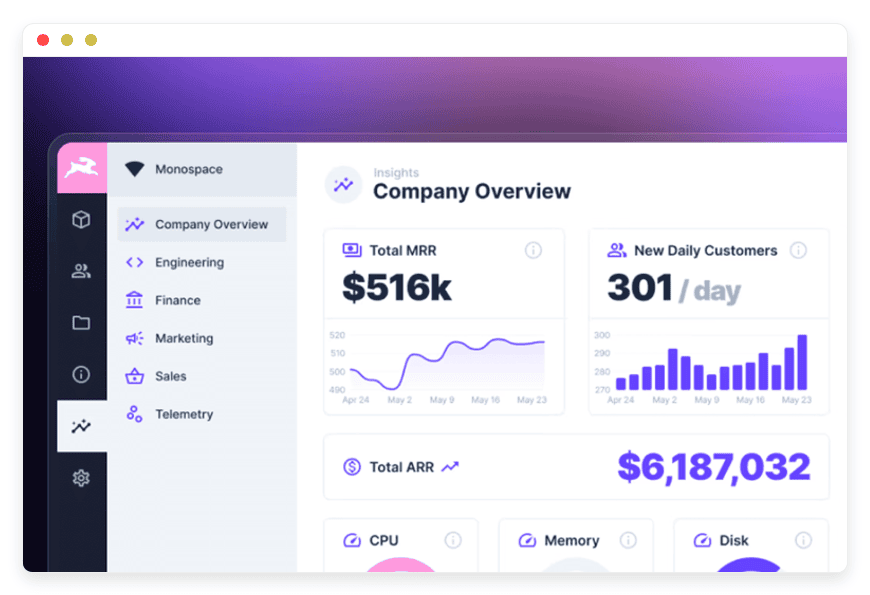
You don't need a separate Business Intelligence tool. Directus includes an Insights module where you can build drag-and-drop dashboards.
Widgets: Create bar charts, line graphs, pie charts, and metric cards.
Real-Time Data: These dashboards pull directly from your database, so they are always up to date.
Custom Queries: You can write raw SQL queries to power your widgets if you need highly specific data aggregation.
This is vital for SaaS admin portals, internal tracking tools, or executive summaries.
Digital Asset Management (DAM)
Directus isn't just for text; it is a full-fledged file management system.
File Organization: Folders, metadata, and tagging for all assets.
Image Transformation: It includes an automatic image transformation engine. You can request specific sizes, crops, qualities, and formats of an image via the API URL (e.g.,?width=500&format=webp). This improves frontend performance significantly.
Storage Adapters: While it stores file metadata in the database, the actual files can be stored on local disk, S3, or other cloud storage providers (configured easily on DANIAN).
Authentication & Security
Building secure authentication is hard. Directus handles it for you.
Multiple Methods: Support for email/password, LDAP, OAuth2, OpenID, and more.
JWT Standard: It uses JSON Web Tokens for stateless, secure API authentication.
Two-Factor Authentication (2FA): Built-in support for added security on user accounts.
Password Policies: Enforce strong passwords and rotation policies effortlessly.
File Organization: Folders, metadata, and tagging for all assets.
Image Transformation: It includes an automatic image transformation engine. You can request specific sizes, crops, qualities, and formats of an image via the API URL (e.g., ?width=500&format=webp). This improves frontend performance significantly.
Storage Adapters: While it stores file metadata in the database, the actual files can be stored on local disk, S3, or other cloud storage providers (configured easily on DANIAN).
Internationalization (i18n)
Directus is built for a global audience.
App Localization: The Admin App itself is translated into dozens of languages.
Content Translation: It has a dedicated interface for managing multilingual content. You can store translations in a separate table, and the API will serve the correct language based on the user's request, simplifying the architecture of multi-language websites.
Solutions per Industry
Directus is flexible enough to power almost any application. While it is known as a Headless CMS, its true nature as a Data Platform makes it applicable across the entire business spectrum. Here is how distinct industries use Managed Directus Hosting to solve specific problems.
1. eCommerce and Retail
The Solution: Directus acts as a Product Information Management (PIM) system. The retailer models their inventory in Directus, creating a "Single Source of Truth."
Workflow: The "Flows" feature syncs inventory levels from the warehouse system to Shopify or Magento automatically via webhooks.
Benefit: The marketing team uses the App Studio to enrich product descriptions, add high-res images, and manage SEO tags. This enriched data is then served to the mobile app, the website, and even digital signage in physical stores via the global API.
2. Digital Agencies & Software Houses
The Pain Point: Agencies often juggle multiple client projects with different requirements. One client wants a WordPress site; another wants a React Native app; a third wants a lobby kiosk. Using different backends for each is inefficient and hard to maintain.
The Solution: The agency standardizes on Directus as a Headless CMS and Backend-as-a-Service.
Workflow: They model the content once. The corporate website consumes the data via GraphQL. The mobile app pulls the same data via REST. The lobby kiosk pulls images from the Asset library.
Benefit: When the client needs to update a headline or a team member's photo, they update it in Directus once, and it propagates everywhere instantly. This dramatically reduces maintenance contracts and improves client satisfaction.
3. Education and EdTech
The Pain Point: A university or training center needs a student portal where students can submit assignments, view grades, and chat with advisors. This requires strict, complex Role-Based Access Control (RBAC). You cannot have students seeing each other's grades.
The Solution: Directus handles complex permissions out of the box without custom coding.
Workflow: The university sets up roles for "Student," "Professor," and "Admin." The "Student" role is configured with a custom rule so they can only read grades where student_id equals $CURRENT_USER.
Benefit: The API enforces these rules automatically at the database level. The development team is saved from writing complex (and potentially buggy) security logic, ensuring FERPA or GDPR compliance is easier to maintain.
4. Financial Technology (FinTech)
The Pain Point: Fintech startups need to move fast, but they face strict regulatory requirements regarding data auditing and security. They cannot just "move fast and break things" when money is involved.
The Solution: Directus provides robust logging and data integrity features that are essential for finance.
Workflow: Directus has a "Revisions" feature that tracks every single change made to a record, who made it, and when. This creates an automatic audit trail. Flows can be set up to alert compliance officers if specific sensitive fields (like KYC status or credit limits) are modified.
Benefit: Developers can build the customer-facing dashboard rapidly using the API, while the built-in admin panel serves as the back-office tool for compliance teams to review applications, all with a verified audit history.
5. Government and Public Sector
The Pain Point: Government agencies are pushing for "Open Data" transparency, needing to publish datasets to the public. However, their internal systems are often archaic, legacy SQL databases that cannot be exposed safely to the web.
The Solution: Directus acts as a secure gateway/wrapper around these legacy databases.
Workflow: The agency connects Directus to the existing SQL database. They configure public "Read-Only" permissions for specific datasets (e.g., public transit schedules, budget spending).
Benefit: They instantly have a modern, documented public API for developers and citizens to use, without having to migrate or replace their legacy infrastructure. The internal staff gets a modern UI to manage the data, while the public gets transparency.
6. SaaS Startups (BaaS)
The Pain Point: A startup founder has a brilliant idea for a new app. They have limited funding and need to launch an MVP (Minimum Viable Product) in weeks, not months. Spending 3 months building user management, password reset flows, and subscription tables is not an option.
The Solution: The startup uses Managed Directus Hosting as a complete Backend-as-a-Service (BaaS).
Workflow: They use Directus to handle the "boring stuff": Users, Auth, Roles, and Standard CRUD. The founders focus 100% of their coding effort on the unique logic of their application (the "secret sauce").
Benefit: They launch in record time. As they scale, because Directus is just a wrapper over SQL, they are not locked in. They can slowly replace parts of the backend with custom microservices if needed, without a painful data migration.
7. Media and Publishing
The Pain Point: Large publishers manage thousands of articles, dozens of authors, and complex editorial workflows. Standard CMS tools often crumble under the weight of custom requirements like "guest author" approval flows or multi-channel distribution.
The Solution: Directus allows for a completely custom content model.
Workflow: Editors can use the "Flows" automation to manage the editorial pipeline. When a writer submits a draft, the status changes to "Review," and a notification is sent to the section editor. Once approved, a webhook triggers a static site build (e.g., via Next.js or Gatsby).
Benefit: The separation of content (Directus) from presentation (the website) allows the publisher to redesign their site completely without ever having to migrate content again.
Directus vs Other Softwares
It is important to understand how Directus compares to proprietary alternatives. Note that we are comparing the software capabilities, not the hosting providers.
| Feature | Directus | Proprietary Headless CMS | Traditional Monolith (e.g., WordPress) |
| Data Structure | Mirrors your SQL Database | Proprietary JSON / NoSQL | Rigid, specific table structure |
| API Generation | Instant REST & GraphQL | Usually REST only or limited GraphQL | Requires plugins or custom code |
| Self-Hostable | Yes (Open Source) | No (SaaS only) | Yes |
| User Limit | Unlimited | Per-user pricing typically | Unlimited |
| Automation | Built-in (Flows) | Requires external integrations | Requires plugins |
| Extensibility | Modular (Node.js extensions) | Limited plugins | High (Plugins) but messy code |
| Vendor Lock-in | None (You own the SQL) | High (Data export is hard) | Medium (Database is messy) |
The Verdict: Directus wins on flexibility and ownership. Because it sits on top of a standard database, you are never "stuck." Proprietary systems often charge you based on the number of API calls, the number of admin users, or the number of content records. As you grow, their price grows exponentially. With Directus, the software is free; you only pay for the infrastructure to run it.
Use Cases and Applications
Beyond the standard CMS use case, Hosting Directus opens the door to a variety of creative applications:
Internal Tooling: Quickly build an admin panel for your existing database so support staff can view customer orders without accessing the raw SQL. This improves security and efficiency.
IoT Data Collection: Use the lightweight API to ingest data from sensors and devices in real-time. Use the Insights dashboard to visualize temperature, usage, or status logs immediately.
Gaming Backends: Store player profiles, leaderboards, inventory data, and match history. The low-latency API provided by a managed host ensures smooth gameplay.
Directory Listings: Build complex directories (real estate, job boards) with advanced filtering and geolocation queries, utilizing the power of PostGIS extensions within the database.
Multilingual Websites: Directus has built-in support for translations, making it an excellent choice for global content delivery without duplicating your infrastructure.
How DANIAN Helps
Fully Managed: We manage the entire lifecycle of the hosting environment. From the initial launch to regular system updates, we ensure the underlying OS and dependencies are healthy. You just log in and work.
Backup & Monitoring: Your data is your business. We configure automated daily backups that are stored securely off-site. If you make a mistake or delete a critical collection, restoring is a one-click process.
SSL & Firewall: Security is not optional. We provision SSL certificates automatically so your API is encrypted. Our infrastructure includes proactive monitoring and custom firewalls to block malicious traffic before it reaches your application.
Updates: Directus releases updates frequently with cool new features. We handle the application of security patches and version upgrades, ensuring you always have the latest tools without the risk of breaking your build.
24/7 Monitoring: Issues are detected and often resolved before you even notice them. Our systems watch your memory usage and CPU load constantly.
Guaranteed Performance: Downtime can be detrimental to your business. With our scalable infrastructure, we ensure consistent performance even as your user base grows.
7-Day Free Trial: We are confident you will love the platform. That is why we let you try it completely risk-free.
Less Setup, More Development. Affordable from the Start. Real Help When You Need It. That is the DANIAN promise.
How to Get Started
Launching your own Directus backend takes less time than reading this article. We have stripped away the complexity of Docker, Node.js, and Nginx configurations.
Visit DANIAN: Go to danian.co and sign up for an account.
Select Directus: Browse our catalog of open-source applications and select Directus.
Launch: Click start. Sit back for a moment while our platform build your container, configure the database, and set up the security.
Login: You will receive your admin credentials. Then, log in and start defining your data model.
FAQ
Q: Is Directus free?
A: The Directus software is open-source (BSL) and free to use for most projects. However, running it requires server resources (CPU, RAM, Storage). DANIAN provides the managed infrastructure to run the software reliably for a monthly fee.
Q: Can I use my own database?
A: When you launch Directus on DANIAN, we provision a high-performance database for you automatically to ensure compatibility and speed.
Q: What is the difference between Headless CMS and BaaS?
A: A Headless CMS focuses strictly on content management. A Backend-as-a-Service (BaaS) includes content management plus application logic, authentication, and data manipulation. Directus fits both categories, making it a "composable" data platform.
Q: How do I handle updates?
A: On a self-hosted server, you would need to manually pull the Docker image, run migration scripts, and restart containers. With DANIAN, we handle the updates for you, ensuring compatibility and security so you don't have to stress about breaking changes.
Q: Is Directus suitable for enterprise projects?
A: Absolutely. Directus is used by government agencies and Fortune 500 companies because of its security, scalability, and ability to mirror existing enterprise databases.
Q: What happens if I want to leave DANIAN?
A: You are never locked in. Since Directus sits on top of a standard SQL database, you can export your data easily and take it anywhere. We believe you will stay because of our service, not because of a contract.
Conclusion
Directus has redefined what it means to manage data. It combines the rigorous structure of a SQL database with the flexibility of a modern API and the usability of a no-code app. It bridges the divide between developers who need raw power and content creators who need ease of use.
But the true power of Directus is realized when you don't have to maintain it. By choosing Managed Directus Hosting, you free yourself from the burden of DevOps. You gain the ability to spin up new projects in minutes, secure in the knowledge that your infrastructure is professional, backed up, and monitored.
Don't let server maintenance slow down your innovation. Stop worrying about Docker containers and start building your next great idea.


