The small dev team's open-source CI/CD stack in 2026 — git, pipelines, registry and secrets you own
A small engineering team can run its whole development toolchain on six open-source tools: git, pipelines, a private registry, dashboards, secrets, and single sign-on. You give up GitHub's ecosystem; you keep ownership of your code, your build data, and a cost that does not move when your team grows.
The stack: Gitea for git, Woodpecker CI for pipelines, Verdaccio for a private npm registry, Grafana for dashboards, Vault for secrets, and Keycloak for single sign-on.
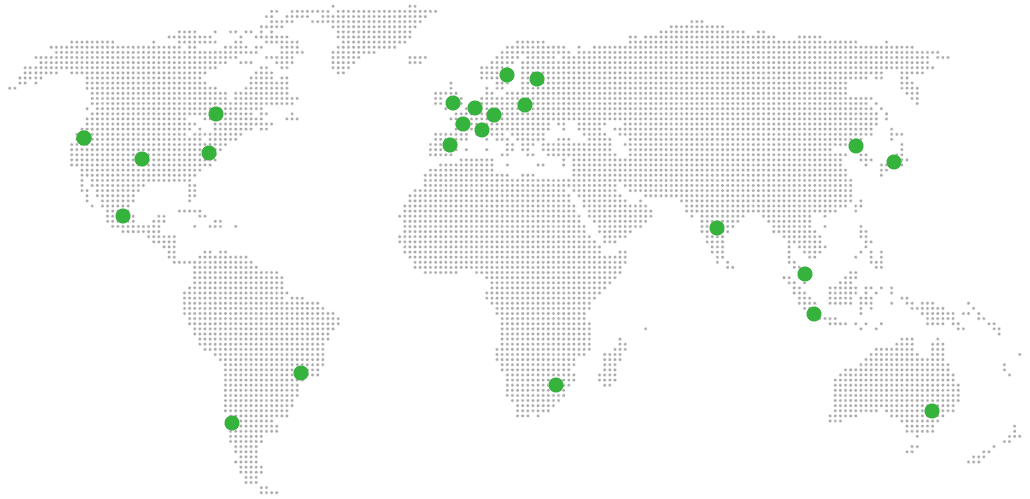
Run all six managed by us and the math is flat: 6 × €9 = €54/month, in the region you choose, across 21 datacenter regions on six continents.
The equivalent SaaS toolchain — GitHub seats, CI minutes, a private registry, Datadog, a hosted secrets manager, and Okta — runs from roughly $195 to $510 or more per month at five developers, and climbs with every seat, host, and secret.
The honest trade: GitHub's Actions marketplace and integrations are unmatched. Self-hosting swaps that breadth for cost you can predict and data you control.
Start with two tools, not six. Put git on Gitea, wire one pipeline in Woodpecker, and evaluate for 14 days.
Who this stack is for (and who should stay on GitHub)
This list is for a small engineering team — say two to ten developers — that already pays for several developer tools separately and wants fewer invoices and more control. It is not for teams that lean on the GitHub Actions marketplace or want everything inside one vendor's bundle. For those teams, GitHub is the better choice.
GitHub's ecosystem is the reason most teams never leave. The Actions marketplace has thousands of prebuilt steps. Copilot sits in the editor. The integrations are everywhere, and most of the world's developers already have an account. Self-hosting trades that gravity for three things: a cost that does not scale with seats, source and build artifacts that stay on infrastructure you control, and no per-tool price creep.
If the marketplace breadth is load-bearing for your workflow, stay where you are. If predictable cost and data control matter more, the six tools below cover the whole loop.
The six tools, and what each one replaces
Each tool below does one job and replaces one paid SaaS slice. We host every one at €9 per app, per month, patched and backed up daily off-site, in the region you pick. The capsules name the license, the GitHub stars, what the tool replaces, and the one thing it does not do well.
Gitea — your git hosting
Gitea is a self-hosted git forge: repositories, pull requests, code review, issues, a kanban board, and a built-in package registry. It is written in Go, licensed MIT, and carries about 55,700 GitHub stars. It runs on a small server and starts in seconds. For most teams it covers what GitHub's core does: hosting code, reviewing pull requests, tracking issues, and tagging releases. Gitea also ships Gitea Actions, a built-in CI system whose syntax mirrors GitHub Actions, so existing workflow files mostly carry over.
The honest limit is community size. GitHub has the world's developers and an integration for nearly everything. Gitea's third-party surface is smaller. The community split in late 2022 when the Forgejo fork launched over governance concerns, and Forgejo became a fully independent project in early 2024. Both projects are healthy, but neither has GitHub's gravity. If your work depends on a long list of GitHub-only integrations, that gap is real.
We run managed Gitea for git hosting at €9/month. We patch it, back it up daily off-site, and keep it monitored. You push code; you do not run the server.
Woodpecker CI — your pipelines
Woodpecker CI runs your build and deploy pipelines. It is a community fork of Drone, licensed Apache 2.0, with about 6,400 GitHub stars. Every pipeline step runs in its own Docker container, and the server idles at roughly 100 MB of RAM. Pipelines are defined in a plain .woodpecker.yml file, and Woodpecker has first-class support for Gitea, so the git host and the CI engine fit together without glue code. A push to Gitea triggers a run; the run builds, tests, and deploys.
The honest limit is the plugin ecosystem. GitHub Actions has a marketplace with thousands of prebuilt actions, and that breadth is hard to match. Woodpecker's plugin catalog is far smaller, though Drone plugins are compatible and most build steps are a few shell commands anyway. Setup also asks more of you than a hosted runner: TLS, OAuth, and a reverse proxy. Self-hosted CI means someone owns the uptime.
That someone is us. We run Woodpecker CI for pipelines at €9/month, wired to your Gitea instance, patched and monitored. When a runner needs attention, a human engineer handles it.
Verdaccio — your private npm registry
Verdaccio is a private npm registry. It stores your internal packages and proxies the public npm registry, caching what your builds download. It is licensed MIT, carries about 17,700 GitHub stars, boots in seconds, and is fast enough to sit inside CI — many open-source projects use it for end-to-end tests. Point a project's .npmrc at Verdaccio and your private packages install exactly like public ones, without publishing your code to the public registry.
The honest limit is scope and staffing. Verdaccio is built for npm; it is not a multi-format artifact platform, so a team needing Maven, PyPI, and Docker in one place will outgrow it. It is also volunteer-maintained, with no full-time team and, by the maintainers' own note, no current funding for security research. The project is active and widely used, but it is community software, not a vendor product.
We run managed Verdaccio at €9/month, patched and backed up. Your private packages and your cache live on infrastructure you control, not inside a registry seat plan that bills per developer.
Grafana — your dashboards
Grafana turns metrics, logs, and traces into dashboards and alerts. It connects to more than 150 data sources, including Prometheus, Loki, and Postgres, and it is the most widely used open-source tool for the job. Grafana is licensed AGPLv3 — it moved from Apache 2.0 in 2021 — and carries more than 60,000 GitHub stars. You watch your deploys, your error rates, and your build health on one screen, and you set alerts when something crosses a line.
The honest limit is that Grafana is the visualization layer, not the whole observability stack. It needs a data source behind it — usually Prometheus for metrics — and that is a separate thing to run. Datadog bundles collection, dashboards, APM, and alerting into one product that works out of the box; Grafana asks you to assemble more pieces, and its query languages take time to learn. The trade is cost and control: Grafana plus Prometheus runs for a fraction of Datadog's per-host bill.
We run Grafana for dashboards at €9/month, patched and monitored, in the region you choose. The data stays yours.
Vault — your secrets
Vault stores and manages secrets: API keys, database passwords, certificates, and encryption keys. It hands secrets to your pipelines and apps at runtime, so credentials never sit in plain text in a repo or a CI variable. It records which client read which secret and when. Vault carries about 35,700 GitHub stars and is the most established tool in its category.
One honest point matters here. Vault is no longer open source in the strict sense. In 2023 its maker moved it to the Business Source License, which is source-available rather than OSI-approved; HashiCorp is now owned by IBM. The community responded with OpenBao, a fork under the Linux Foundation that keeps the MPL 2.0 open-source license and stays API-compatible. If a strictly open-source license is a hard requirement, OpenBao is the path; if you want the established tool, Vault is it. The other honest limit is operational weight: initialization, unsealing, and high availability are not trivial, and Vault ships security fixes almost monthly.
We run managed Vault at €9/month and carry that operational weight — the unseal flow, the patching, the backups — so your team does not.
Keycloak — one login across the toolchain
Keycloak is identity and single sign-on. It speaks OpenID Connect, OAuth 2.0, and SAML, connects to LDAP and Active Directory, and supports multi-factor login. Wire it in front of the other five tools and your team signs in once to reach Gitea, Woodpecker, Verdaccio, Grafana, and Vault. Keycloak began at Red Hat, is a CNCF project, is licensed Apache 2.0, and carries about 34,700 GitHub stars.
The honest limit is weight and complexity. Keycloak is full identity-and-access management, and it shows: the base configuration wants around 1.25 GB of RAM, and production deployments typically run 2 to 4 GB. Lighter single-sign-on tools exist if all you need is a login gate. Keycloak also ships frequent security patches that have to be applied promptly. Okta and Auth0 hide all of this behind a hosted console — that polish is what their per-user price buys.
We run managed Keycloak at €9/month and keep it patched. Your team gets one login across the stack; you do not run the identity server or chase its security releases.
How the six fit together
The six tools form one loop. A developer pushes code to Gitea. The push triggers a Woodpecker pipeline. The pipeline pulls dependencies from Verdaccio, builds, and deploys. You watch the result in Grafana. Vault hands each step the secrets it needs, and Keycloak gives the whole team one login across all six.
In practice it reads like this. A developer opens a pull request in Gitea and a teammate reviews it. On merge, Woodpecker starts a run defined in .woodpecker.yml. The run installs packages from Verdaccio — private ones you published, public ones it cached — then runs tests and ships the build. Throughout, the pipeline asks Vault for the database password and the deploy key rather than reading them from a file. After deploy, a Grafana dashboard shows error rates and response times, with an alert set for regressions. Everyone reached every tool through a single Keycloak login. No part of that loop sent your source, your packages, or your build logs to a vendor you do not control.
What the stack costs
Run all six with us and the math is simple: six apps at €9 each is €54 per month, flat, no matter how many developers, hosts, secrets, or build minutes you use. The equivalent SaaS toolchain at five developers runs from roughly $195 to $510 or more per month — and the number rises as you grow.
| The job | Typical SaaS, list price at about 5 developers | Self-hosted, run by DANIAN |
|---|---|---|
| Git hosting | GitHub Team, 5 × $4 = $20/mo | Gitea — €9/mo |
| CI/CD pipelines | GitHub Actions or CircleCI minutes — about $15–50/mo in overage (Linux $0.006/min) | Woodpecker CI — €9/mo |
| Private npm registry | npm Teams, 5 × $7 = $35/mo (a dedicated artifact platform starts near $150/mo) | Verdaccio — €9/mo |
| Dashboards and monitoring | Datadog, about $15/host/mo plus APM and logs — roughly $45–150/mo | Grafana — €9/mo |
| Secrets management | A hosted secrets manager — a few dollars on per-secret pricing up to about $90/mo on a per-seat plan | Vault — €9/mo |
| Single sign-on | Okta, $6/user/mo with a $1,500/year contract minimum (about a $125/mo floor) | Keycloak — €9/mo |
| Total | About $195–$510+ per month, rising with use | €54 per month, flat |
A few honest caveats sit behind that table. GitHub bundles some of these jobs — Actions for CI, Packages for a registry — so a GitHub-centric team may not buy every line separately. The SaaS figures are list prices in US dollars; real bills vary with usage and negotiated discounts. Datadog and the secrets managers are usage-priced, so their cost climbs with hosts and secret counts rather than seats. Okta's $1,500 annual minimum means even a three-person team pays a four-figure floor.
The pattern holds at any reasonable exchange rate: a flat €54 beats a usage-metered toolchain that starts near $200 and only grows. We do not bill per developer, and we will not raise your price because your team grew.
How to start
Do not stand up six services at once. Start with two. Put your git on Gitea and wire one pipeline in Woodpecker, then run that pair for 14 days against real work. If it holds, add the registry, dashboards, secrets, and single sign-on one at a time.
A sensible order is git first, then CI, then the rest as you feel the need. Move one repository to Gitea and review a few pull requests there. Add a .woodpecker.yml to that repo and let one pipeline build and deploy. Once that loop is steady, point your .npmrc at Verdaccio, then add a Grafana dashboard for the service you just shipped. Bring in Vault when you want secrets out of CI variables, and Keycloak when one login across the tools starts to matter. Each tool is €9/month on its own, so you grow the stack at your own pace.
Frequently asked questions
What is a self-hosted CI/CD stack?
It is the set of tools a team runs on its own infrastructure to write, build, and ship software: git hosting, a pipeline engine, a package registry, monitoring, secrets, and single sign-on. You own the data and the uptime instead of renting each piece from a SaaS vendor.
Which open-source tools make up a self-hosted developer platform in 2026?
A common set is Gitea for git, Woodpecker CI for pipelines, Verdaccio for a private npm registry, Grafana for dashboards, Vault for secrets, and Keycloak for single sign-on. The six cover the whole loop from code commit to running service, and each replaces one paid SaaS slice.
What does each tool in the stack replace?
Gitea replaces the GitHub or GitLab git layer. Woodpecker replaces GitHub Actions or CircleCI minutes. Verdaccio replaces npm's private packages or a hosted artifact registry. Grafana replaces Datadog's dashboards. Vault replaces a hosted secrets manager. Keycloak replaces Okta or Auth0.
What is the best self-hosted GitHub alternative in 2026?
For git hosting, Gitea is the leading self-hosted GitHub alternativeyFd7KDA"] .zpicon-common svg{ fill:#0F4C5C !important }
Custom Domains

ABOUT THE SOFTWARE
What is BookStack
FEATURES
What BookStack does
WHAT'S ALWAYS INCLUDED
Every app. Fully managed.
Nothing extra to pay for.
Every app you deploy includes the full managed service — security, backups, updates, and support from day one.
WHY MANAGED
Why teams pick managed BookStack
REVIEWS
Hear from customers like you

No more maintenance headaches!
Finally, I can relax and not bother with maintenance. Each of the softwares that we run on DANIAN is automated and running stable for couple months already. They even assist us with modifying the DNS records. Once we needed to modify the config of Nextcloud so that we are able to upload higher than 5GB files and they assisted us fast. I also love their documentation!

Kevin Blackwell

Best managed service
I previously ran Peertube, Mastodon, Mattermost and Mirotalk on other providers before switching to DANIAN. I was tired of handling the updates and backups myself. Not only that the performance is "out of this world" fast, but their tech support is amazing. Since then I added 5-10 more Apps on my account. I also love how they add more softwares on their list constantly!

William Northfield

Love the personalized service!

George Adams

n8n runs excellent

David Hartmann

Smooth experience
I needed a way to manage the projects and files for my company. This was the first time I learn about opensource. I asked their support team and they assisted me immediately. I started with Openproject. Later I added Nextcloud. My team were able to get used to the apps fast.

Levi Nilsson

Bye GA

Wyatt Mitchell

Love the freedom
I wanted to use a crm for my startup. I signed up for the free trial. Tried out espocrm and dolibar and picked one. Their dashboard is very easy for a beginner. I recommend them and feel confident in choosing them.
Elias Koch

Wow just wow
After discovering DANIAN, I wished I'd found them sooner — their solution is excellent and deserves wider recognition. Very good solution!

Tyler Hollander

Professional tech support!

Bastian Engel

Their support team is the best!
I had a problem with my card and the subscription could not be renewed in time. I notified their support and surprisingly, they showed much understanding. They basically left my apps run until I solved the card issue. Other providers would have deleted my data in a heartbeat. This is the way to build client-vendor trust!

George Adams

Fair price and fast
4 months ago I activated n8n, Uptime kuma, Vaultwarden and Paperlessngx. So far everything is perfect. The performance of all apps is excellent. I contacted their support team couple times for using custom subdomains for the apps and they were fast and kind. I'm constantly recommending them to my network!

Atanas

Vaultwarden 10/10
I wanted to selfhost a passwords manager for my company but I didn't trust the mainstream providers. I tried out Vaultwarden for the free trial. I loved how their support team communicated with me professionally but still kind. I know that I can contact them whenever with whatever question I have. Recommended!

James Smith

Multiple locations options

Edward Nelson

Everything just works!
My focus is on my business, not running servers. I love that I can lauch any app without having to think about the tech behind it. Everything just works!
Tony Roy

Awesome support team!

Filip

Very proactive!
Today couple of the videos on my Peertube got viral. Before I even noticed, their support have notified me via email that they proactively upgraded my app with more cpu & ram so that it continues to work without any downtime. They left the upgraded app with the added resources for couple days until the traffic stabilizes. After that I had the possiblity to stay on the same plan or keep the upgraded plan. Out of gratitude I stayed on the upgraded one.

Luke Hall

Win-win!
I run a web design biz. After I perform the work for my clients, they constantly ask me for more software solutions. So I partnered with DANIAN. Not only I provide the requested softwares for my clients and get the increased revenue boost by delegating all to DANIAN, but also for those clients that wish to order directly from DANIAN, I send them an affiliate link. Win-win on all sides!

Luke Walker


Jeffrey Johnson

Awesome customer service
I needed to add analytics on my website but I didn't know anything about DNS. Their team guided me at all phases and they performed the changes for me. Additionally they were transparent and notified me of every change applied and steps performed.

Gabriele Marino

Good admin dashboard
Not only that I got Chatwoot, I also have access to the management dashboard. I love that I can view my hourly/daily usage and perform manual backups and restorations if needed. I don't need the level of control but it feels good to know that I have it if I need it.

Matthew Turner


Andreas Schmitt

Great service!
I configure custom Matomo tracking for my clients as a monthly service. Many of my clients were asking if they can selfhost Matomo instead of using the Cloud service. My employee recommended DANIAN. Basically, I can activate as much Matomo's in any of 20+ countries the same day. Additionally the affiliate revenue is a nice bonus.

Jacob Turner

Smooth experience
I was listing through youtube tuts on how to install Bookstack myself. Then randomly, I found their video playlist exactly for Bookstack. Got curious and went at their website. For the same price (or higher) that I would pay for just the VPS, with them I'm getting a fully managed Bookstack. It's a no-brainer decision!

Elias Gustafsson


Mason Hayes

Its a great service
Its a great service. I love the performance of my Mastodon community. It keeps on growing and I don't have any worries about backups, secuirity, updates, etc.

Vinícius Rocha

Very intuitive solution!
I wanted to use a nocode software for my company. A friend recommended them so I tried both Baserow and NocoDB, couple days later picked one.

Haruto Hashimoto


Henrik Otto
USE CASES
Three teams who run BookStack on DANIAN
BookStack on DANIAN tends to land with teams that have outgrown a per-seat wiki or want to keep their documentation on infrastructure they can point at. Three patterns we see, each with the configuration choices that matter for that pattern.
14-PERSON DEVOPS TEAM
Replacing Confluence Cloud after the per-seat bill crossed $750 a year
Germany region. Microsoft Entra ID OIDC with group-claim sync to roles engineer, sre, and pm. Thirty-plus books across shelves for Runbooks, On-Call Playbooks, Post-Mortems Q1–Q4, Architecture Decision Records, and Compliance Evidence. Slack webhook on page.update for the On-Call Playbooks shelf. Daily backups, 7 days retention.
12-SEAT LAW FIRM
Migrating internal procedures off Notion for matter-data control
UK region. Google Workspace OIDC, MFA enforced per role via TOTP. Three shelves — Internal Procedures, Conflict-Check Workflow, Practice-Area Knowledge — with granular per-shelf permissions so the conflict-check shelf stays editor-only to compliance. Audit log retained seven years. Weekly PDF export of Internal Procedures pinned to S3 with object lock.
UNIVERSITY RESEARCH DEPARTMENT
Documenting lab protocols, equipment SOPs, and module materials for 145 staff and students
Regional datacenter bound to the campus directory. LDAP with LDAP_START_TLS="true" and group sync to roles faculty, postgrad, and undergrad. Multi-language UI per user. Bulk PDF export of course books at semester-end for accreditation. The v25.12 slug-history system preserves citations after page renames.
COMPARISON
Four ways to run BookStack
Compare the cost and the ongoing work, not just the price. A proprietary wiki replaces BookStack with a recurring per-seat bill. A VPS replaces the bill with operations. A home server replaces both with hardware that is yours to keep alive. DANIAN covers the work for €9 a month.
| PATH | 1 SEAT | 5 SEATS | 10 SEATS | ONGOING WORK |
|---|---|---|---|---|
| Proprietary SaaS Confluence Cloud Standard | $6.40/mo | $32/mo | $64/mo | Vendor handles ops; per-seat bill scales linearly; admin still maintains spaces, permissions, and Marketplace add-ons. |
| Self-host on a VPS $24/mo production-class VPS | ~$44/mo infra | ~$44/mo infra | ~$44/mo infra | Plus €60–240/mo in your team's time for patching, backups, SSL, on-call. DB tuning kicks in past 25 users. |
| Home server HP ProLiant ML30 Gen10 | €210–667/mo* | €210–667/mo* | €210–667/mo* | Hardware lives or dies on your hands; business internet plus static IP required; replacing the unit is its own project. |
| DANIAN Managed BookStack | €9/mo | €9/mo | €9/mo | Zero hours per month on your side. We patch, monitor, back up, restore. SSO, SMTP, DNS, custom domain configuration included. |
* Home server total includes hardware amortised over 36 months (€18–55), electricity at €0.30/kWh (€17–32), business internet with static IP (€40–80), off-site backup target (€10–20), and operator time at €60–120/hour (€120–480). DANIAN's price stays flat across seat counts because BookStack pricing is per app, not per user.
BY INDUSTRY
BookStack for specific industries
BookStack's combination of hierarchical pages, per-item permissions, in-browser diagrams, multi-format export, and a real audit log fits some industries more closely than others. Four where we configure the same set of knobs most often, each with the operational anchor that matters for that work.
FAQ
Frequently asked questions
Everything teams ask before signing up — answered straight, without sales speak.
Three groups: technical setup, migration, and how DANIAN works as a service.
01
Technical and configuration
02
Migration and onboarding
03
Billing, support, and platform
DEPLOY IN YOUR REGION
21 datacenter locations on six continents
Pick the region closest to your users.
United States, Germany, Finland, Singapore, Australia, Brazil, Canada, Netherlands, UK, Spain, Italy, France, Sweden, Malaysia, India, Japan, Mexico, Poland, South Korea, Chile, South Africa and more coming soon